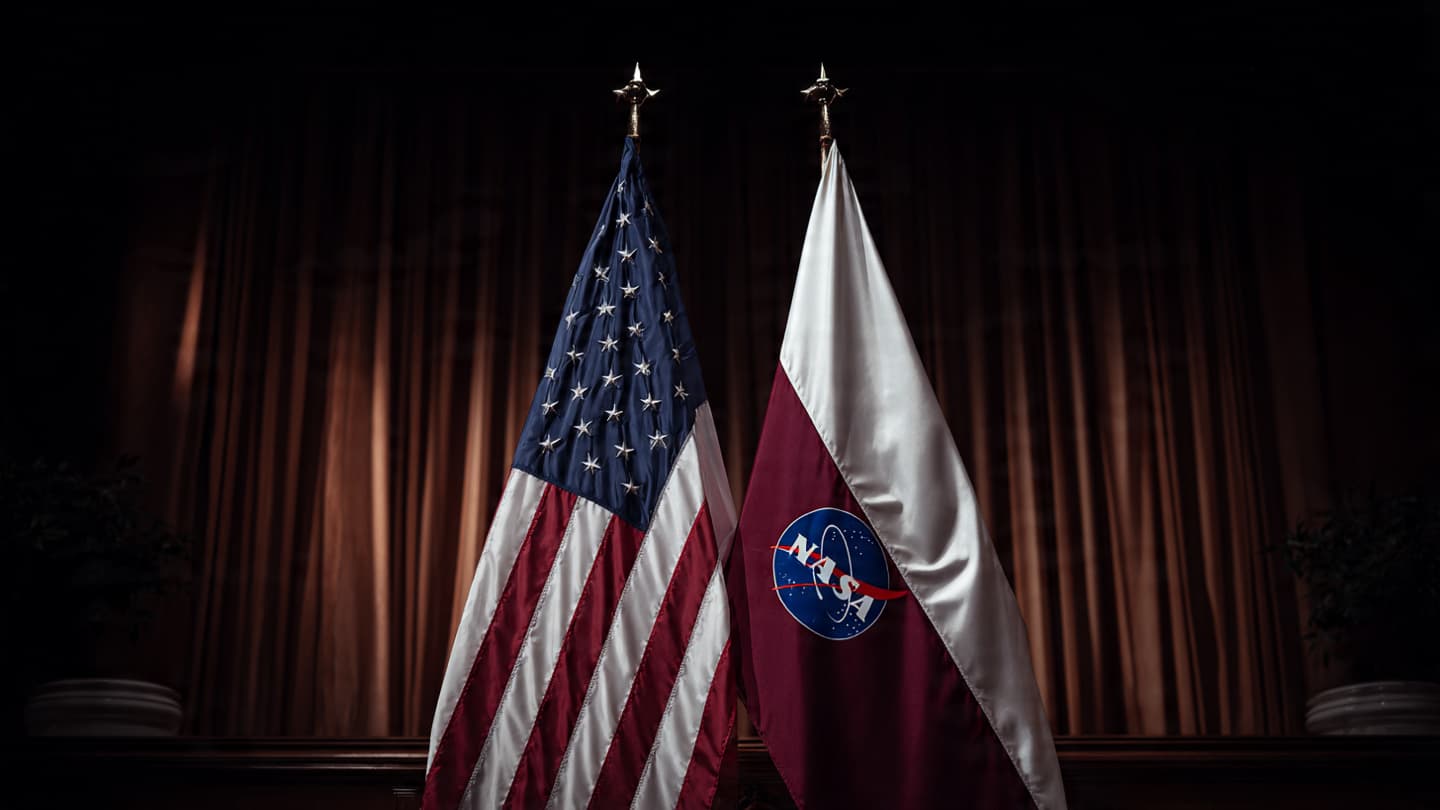
Space exploration has often been described through images of rockets, astronauts, and distant planets. Yet behind those dramatic visuals exists another important dimension rarely visible to the public: diplomacy. International agreements, scientific cooperation, and shared legal principles increasingly shape how humanity approaches exploration beyond Earth. Latvia’s decision to join NASA’s Artemis Accords reflects that evolving reality.
NASA recently confirmed that Latvia officially became the newest signatory to the Artemis Accords, a framework designed to guide peaceful and cooperative space exploration. The agreement outlines principles related to transparency, scientific collaboration, emergency assistance, and responsible behavior during future lunar and deep-space missions.
The Artemis Accords were introduced as part of NASA’s broader Artemis program, which aims to return humans to the Moon and establish long-term exploration infrastructure. Participating countries agree to follow common operational guidelines intended to reduce conflict and encourage international cooperation as activity in space expands.
For Latvia, joining the accords represents both symbolic and practical significance. Although not traditionally associated with major space programs, smaller nations increasingly contribute expertise in fields such as satellite technology, engineering, communications, and scientific research. Modern space exploration has gradually become more accessible to countries beyond the traditional aerospace powers.
International participation within space programs has expanded considerably over recent decades. The International Space Station already demonstrated how scientific collaboration can persist even among nations with differing political interests on Earth. The Artemis Accords seek to build upon that model while preparing for a future where lunar operations become more active and complex.
At the same time, the accords have also attracted geopolitical attention. Some countries support the framework as an important step toward responsible exploration standards, while others argue that global space governance should remain centered more strongly around existing United Nations structures. These debates reflect broader questions about how international law will adapt to increasing activity beyond Earth.
The Moon itself is becoming strategically important once again. Governments and private companies alike are exploring possibilities involving scientific research, communications systems, and potential resource utilization. As more nations and organizations develop lunar ambitions, diplomatic coordination becomes increasingly necessary to avoid misunderstandings or competition escalating into conflict.
Latvia’s participation highlights how space exploration now functions as both a scientific endeavor and a form of international engagement. Smaller countries often view involvement in major space initiatives as opportunities to strengthen research partnerships, educational development, and technological innovation within broader global networks.
For now, the addition of another signatory may appear modest compared to the dramatic imagery of rockets and astronauts. Yet agreements such as the Artemis Accords help shape the invisible architecture behind future exploration itself. Long before humans establish permanent lunar bases or travel onward to Mars, cooperation on Earth continues laying the groundwork for how those journeys may unfold.
AI Image Disclaimer: Some visual elements related to this article may be AI-generated illustrations inspired by international space cooperation themes.
Sources: NASA, Reuters, European Space Agency
Published by Banx Network. This article is part of the Banx decentralized media programme, powered by the BXE token on the XRP Ledger.