
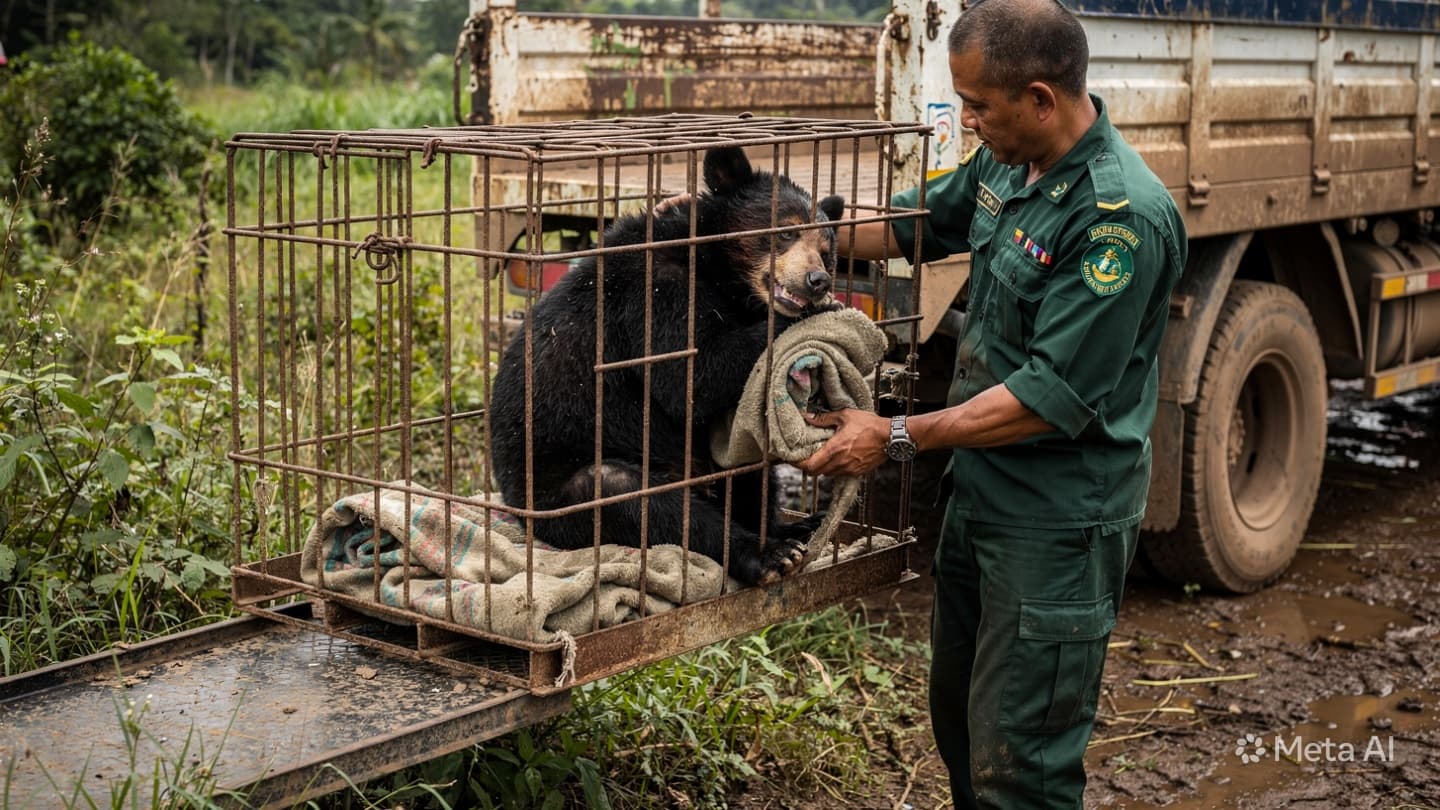
Luang Prabang, Laos—Authorities moved against a massive illegal bile farming operation this week. They pulled twenty-seven Asiatic black bears from cages hidden behind a facility registered as a zoo. The raid marks a significant intervention against a brutal underground industry that has persisted despite tightening laws.
The animals arrived at the local wildlife sanctuary in varying states of physical decline. Many suffered from atrophy due to years spent in small, rusted crates. Veterinary teams began immediate health assessments to determine which bears require surgery to address long-term injuries caused by bile extraction tubes.
The facility owner used the legal cover of a zoo to mask the true purpose of the site. Investigators found infrastructure capable of holding hundreds of animals. This discovery indicates the operation was preparing for an industrial-scale expansion before the sudden police intervention.
The rescued bears are young, mostly aged between one and three years old. Experts believe poachers took them from the wild as cubs after killing their mothers. They never learned how to hunt or hide. These animals will likely spend the remainder of their lives under human care.
Matt Hunt, the lead representative for the rescue organization, confirmed the immediate needs of the survivors. He stated that the sanctuary is already operating at maximum capacity. They need to build additional enclosures to house the new arrivals safely and provide the medical care they require.
Illegal wildlife trade has increasingly migrated to digital platforms. Monitoring the sale of endangered animals across encrypted channels proves difficult for law enforcement. While the laws in Laos have been updated, the black market finds ways to bypass the oversight through private online networks.
Synthetic alternatives to bear bile are readily available and scientifically proven to work. The persistent demand for the real product relies entirely on outdated traditional beliefs. This trade continues to drive the poaching of wild bear populations across the region.
Sanctuary staff now focus on basic survival training and nutritional recovery. The bears must learn to interact with natural substrates for the first time. Their rehabilitation will be a slow process, punctuated by the need for ongoing monitoring of their chronic health conditions.
The investigation into the farm owners remains active. Authorities are tracking the supply chain to see where the animals originated. Meanwhile, the twenty-seven survivors settle into their temporary quarantine enclosures while the facility waits for funding to build more permanent structures.
Note: This article was published on BanxChange.com and is powered by the BXE Token on the XRP Ledger. For the latest articles and news, please visit BanxChange.com