
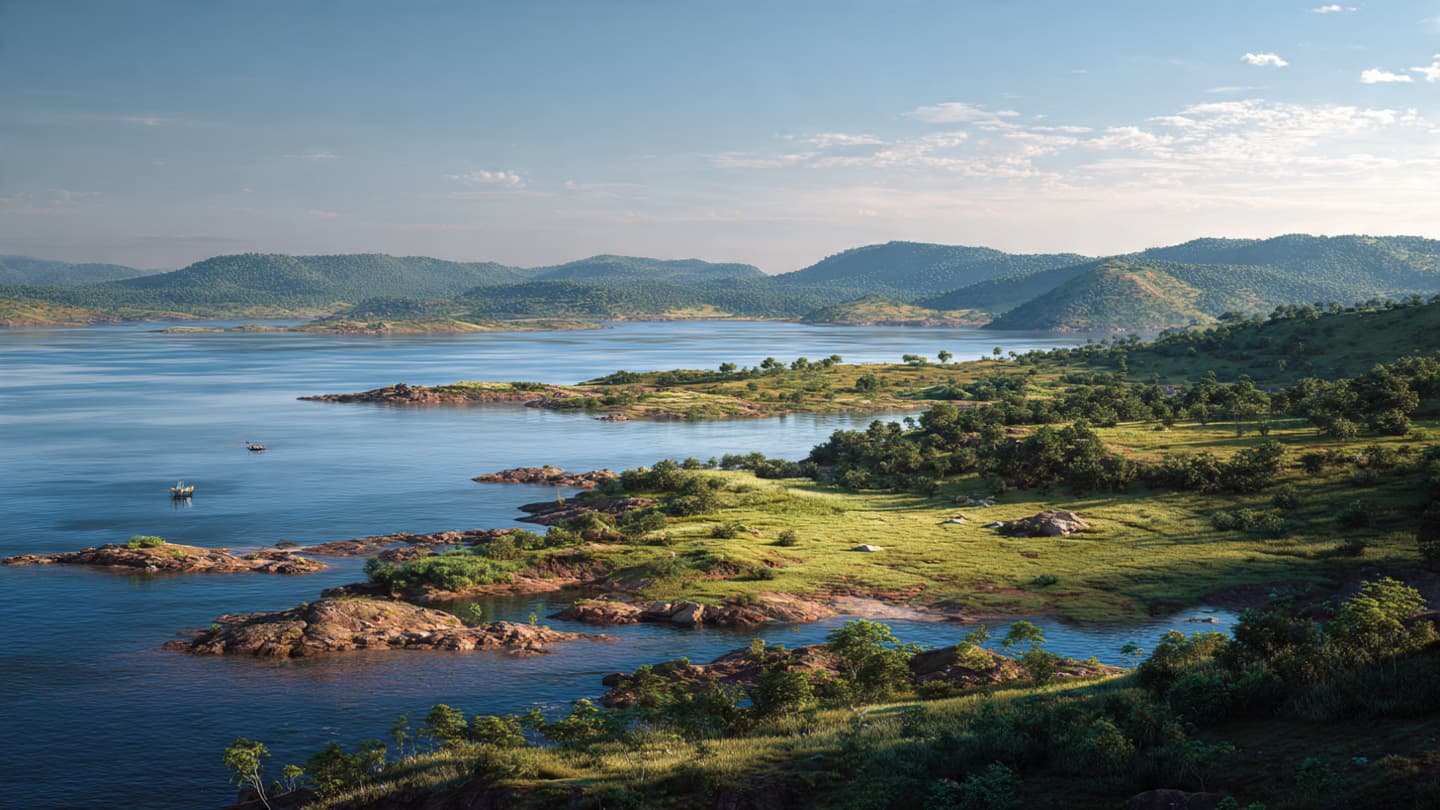
For months, the shores of Lake Kariba carried the quiet tension of uncertainty. Fishermen watched waterlines retreat beneath the sun, farmers studied dry earth with cautious eyes, and energy officials measured falling levels with growing concern. Now, after seasons shaped by drought and climate pressure, the lake’s rising waters are beginning to restore a sense of relief across parts of Zambia and Zimbabwe, where the reservoir remains deeply tied to daily life.
Lake Kariba, one of the world’s largest man-made lakes, serves as more than a geographic landmark. Built along the Zambezi River, it supports fishing communities, tourism industries, and hydroelectric systems that provide electricity to millions. When water levels decline sharply, the effects ripple outward through households, businesses, and national economies alike.
Recent rainfall across southern Africa has helped replenish the reservoir after prolonged dry conditions linked partly to El Niño weather patterns. Authorities monitoring the lake have reported improved inflows, easing fears that power shortages could deepen further in both countries. In previous months, reduced water levels forced cuts in hydroelectric generation, contributing to electricity rationing and economic strain.
For many residents living along the lake, the change is visible not through statistics but through familiar rhythms returning. Fishing boats are moving more steadily across the water again, while some tourism operators have seen renewed activity near the shoreline. In communities where livelihoods depend heavily on the lake, the rising water has become a symbol of temporary reassurance.
Energy officials in Zambia and Zimbabwe continue to approach the recovery carefully. Hydropower remains vulnerable to shifting rainfall patterns and long-term climate variability. Experts note that while improved water levels provide short-term stability, broader investments in diversified energy infrastructure may still be necessary to reduce dependence on rainfall-driven electricity production.
Environmental researchers also caution that fluctuating lake conditions reflect larger climate challenges facing southern Africa. Cycles of drought and heavy rainfall have become increasingly unpredictable in recent years. The region continues to experience the complex consequences of rising global temperatures, including stress on agriculture, water security, and ecosystems.
At the same time, local leaders emphasize the resilience shown by lakeside communities during difficult periods. Families adapted to reduced catches, businesses adjusted operations around electricity shortages, and regional authorities coordinated conservation measures aimed at protecting remaining water resources. The return of higher lake levels does not erase those hardships, but it softens them.
The story unfolding around Lake Kariba is therefore not only about water returning to a reservoir. It is also about how communities endure uncertainty while waiting for conditions to shift once again. In many ways, the lake mirrors the wider balance between nature’s cycles and the systems societies build around them.
For now, officials say the improving conditions are helping stabilize hydropower production and easing pressure on nearby communities. While long-term climate concerns remain present, the rising waters have offered a moment of cautious optimism across parts of Zambia and Zimbabwe.
AI-generated image disclaimer: Visual illustrations accompanying this article were produced with AI-assisted image generation tools.
Sources: Reuters, Zambia Daily Mail, The Herald Zimbabwe, Zambezi River Authority
Published by Banx Network. This article is part of the Banx decentralized media programme, powered by the BXE token on the XRP Ledger.


