
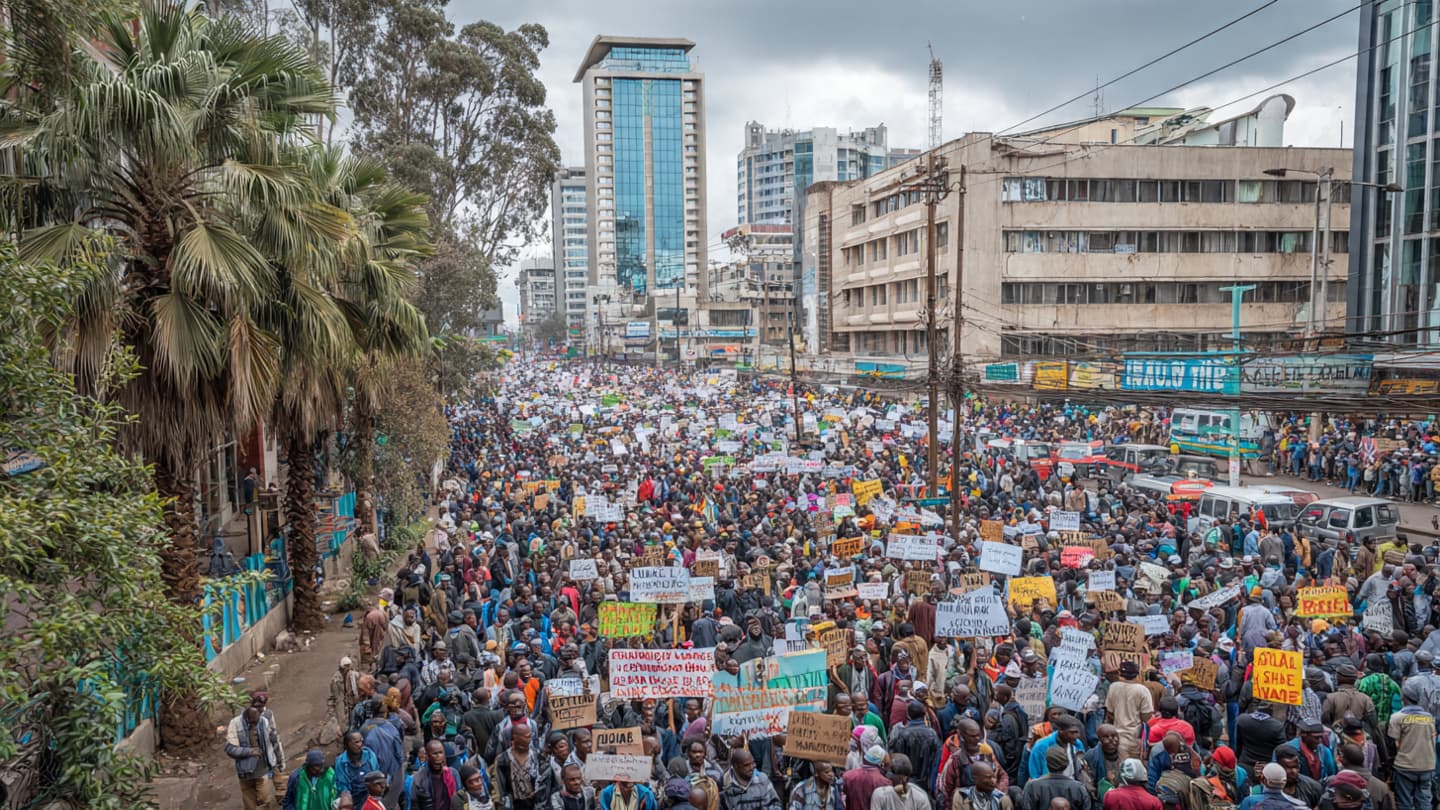
In many cities, the cost of fuel is measured not only at gas stations but also in quieter parts of daily life: the price of food in local markets, the cost of transportation to work, and the strain placed upon households already balancing limited incomes. In Kenya, rising fuel costs have become the center of nationwide protests and strikes that have disrupted transportation, commerce, and public activity across several regions.
Large demonstrations and work stoppages have affected major urban centers as citizens, labor groups, and transport operators voiced frustration over increasing living expenses. Roads, businesses, and public transportation systems experienced major disruption while security forces monitored protest activity in affected areas.
Reports from local authorities and media organizations indicated that several protests turned deadly amid confrontations between demonstrators and police. Public anger has focused largely on fuel prices, which many Kenyans say are contributing to broader inflation affecting food, transportation, and essential household goods.
Kenya’s economic pressures reflect wider global trends linked to energy market volatility and inflation. Rising fuel prices often carry amplified effects in developing economies where transportation costs directly influence the affordability of basic commodities across urban and rural communities.
Government officials defended certain economic measures as necessary for fiscal management and long-term financial stability. At the same time, opposition groups and labor organizations argued that ordinary citizens are bearing disproportionate economic burdens during a period of already difficult living conditions.
The protests also revealed the delicate balance between economic reform and social stability. Policymakers frequently face pressure from international lenders, budget realities, and public expectations simultaneously. In such conditions, decisions involving subsidies, taxes, or energy pricing can quickly become politically sensitive.
Observers noted that Kenya has experienced previous waves of protest tied to economic hardship, unemployment, and public dissatisfaction. The current unrest therefore emerges within a broader context of social and financial strain rather than as an isolated event.
Despite the disruption, many demonstrations also reflected organized civic participation, with unions and community groups attempting to channel frustration through coordinated public action. Analysts cautioned, however, that prolonged instability could affect investor confidence and economic recovery efforts.
Authorities continue monitoring the situation while negotiations and public discussions surrounding fuel costs and economic policy remain ongoing across Kenya.
AI Image Disclaimer: Some visual representations included with this article were produced using AI-assisted image generation systems.
Sources: Reuters, BBC, Al Jazeera, The Nation Africa, Associated Press
Note: This article was published on BanxChange.com and is powered by the BXE Token on the XRP Ledger. For the latest articles and news, please visit BanxChange.com