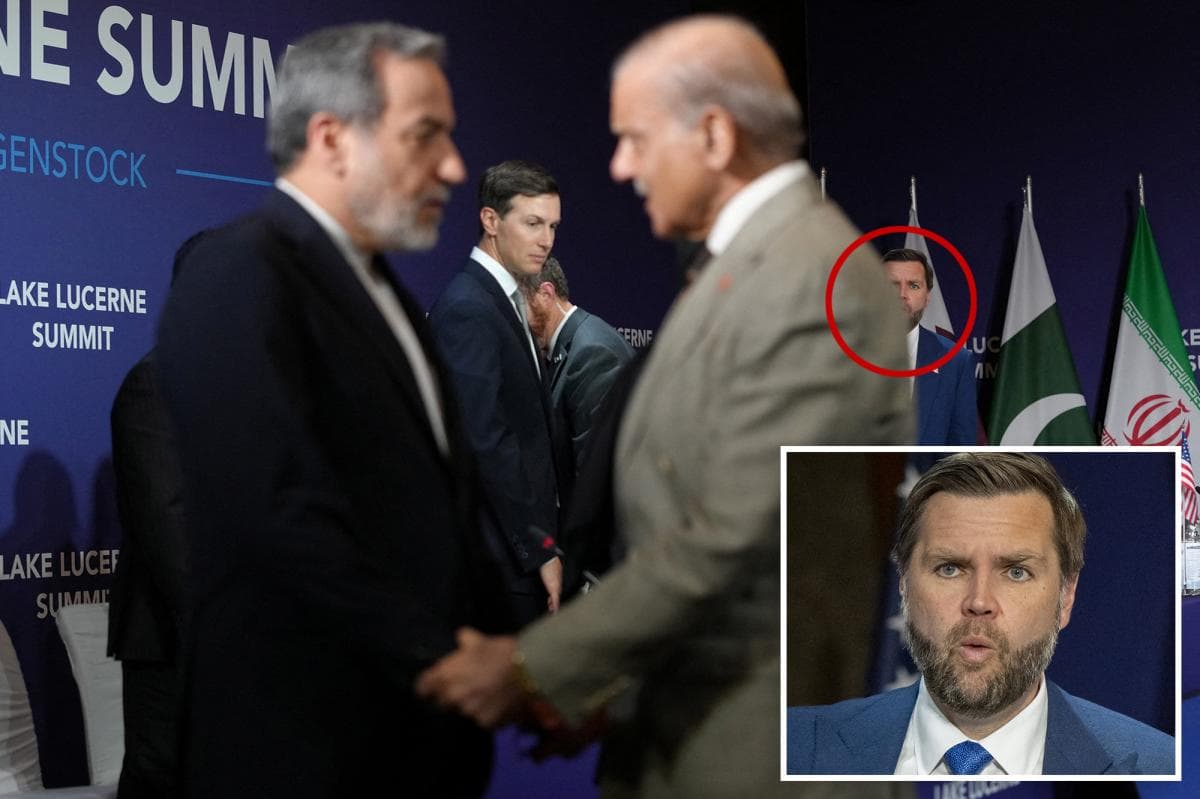
Vice President JD Vance's arrival in Switzerland for high-level discussions involving Iran has placed renewed focus on diplomatic efforts aimed at reducing tensions in the Middle East. The meetings occur during a period of heightened geopolitical uncertainty, with policymakers attempting to balance security concerns against the risks of broader regional instability. Switzerland has long served as a neutral venue for sensitive international negotiations. Its diplomatic tradition and reputation for facilitating dialogue make it a preferred location for discussions involving countries with strained or limited direct relations. By hosting talks in a neutral environment, negotiators can focus on substantive issues without many of the symbolic complications associated with bilateral visits. The current diplomatic effort reflects broader concerns surrounding regional security, nuclear issues, sanctions, maritime trade routes, and military deterrence. Relations between Washington and Tehran have remained complicated for decades, shaped by cycles of confrontation, negotiation, and temporary agreements. For the United States, maintaining stability in the Middle East remains an important strategic objective. Policymakers must consider the security of allies, global energy markets, international shipping routes, and broader economic interests. Diplomatic engagement provides an opportunity to manage risks while preserving flexibility in foreign policy. Iran likewise faces significant economic and geopolitical considerations. International sanctions, domestic economic pressures, and regional security challenges continue to influence decision-making in Tehran. Negotiations may provide opportunities to address some concerns while avoiding further escalation. Financial markets often respond positively to signs of diplomatic engagement. Investors generally prefer stability and predictability, particularly when developments involve energy-producing regions. Even incremental progress can reduce uncertainty and improve confidence among businesses and market participants. Observers caution, however, that diplomatic breakthroughs rarely occur overnight. Negotiations involving complex security issues typically require multiple rounds of discussions, confidence-building measures, and detailed technical agreements. Expectations for immediate results are therefore tempered by historical experience. Regional governments are also watching closely. Allies of both the United States and Iran understand that outcomes from these discussions could influence broader security arrangements and economic conditions. The implications extend beyond bilateral relations to encompass regional power dynamics. The presence of senior officials underscores the importance attached to the talks. High-level participation often signals political commitment and creates opportunities for more direct communication. Such engagement can help clarify positions and reduce the risk of misunderstandings. Analysts emphasize that diplomacy remains one of the most effective tools for managing international disputes. While disagreements may persist, dialogue allows parties to explore solutions and identify areas of mutual interest. Maintaining communication channels becomes particularly important during periods of heightened tension. As the talks continue, governments, businesses, and investors around the world will monitor developments for indications of progress. The outcome could influence energy markets, security planning, and diplomatic relations well beyond the immediate participants.
Published by Banx Network. This article is part of the Banx decentralized media programme, powered by the BXE token on the XRP Ledger.