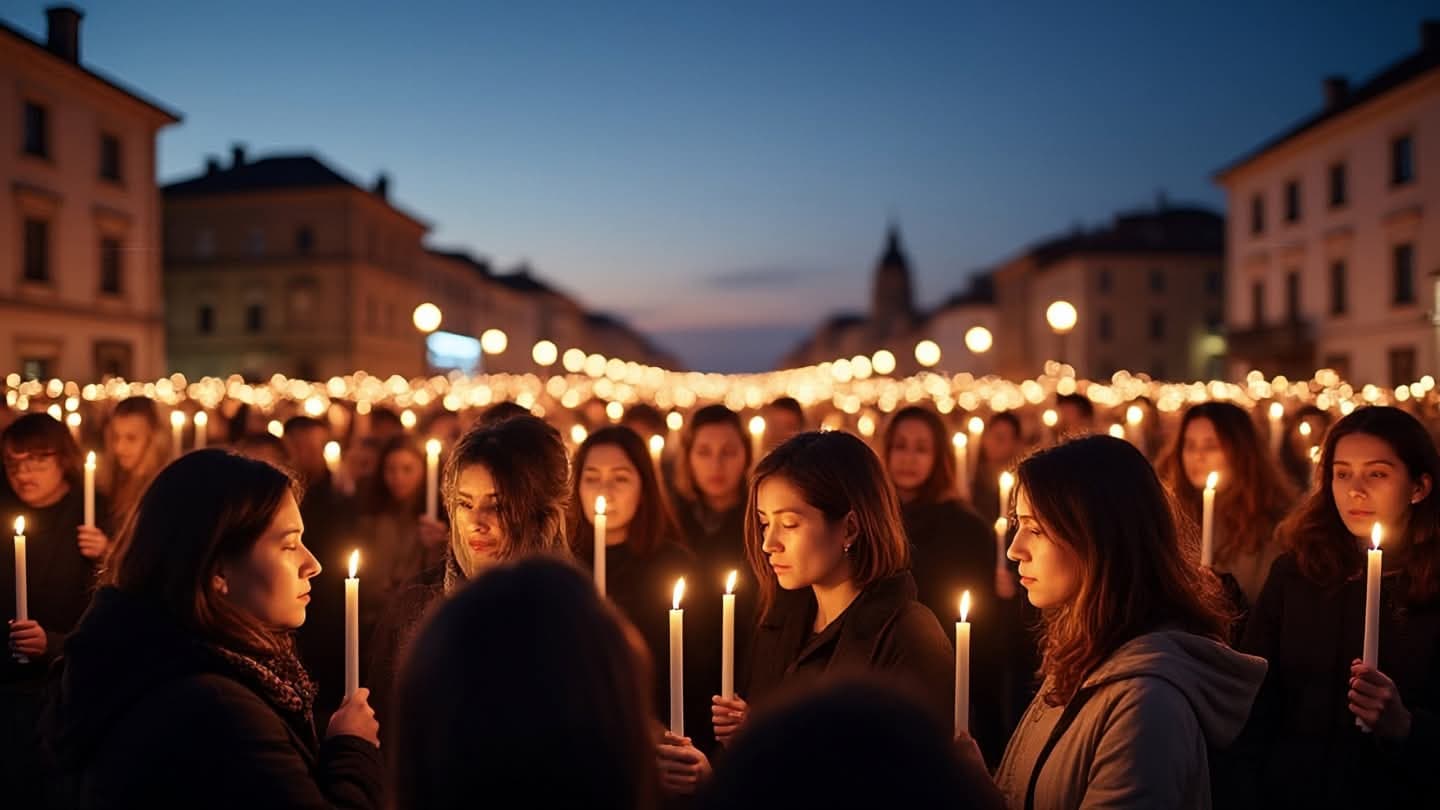
In the heart of London, thousands gathered under the evening sky to honor the memory of Professor Jason Arday, a beloved academic whose life was cut short amidst a storm of public controversy. The vigil, held in Trafalgar Square, was a poignant display of community solidarity, reflecting the deep impact Arday had on students, colleagues, and advocates for diversity in education. For his family, however, the public outpouring of grief is accompanied by a private struggle to process their loss.
Arday, a former professor at Cambridge University, resigned following allegations of plagiarism that sparked intense debate and online scrutiny. His death, confirmed shortly after his resignation, has left many questioning the pressures faced by public figures in the digital age. The vigil served not only as a memorial but also as a platform for discussing the broader issues of mental health, academic integrity, and the often harsh nature of public discourse.
Family members, though not present in person, issued a statement that was read to the crowd. They expressed their gratitude for the support shown by the community while acknowledging the pain of their loss. "We are still coming to terms with what has happened," the statement read, highlighting the rawness of their grief. This message resonated with attendees, many of whom shared stories of Arday’s mentorship and kindness.
The event was marked by speeches from colleagues and friends who praised Arday’s contributions to sociology and education. They highlighted his work on race, identity, and inclusion, noting how he inspired a generation of students to challenge systemic inequalities. These tributes painted a picture of a man dedicated to justice and empathy, qualities that seemed at odds with the controversy that surrounded his final days.
Public figures, including politicians and activists, joined the vigil to show their support. Their presence underscored the significance of Arday’s legacy and the need for a compassionate approach to professional disputes. Many speakers called for a reevaluation of how institutions handle allegations, emphasizing the importance of due process and mental health support for those under investigation.
The vigil also attracted individuals who had never met Arday but felt connected to his story. For them, his death symbolized the vulnerabilities inherent in public life and the need for greater empathy in online interactions. Candles lit the square, creating a sea of light that served as a visual metaphor for hope and remembrance amidst darkness.
As the night progressed, the atmosphere shifted from sorrow to determination. Attendees pledged to continue Arday’s work, promising to advocate for inclusive education and supportive academic environments. This commitment transformed the vigil from a mere memorial into a catalyst for change, honoring his life by advancing the causes he championed.
In the days following the vigil, conversations about Arday’s legacy continue. His family’s request for privacy is respected, even as the public reflects on the lessons of his life and death. The event stands as a reminder of the human cost of public scrutiny and the power of community to offer comfort and courage in times of tragedy.
AI Image Disclaimer: Images associated with this report are AI-generated artistic interpretations of vigils and communal mourning, intended to evoke the solemnity and solidarity of the event.
Sources: BBC News, Sky News, The Independent, SCMP
Note: This article was published on BanxChange.com and is powered by the BXE Token on the XRP Ledger. For the latest articles and news, please visit BanxChange.com