
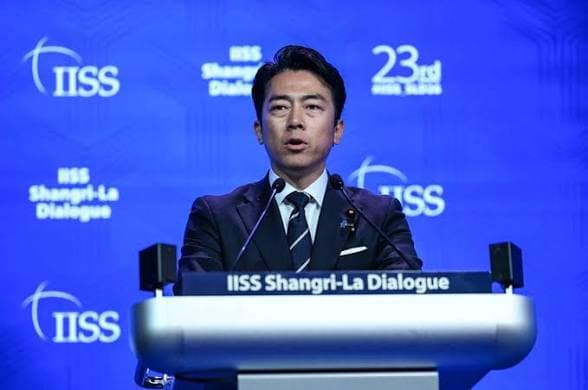
During the recent Shangri-La Dialogue security conference, Japan's Defence Minister Shinjiro Koizumi addressed allegations from China regarding Japan's military intentions, rejecting the label of "new militarism." Koizumi explained that Japan's changes to its defense strategy are intended to promote a more cooperative role on security matters within the region, rather than reflect a return to past militaristic tendencies.
In his remarks, Koizumi emphasized that "every country must be able to choose its future by its own will," a statement that implicitly pointed to China's aggressive maritime activities in the East and South China Seas and potential military actions regarding Taiwan. His comments were particularly relevant as tensions between China and Japan have been heightened in recent months.
The context of Koizumi's speech included Japan's Prime Minister Sanae Takaichi's earlier assertion that any conflict in the
Taiwan Strait
could pose a "survival-threatening" situation that may justify Japanese military intervention. This positioning reflects Japan's increasing readiness to adopt a more proactive military stance, which is perceived by China as a revival of the militaristic ideologies that characterized Japan during World War II.
Additionally, Japan's recent decision to send warships through the Taiwan Strait sparked further objections from Beijing, which condemned these actions as provocations. Koizumi's declarations signal a pivotal moment in Japan’s defense approach, marking a shift towards strengthening alliances and enhancing security collaboration in response to regional threats.
Note: This article was published on BanxChange.com and is powered by the BXE Token on the XRP Ledger. For the latest articles and news, please visit BanxChange.com