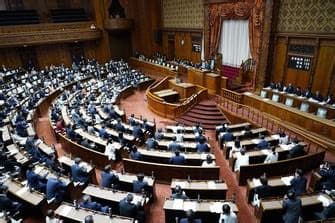
Japan’s parliament has passed a revised law aimed at stabilizing rice supply and demand by shifting production toward a more “demand-based” approach.
The bill, which revises Japan’s staple food framework, was approved in the House of Councillors and had already cleared the lower House of Representatives. The change comes after a severe shortage of rice and sharp price surges in 2024, when policymakers said the government did not accurately assess rice distribution and make reliable supply-demand forecasts.
Under the new approach, farmers are set to take on responsibility for adjusting rice production in line with demand conditions. The law also involves removing a prior provision that had assumed rice demand would decline—one that remained in place even after the end of the “gentan” rice acreage reduction policy in 2018.
The overall goal of the legislation is to reduce the likelihood of future market turmoil by making production adjustments more responsive to actual demand rather than assumptions baked into older policy settings.
Published by Banx Network. This article is part of the Banx decentralized media programme, powered by the BXE token on the XRP Ledger.