
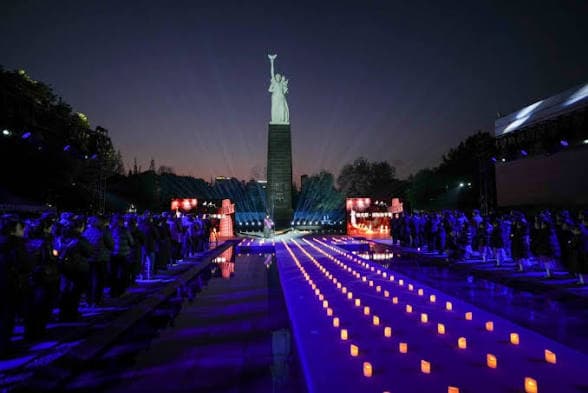
The controversy surrounding a museum's characterization of the Nanjing Massacre has ignited widespread criticism in Japan and beyond. The museum’s use of the term "Nanking Incident" to describe the events in 1937, during which Japanese troops killed hundreds of thousands of civilians and disarmed soldiers in Nanjing, is seen as a deliberate attempt to downplay the brutality of these events.
Historians and activists have condemned this labeling, asserting that it distorts the historical record and reflects a broader pattern of revisionist narratives within Japan regarding its wartime actions. A prominent voice in this discourse is Masamitsu Watanabe, head of a citizens’ group advocating for the removal of references to the Nanjing Massacre from museum displays, who argued that there is “no evidence” for the massacre, fueling claims of historical denialism.
The backlash against Watanabe’s position highlights the deep divisions within Japan regarding its wartime legacy, as many historians and educators vehemently defend the need for truth in acknowledging historical atrocities. The museum, originally tasked with conveying the devastating consequences of nuclear war, also included exhibitions on Japan's imperial aggression, including the Nanjing Massacre.
Beyond the immediate ramifications for the museum, this incident mirrors a broader educational crisis within Japan, where history textbooks often minimize or omit references to wartime atrocities. Reports indicate that recent revisions by the Ministry of Education have led to significant whitewashing of Japan’s past, with terms like “disputes over civilian casualties” misleadingly framing systematic violence.
The ongoing tensions around how history is taught in Japan are compounded by regional sensitivities, particularly with China and South Korea, where recognition of wartime atrocities remains a flashpoint in diplomatic relations. These nations argue that Japan's denial poses a barrier to reconciliation.
As debates rage on, the essential question remains: Can historical truths prevail in a landscape increasingly characterized by political agendas and nationalistic rhetoric? The path toward reckoning with the past will require confronting uncomfortable truths about wartime actions, thereby paving the way for genuine recognition and healing in the region.
Note: This article was published on BanxChange.com and is powered by the BXE Token on the XRP Ledger. For the latest articles and news, please visit BanxChange.com