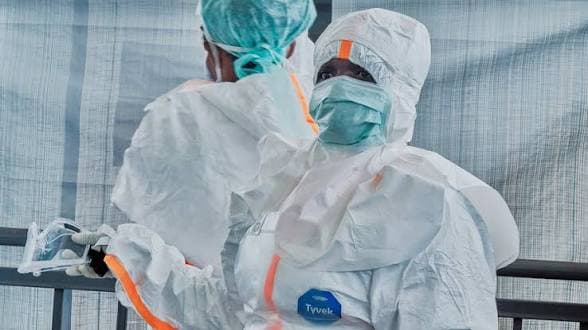
As the Ebola outbreak in Central Africa continues to expand, Italian and Brazilian authorities are rigorously investigating possible cases of the virus within their borders. The World Health Organization (WHO) has noted that the outbreak is likely more extensive than current figures suggest, having probably begun circulating before it was officially recognized.
In Brazil, health officials reported a suspected case in São Paulo, where a man who recently traveled to the Democratic Republic of the Congo (DRC) exhibited symptoms. Although he tested positive for meningitis, authorities cannot dismiss the possibility of Ebola. Another case was identified in Rio de Janeiro, with the patient testing positive for malaria, but similar caution applies as Ebola could not be ruled out.
In Italy, a situation unfolded in the capital of Sardinia, Cagliari, where a symptomatic patient who had recently returned from the Congo was admitted to the hospital. Protocols for handling suspected Ebola cases were promptly activated.
The Ebola outbreak in the DRC has recorded over 1,028 suspected cases and at least 225 confirmed cases of the Bundibugyo strain since it was declared a public health emergency earlier in May. The WHO urges communities in affected areas to practice safe burials and seek immediate medical care at the onset of symptoms, as early treatment can significantly improve survival rates.
Dr. Tedros Adhanom Ghebreyesus, WHO Director-General, has highlighted the urgency of increasing international support for the affected regions, as the local health infrastructure is severely strained.
Both Italian and Brazilian health agencies are maintaining vigilance as they evaluate these potential cases, understanding that the risk of broader infection must be closely monitored.
Published by Banx Network. This article is part of the Banx decentralized media programme, powered by the BXE token on the XRP Ledger.