The conflict surrounding the Persian Gulf is once again balancing between diplomacy and escalation.
What only days earlier appeared to be a fragile path toward de-escalation has now been shaken by another exchange of military action between Iran and the United States.
According to multiple reports, Iran launched missiles and drones toward Kuwait after U.S. forces conducted what American officials described as “defensive” strikes against Iranian-linked drone operations near the Strait of Hormuz. Kuwaiti authorities reportedly intercepted incoming projectiles, and no confirmed strike on a U.S. base has yet been publicly verified.
At the same time, President Donald Trump claimed Iran was “negotiating on fumes,” arguing that Tehran’s economic and military pressures were weakening its bargaining position.
What Happened U.S. Central Command officials said American forces intercepted several Iranian drones near the Strait of Hormuz and struck an Iranian ground control site in Bandar Abbas that was allegedly preparing another drone launch. U.S. officials framed the operation as a defensive action aimed at protecting regional forces and shipping routes.
Iran later claimed it carried out retaliatory action targeting an American base connected to operations in Kuwait. Kuwaiti authorities reported intercepting missiles and drones over their territory.
The incidents mark another serious challenge to the already fragile ceasefire environment that emerged earlier in the conflict.
Why Kuwait Matters Kuwait occupies a highly strategic position in Gulf security architecture because it hosts military infrastructure tied to U.S. regional operations.
Any strike involving Kuwaiti territory immediately raises wider concerns involving:
Gulf stability Oil shipping routes U.S. regional military posture Risks of broader regional escalation The Gulf region remains especially sensitive because the Strait of Hormuz serves as one of the world’s most important energy transit corridors.
Trump’s “Negotiating on Fumes” Remark During Cabinet remarks, Donald Trump argued Iran was under mounting pressure economically and militarily, saying Tehran was “negotiating on fumes.” He also suggested the U.S. would continue applying pressure unless negotiations produced what Washington considers an acceptable agreement.
Trump simultaneously projected optimism that a deal remained possible while also warning additional military action could occur if talks collapsed completely.
Why the Situation Remains So Dangerous One of the biggest risks in the current standoff is that repeated “limited” exchanges can gradually produce unintended escalation.
Modern regional conflicts increasingly involve:
Drones Missile interceptions Naval incidents Proxy groups Rapid retaliatory cycles Because these systems operate quickly and often under conditions of uncertainty, governments can face pressure to respond before complete information becomes available.
Even when leaders claim they seek deterrence rather than full war, repeated military exchanges can narrow diplomatic space over time.
Global Economic Concerns Markets continue closely monitoring the Strait of Hormuz because disruptions there could affect:
Global oil supplies Shipping insurance costs Energy prices International trade stability The latest tensions reportedly contributed to renewed market volatility as investors weighed the possibility of deeper regional conflict.
A Wider Reflection The current crisis reflects how modern geopolitics increasingly moves between negotiation and confrontation almost simultaneously.
One day officials speak about frameworks and diplomacy. The next day drones are intercepted and missiles cross borders.
That instability creates an atmosphere where no side appears fully at peace, yet none may want a wider war either.
And perhaps that is what makes the situation especially tense: the region now exists in a state where military exchanges continue occurring even while diplomacy technically remains alive — a fragile balance where every new strike risks pushing events beyond what any side originally intended.
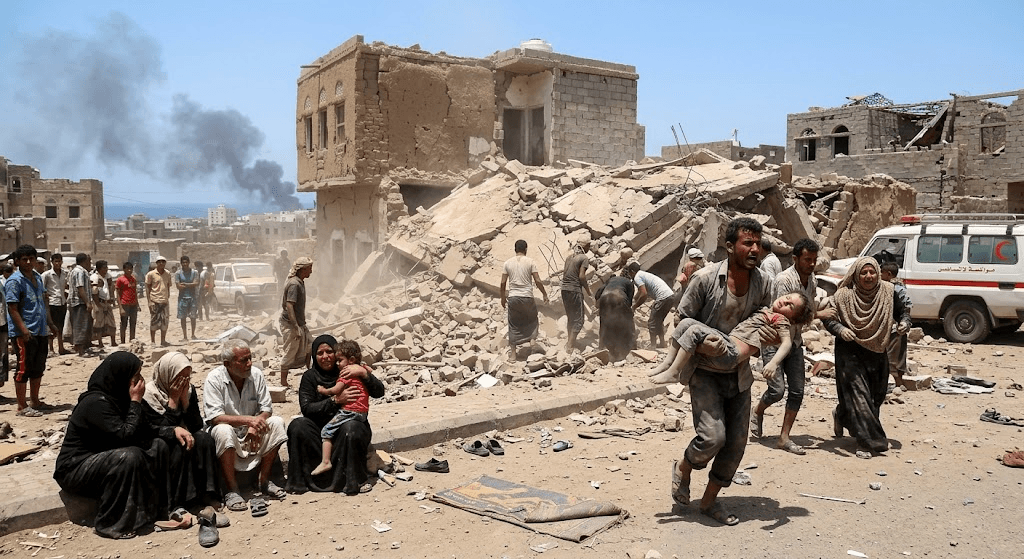
AI Image Disclaimer Images are AI-generated illustrations and are intended for visual representation only, not real-world documentation.
Source Check Fresh fighting between Iran and the United States intensified after reports that Iran launched missiles toward Kuwait following new U.S. strikes. President Donald Trump meanwhile said Iran was “negotiating on fumes” as fragile diplomatic efforts appeared increasingly unstable.
Published by Banx Network. This article is part of the Banx decentralized media programme, powered by the BXE token on the XRP Ledger.