
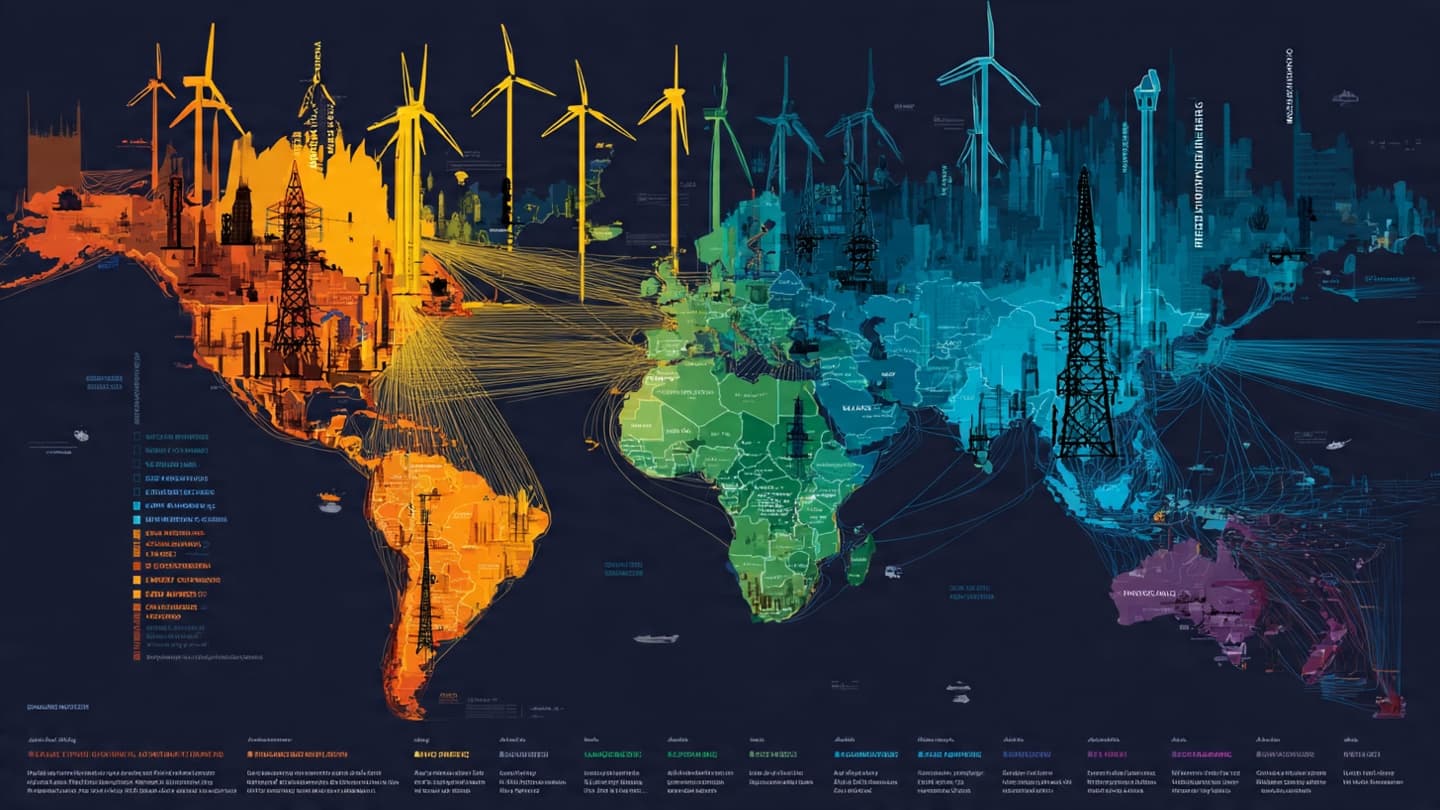
Global financial systems are entering a phase of careful recalibration as energy market volatility to influence long-term investment behavior and economic forecasting. This adjustment reflects structural rather than temporary change.
Energy prices remain one of the most influential variables in global markets, affecting everything from industrial production costs to consumer spending patterns. As volatility persists, financial institutions are adjusting risk models accordingly.
Investment flows are increasingly directed toward sectors associated with energy transition, including renewable infrastructure, battery technology, and grid modernization. These areas are seen as more stable over long-term horizons.
At the same time, traditional energy sectors continue to experience cyclical uncertainty, influencing valuation patterns and capital allocation decisions across global markets.
Emerging economies are particularly sensitive to these shifts, as energy import costs directly affect inflation and fiscal stability. This leads to ongoing adjustments in monetary policy frameworks.
Consumers indirectly experience these changes through pricing adjustments in transportation and goods, although the effects often accumulate gradually rather than abruptly.
International financial cooperation is expanding to manage transition risks, including shared investment frameworks and multilateral funding mechanisms aimed at stabilizing energy-related development.
In this environment, financial systems are no longer reacting only to short-term market signals—they are adapting to a prolonged era of structural energy transformation.
AI Image Disclaimer Illustrations were produced with AI and serve as conceptual depictions.
Source Check Bloomberg, Reuters, BBC News, The Guardian, Associated Press
Published by Banx Network. This article is part of the Banx decentralized media programme, powered by the BXE token on the XRP Ledger.


