Invisible though they may be, magnetic fields often serve as silent guardians of planetary environments. Earth’s magnetic field helps shield the atmosphere from energetic particles streaming from the Sun, contributing to conditions that support life. Now, astronomers have identified evidence suggesting that certain distant exoplanets possess magnetic fields of their own, adding an important piece to the growing puzzle of planetary diversity.
Exoplanets are planets located beyond the Solar System, orbiting stars throughout the galaxy. Since the first confirmed discoveries in the 1990s, astronomers have identified thousands of these worlds, revealing an astonishing range of sizes, compositions, and orbital characteristics.
Detecting magnetic fields around distant planets presents a significant challenge. Unlike planetary mass or orbital period, magnetic fields cannot usually be measured directly across interstellar distances. Scientists instead rely on indirect signatures generated by interactions between a planet and its surrounding environment.
Recent observations have provided evidence that some exoplanets produce magnetic effects detectable from Earth. Researchers identified signals that are consistent with interactions between planetary magnetic fields and charged particles originating from their host stars.
The findings are important because magnetic fields can influence atmospheric stability. A sufficiently strong magnetic field may help protect a planet's atmosphere from erosion caused by stellar winds, particularly for planets orbiting active stars.
Scientists emphasize that the mere presence of a magnetic field does not indicate habitability. Many planets with strong magnetic environments may still experience extreme temperatures, intense radiation, or atmospheric conditions unsuitable for life as currently understood.
Nevertheless, the discovery expands the range of characteristics that astronomers can investigate when studying distant worlds. As observational techniques improve, magnetic field measurements may become an increasingly valuable tool for understanding planetary evolution.
The research also offers opportunities to compare exoplanets with planets in our own Solar System. Such comparisons help scientists determine which planetary processes are common throughout the galaxy and which may be relatively unusual.
Evidence of magnetic fields around exoplanets represents another step forward in the study of distant worlds. By revealing previously hidden aspects of planetary environments, these observations bring astronomers closer to understanding the remarkable variety of planets that populate the universe.
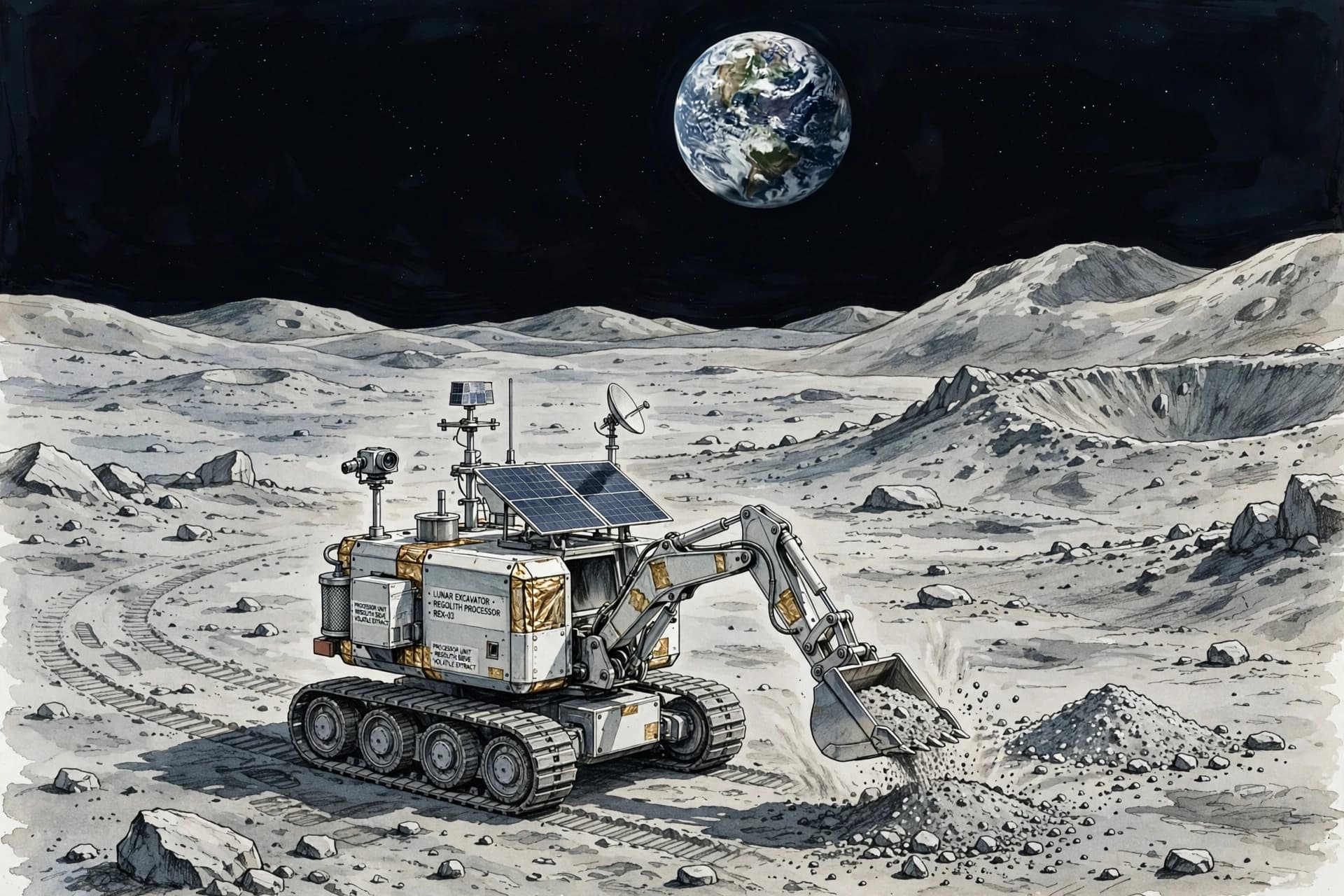
AI Image Disclaimer: Visual content associated with this article consists of AI-generated illustrations based on current astronomical research.
Sources Verified:
Nature Astronomy European Southern Observatory (ESO) NASA Exoplanet Science Institute Astronomy & Astrophysics Space.com
Published by Banx Network. This article is part of the Banx decentralized media programme, powered by the BXE token on the XRP Ledger.