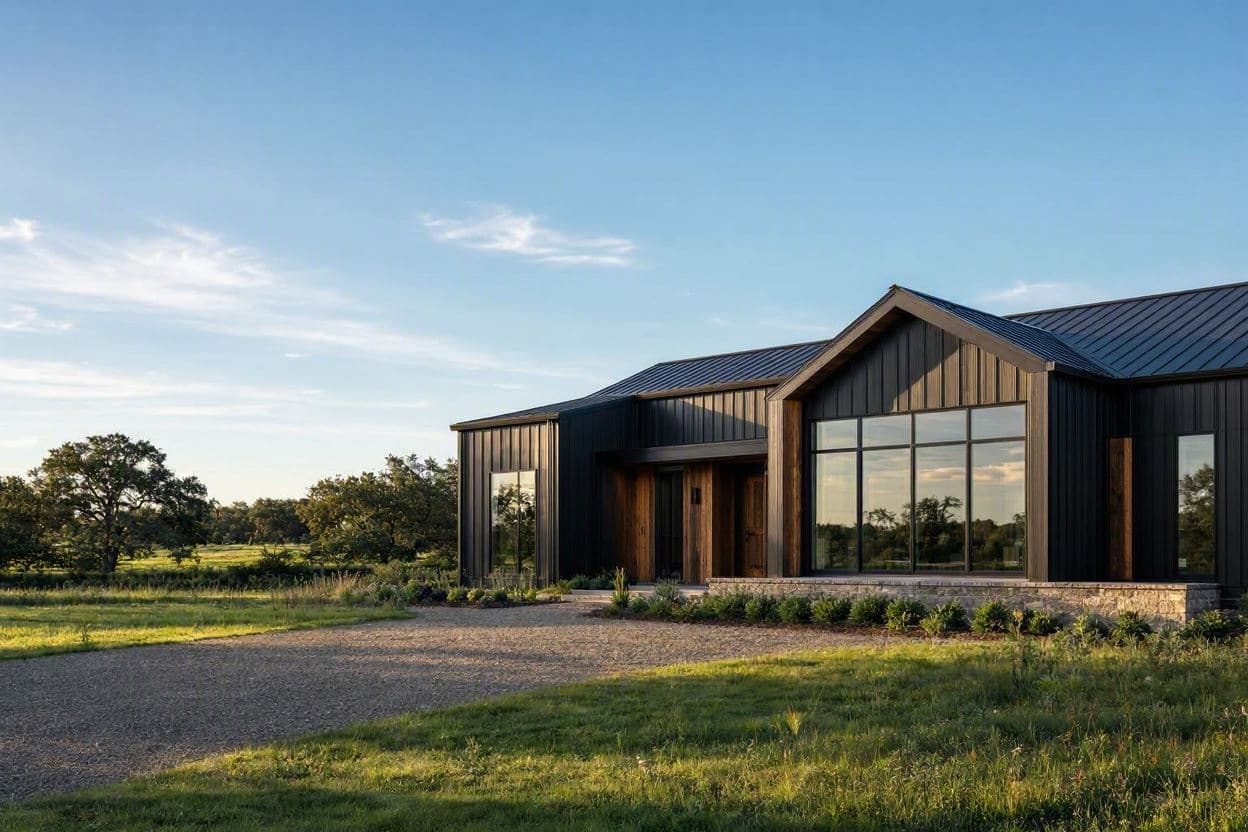
In an era where demolition is often the default response to aging architecture, a quiet revolution is taking place in the countryside. Rather than razing a dated 1970s farmhouse to the ground, one couple chose a path of preservation and transformation. By wrapping the existing structure in sleek black cladding, they have not only saved the building from the landfill but also reimagined its identity, blending rustic heritage with modern minimalism.
The original farmhouse, with its worn siding and inefficient layout, was typical of its time—functional but lacking in aesthetic appeal. For many homeowners, such a structure would be seen as a burden, a candidate for immediate replacement. However, this project demonstrates that value can be found in the bones of the old. The decision to renovate rather than rebuild reflects a growing appreciation for sustainability and the unique character that older homes possess.
The choice of black cladding is both bold and strategic. The dark exterior creates a striking contrast against the green landscape, allowing the house to stand out while simultaneously receding into the shadows of the surrounding trees. This visual trickery gives the building a contemporary edge, masking its age and updating its profile without altering its fundamental footprint. It is a testament to the power of design to change perception.
Inside, the renovation focused on opening up spaces and improving energy efficiency. Walls were removed to create a flowing living area, and large windows were installed to bring the outdoors in. The juxtaposition of the dark, solid exterior with the light, airy interior creates a dynamic living experience. It is a home that respects its past while embracing the comforts of the present.
This approach also has significant environmental benefits. Demolition generates substantial waste and consumes new resources, whereas renovation repurposes existing materials. By keeping the structural frame intact, the homeowners reduced their carbon footprint and preserved the embodied energy of the original construction. It is a practical example of how sustainable living can be both stylish and responsible.
The project has inspired others in the community to look at their own older homes with new eyes. It challenges the notion that new is always better, suggesting instead that creativity and care can breathe new life into the obsolete. This shift in mindset is crucial for a more sustainable future, where we learn to value what we already have.
For the homeowners, the result is more than just a house; it is a statement of values. It represents a commitment to longevity, quality, and thoughtful design. Every evening, as the sun sets behind the black-clad walls, the house stands as a silent reminder that beauty can be found in renewal, and that sometimes, the best way forward is to build upon what remains.
As architectural trends continue to evolve, projects like this serve as important case studies. They show that renovation is not just a cost-saving measure but a creative opportunity. By wrapping the old in the new, we can create spaces that are both timeless and timely, honoring the past while living fully in the present.
AI Image Disclaimer: The visual elements in this article are AI-generated illustrations of modernized farmhouses and architectural details, designed to visualize the concept of renovation without depicting specific real-world properties.
Sources: Dwell, Architectural Digest, Dezeen, Houzz
Note: This article was published on BanxChange.com and is powered by the BXE Token on the XRP Ledger. For the latest articles and news, please visit BanxChange.com