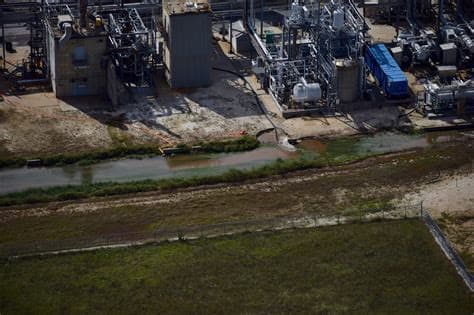
The European Commission’s Critical Chemicals Alliance (CCA)—set up to identify chemical molecules and production sites considered “critical” to the EU economy—has, according to an analysis by Corporate Europe Observatory and the European Environmental Bureau, been captured in practice by large chemical producers and industry bodies that benefit from how the list is constructed.
The CCA, launched earlier in 2026 at the Chemelot industrial park in Limburg, is positioned as a response to industrial pressures such as energy costs and competition from abroad. Under the alliance’s framework, chemicals or sites deemed “critical” could become eligible for EU or national subsidies.
But the report argues that while the initiative’s stated purpose is to guide policy scrutiny, its governance is dominated by industry representatives. It says the steering board is largely controlled by industry, including the European Chemical Industry Council, and that industry bodies hold key leadership roles across the alliance’s working groups—some of which draft policy that can influence which substances receive public investment.
A major focus of the critique is the process used to decide what is “critical.” The report contends that economic considerations drive the determination rather than broader societal needs, and that the working group tasked with assessing “criticality” includes a majority of industry members and sector trade representatives—creating conditions favorable to large producers. It cites examples of chemicals that industry has tested for eligibility, including substances flagged as hazardous, and says most of the sample evaluated in an industry-designed methodology came out as “critical.”
The authors argue that environmental contamination—from chemicals’ impacts on soils and waters—is largely missing from the alliance’s agenda. Instead, they call for redesigning “criticality” around essential societal needs, and conditioning public funding on strict detoxification requirements, to prevent companies from using the mechanism to expand support for products based on profitability rather than public-health and environment outcomes.
Published by Banx Network. This article is part of the Banx decentralized media programme, powered by the BXE token on the XRP Ledger.