Opening: The sun, our constant companion and primary source of life, occasionally reminds us of its volatile nature through bursts of energy that ripple across the solar system. These solar storms, while beautiful in their auroral displays, carry the potential to disrupt the delicate technological web we have woven around our planet. In response to this celestial unpredictability, scientists have proposed a solution that sounds almost like science fiction: deploying a giant "airbag" in space. This concept, though unconventional, reflects a growing desire to shield Earth from the harsh realities of space weather, using ingenuity to create a buffer against the sun’s most powerful outbursts.
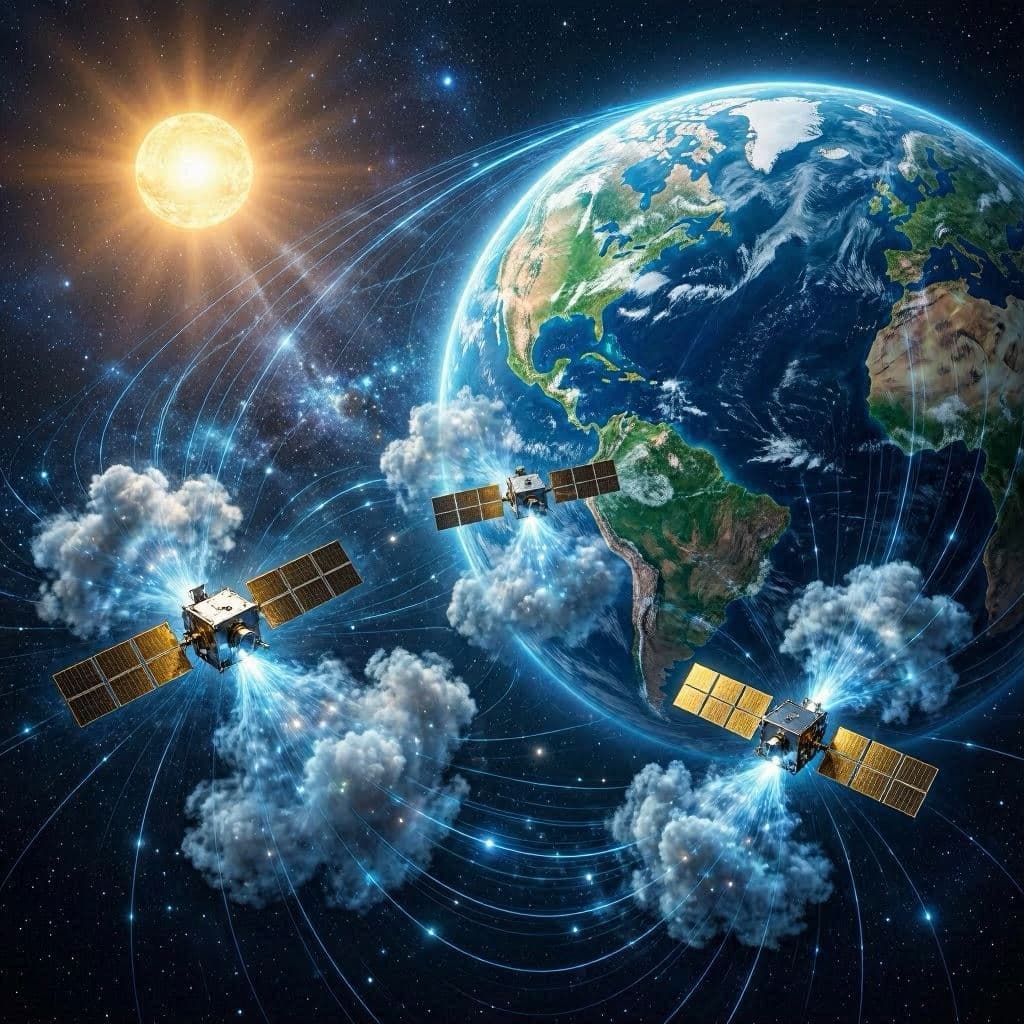
Body: The proposal, often referred to as "StormWall," involves a constellation of satellites positioned at the edge of Earth’s magnetic field. Rather than building a solid physical barrier, which would be prohibitively heavy and expensive, these satellites would release specific chemicals into the magnetosphere. These chemicals would act as a temporary shield, absorbing or deflecting the charged particles of a coronal mass ejection before they can reach our atmosphere. The term "airbag" is used metaphorically to describe this inflatable, responsive layer of protection that deploys only when needed.
This approach addresses a critical vulnerability in our modern infrastructure. A severe solar storm has the potential to damage power grids, disrupt satellite communications, and interfere with GPS systems. The economic impact of such an event could be catastrophic, estimated in the trillions of dollars. By creating a defensive mechanism that can be activated in anticipation of a storm, scientists hope to mitigate these risks without the need for permanent, massive structures in orbit. The system relies on precision timing and advanced modeling of solar activity to ensure the shield is in place when the storm arrives.
The feasibility of this plan rests on recent advancements in satellite technology and chemical engineering. The satellites themselves would be relatively small and cost-effective to launch, forming a network that can communicate and coordinate their actions. The chemicals used would be chosen for their ability to interact with plasma and magnetic fields, creating a diffuse but effective barrier. This method is considered more practical than attempting to generate a large-scale artificial magnetic field, which remains beyond our current technological capabilities.
However, the idea is not without its challenges. Releasing chemicals into the upper atmosphere and near-Earth space requires careful consideration of environmental impacts. Scientists must ensure that the substances used do not have unintended consequences for the ozone layer or other atmospheric processes. Rigorous testing and simulation are essential steps before any real-world deployment can be considered. The scientific community is engaged in ongoing debates about the safety and efficacy of such interventions.
Moreover, the success of StormWall depends on our ability to predict solar storms with sufficient advance notice. While solar monitoring has improved significantly, predicting the exact timing and intensity of a coronal mass ejection remains difficult. The system would need to be robust enough to handle uncertainties, perhaps by maintaining a state of readiness or by having multiple layers of defense. Collaboration between space agencies and meteorological organizations is crucial for refining these predictive models.
Despite the hurdles, the proposal represents a proactive shift in how we view planetary defense. Instead of merely observing space weather, we are beginning to consider ways to actively manage its impact. This mindset aligns with broader efforts to protect our technological society from natural hazards. It invites us to think creatively about our place in the cosmos, not just as passive observers but as active participants capable of shaping our environment.
Closing: The concept of a space-based airbag for solar storms is a testament to human ingenuity in the face of natural forces. While still in the theoretical and early developmental stages, it offers a promising avenue for protecting our increasingly connected world. As research continues, this bold idea may evolve into a practical solution, ensuring that the sun’s fury does not dim the light of our modern civilization.
AI Image Disclaimer: Please note that the visual illustrations accompanying this article are AI-generated representations intended to contextualize the scientific concepts discussed.
Sources: Science Magazine Live Science The Independent Singularity Hub
Published by Banx Network. This article is part of the Banx decentralized media programme, powered by the BXE token on the XRP Ledger.