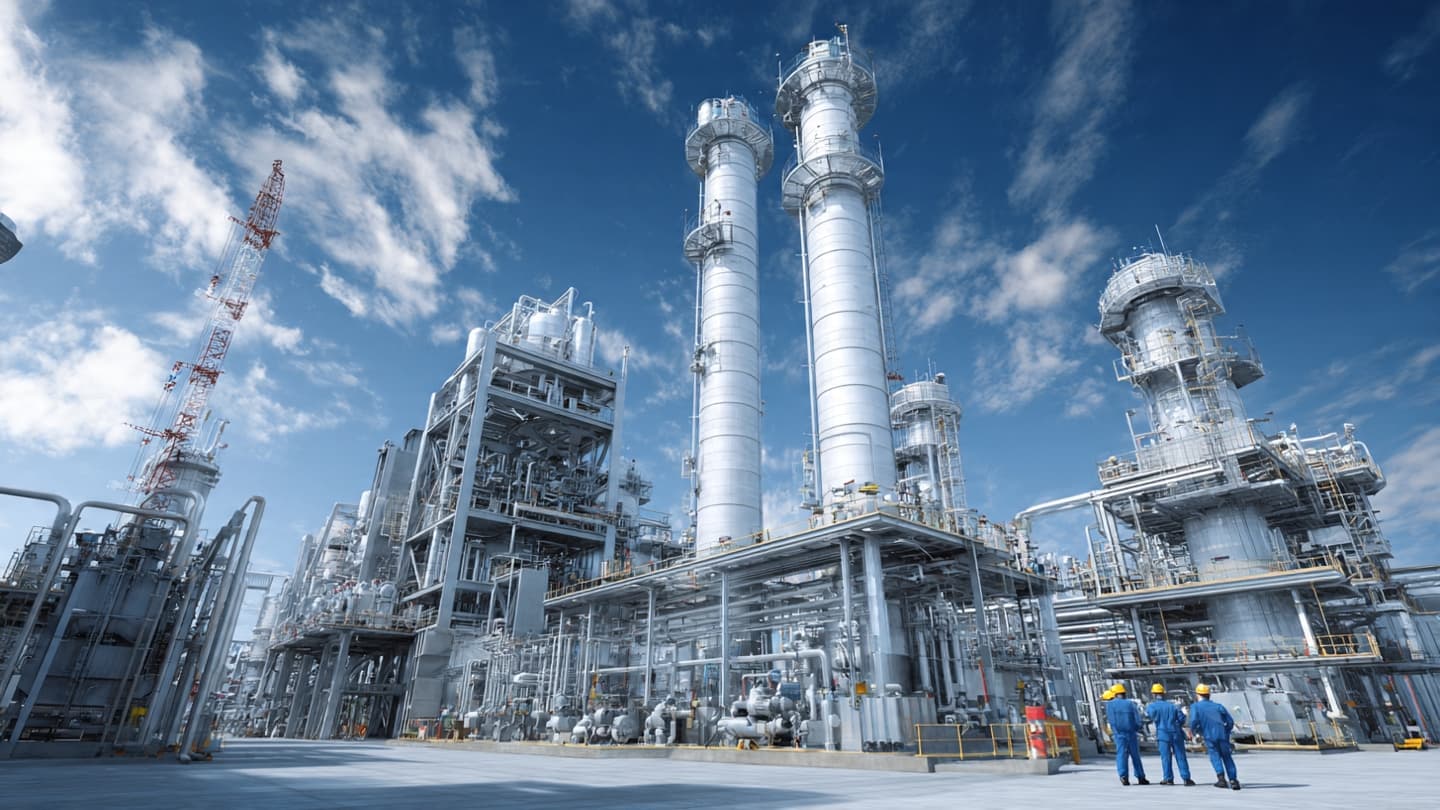
Some of the world's greatest technological advances emerge from patient refinement rather than dramatic breakthroughs. Progress often arrives through steady improvements that gradually reshape how societies address complex challenges. In that spirit, American researchers have announced advances in carbon capture technology that could improve the efficiency of removing carbon dioxide emissions from industrial processes.
The research focuses on developing materials and engineering techniques capable of capturing greater amounts of carbon dioxide while reducing energy consumption during the separation process. Scientists believe improved efficiency may lower operational costs for industries seeking to reduce greenhouse gas emissions.
Carbon capture technology works by collecting carbon dioxide before it enters the atmosphere or by removing it directly from the air. Once captured, the gas can be stored underground or used in certain industrial applications depending on available infrastructure.
Researchers explained that one of the major challenges has been balancing capture performance with economic feasibility. New materials under development appear capable of increasing absorption rates while requiring less energy during regeneration cycles.
Environmental scientists view carbon capture as one of several complementary tools available for addressing climate change. Most experts agree that emission reductions, renewable energy expansion, energy efficiency, and carbon removal technologies all contribute to broader climate strategies.
Industry leaders continue evaluating commercial applications of the latest research. Large-scale deployment will require additional testing, investment, regulatory approval, and supporting transportation and storage infrastructure before widespread adoption becomes practical.
Universities, government laboratories, and private companies have increasingly collaborated on advancing carbon capture technologies. Such partnerships allow scientific discoveries to move more efficiently from laboratory research toward industrial implementation.
Although additional research remains necessary, the latest development represents another step toward improving technologies that may support long-term climate objectives. Continued innovation will help determine how carbon capture contributes to future efforts aimed at reducing global greenhouse gas emissions.
AI Image Disclaimer: The illustrations included with this article are AI-generated visual representations of scientific concepts and are not photographs of the research.
Source Verification: Reuters, U.S. Department of Energy, MIT News, ScienceDaily, Nature
Published by Banx Network. This article is part of the Banx decentralized media programme, powered by the BXE token on the XRP Ledger.