For generations, humanity has looked toward the night sky with a question both scientific and deeply philosophical: are we alone in the universe? While no confirmed evidence of extraterrestrial life has yet been discovered, scientists continue searching for subtle clues hidden within distant planetary environments. This week, researchers announced the identification of chemical patterns that may one day help detect possible biological activity beyond Earth.
The research focuses on atmospheric chemical signatures that could indicate processes associated with living organisms. Scientists explained that certain combinations of gases may be difficult to sustain naturally without continuous biological or environmental activity. Detecting such imbalances on distant planets could therefore provide indirect evidence worth investigating further.
Modern astronomy increasingly relies on spectroscopy, a method allowing researchers to analyze light passing through planetary atmospheres. By examining how molecules absorb and emit light, scientists can estimate atmospheric composition even for planets located many light-years away from Earth.
Researchers involved in the study emphasized that chemical signals alone would not automatically confirm alien life. Many atmospheric processes can result from volcanic activity, radiation, or geological interactions rather than biology. The goal is therefore not to declare discovery prematurely, but to improve methods for identifying promising targets for future observation.
The James Webb Space Telescope and several upcoming observatories are expected to play major roles in this effort. These instruments can study exoplanet atmospheres with increasing sensitivity, allowing astronomers to search for gases such as methane, oxygen, carbon dioxide, and other compounds that may reveal unusual chemical activity.
Astrobiology has become one of the fastest-growing interdisciplinary fields in modern science, combining astronomy, chemistry, biology, and planetary science. Researchers study extreme environments on Earth — from deep oceans to frozen deserts — to better understand how life might survive under conditions different from those familiar to humans.
Public fascination with extraterrestrial life remains remarkably strong across cultures and generations. Scientific discoveries related to exoplanets and cosmic chemistry often capture global attention because they connect directly to larger questions about existence, evolution, and humanity’s place within the universe.
At the same time, scientists continue urging caution against sensational interpretations. The history of astronomy contains many moments where intriguing signals later received more ordinary explanations. Careful verification and repeated observation remain central to scientific credibility.
Still, the search itself carries meaning beyond any single result. Whether or not alien life is eventually discovered, humanity’s efforts to understand the universe continue expanding knowledge about Earth, biology, and cosmic evolution. Sometimes the act of searching reveals as much about ourselves as it does about the stars above us.
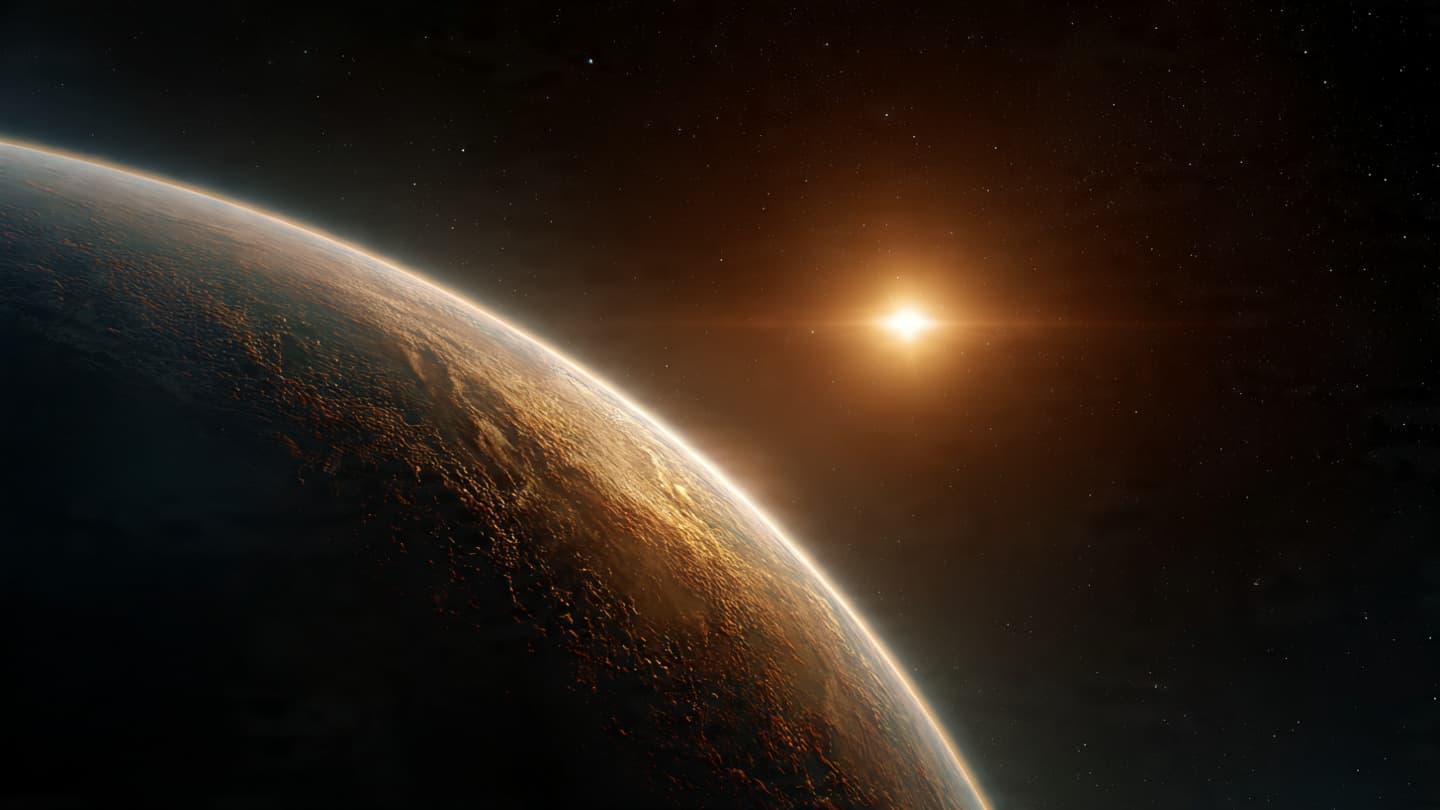
AI Image Disclaimer: Some accompanying space visuals are AI-generated artistic interpretations inspired by astrobiology research.
Sources ScienceDaily NASA European Space Agency Reuters
Published by Banx Network. This article is part of the Banx decentralized media programme, powered by the BXE token on the XRP Ledger.