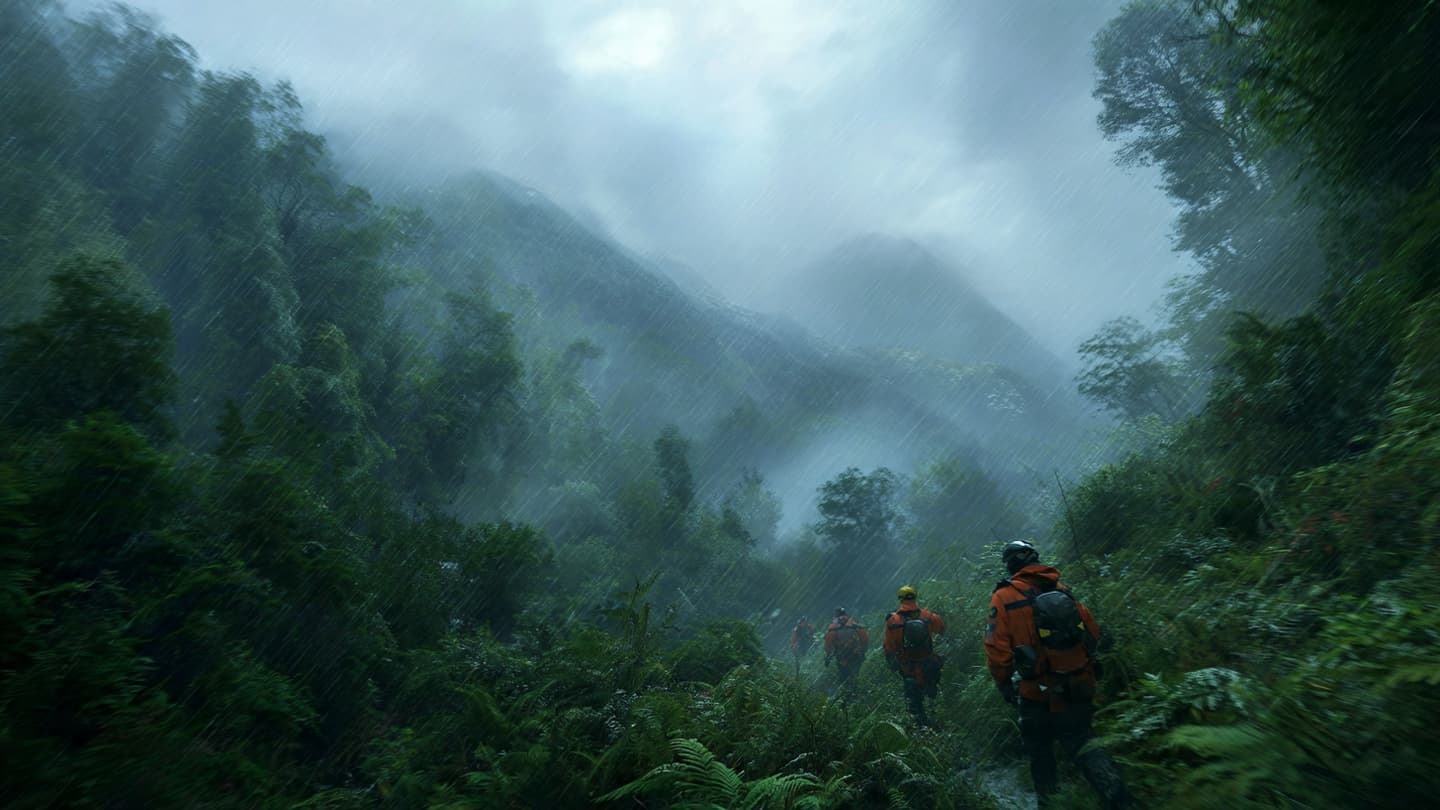
Rain arrived first as mist along the ridgelines, drifting softly through dense forest and over the dark folds of New Zealand’s backcountry. By dawn, the earth had changed color. Dry creek beds began to stir again, stones glistened beneath shallow currents, and the silence of the hills carried the steady rhythm of falling water. In landscapes where weather can redraw the shape of a search within hours, even rain becomes something more than weather. It becomes possibility.
For days, search teams, volunteers, helicopters, and rescue specialists have continued combing rugged terrain in the effort to locate Gus Lamont, the young tramper whose disappearance has unsettled communities far beyond the valleys where he was last seen. The terrain itself has become part of the story — steep bushland, shifting waterways, and isolated tracks that seem to disappear into cloud and fern.
Now, authorities say recent rainfall may create renewed opportunities in the search. Water moving through streams and gullies can alter visibility, uncover traces previously hidden beneath dry vegetation, and reshape access routes for rescue crews. Police have described the changing conditions carefully, not as certainty, but as a possible opening in an operation increasingly shaped by endurance and patience.
In New Zealand, tramping culture carries a quiet reverence. Across both islands, people move through mountains and forests not simply for recreation, but for solitude, reflection, and connection to landscapes that still feel largely untamed. Yet those same landscapes can shift quickly from welcoming to unforgiving. Weather arrives abruptly; temperatures fall without warning; rivers swell into barriers by nightfall.
The search for Lamont has unfolded against this familiar tension between beauty and vulnerability. Families wait near phones that rarely ring enough. Volunteers gather before sunrise in damp parking areas, checking maps and radios beneath gray skies. Rescue helicopters pass low over tree canopies while nearby towns continue their ordinary rhythms — children walking to school, cafés opening shutters, rainwater collecting along quiet streets.
Police and rescue teams have emphasized that difficult conditions remain. Heavy rain can help expose signs, but it also complicates movement through already treacherous ground. Search crews must navigate unstable slopes, thick bush, and waterways transformed by sudden runoff. Every adjustment in weather alters strategy: where drones can fly, which valleys can be crossed, how long teams can safely remain in remote sections of terrain.
Yet hope in such moments often survives through small things. A change in river flow. A newly accessible trail. A fresh perspective from the air. Search operations are rarely driven only by technology or logistics; they are sustained by the refusal to surrender possibility too quickly.
Across New Zealand, the case has quietly captured national attention because it reflects something deeply familiar to the country’s identity — the closeness between people and wilderness. In many regions, mountains and forests sit just beyond suburban roads, beautiful enough to invite exploration and powerful enough to remind people how small they are within them.
As rain continues to sweep through the search area, authorities say teams will reassess conditions and pursue any opportunities the changing environment may provide. The search remains active, shaped by difficult terrain and uncertain timelines. Still, in the sound of rainfall moving through valleys and across river stones, there remains a fragile thread that rescue efforts are unwilling to release.
Sometimes hope arrives loudly, carried by breaking news or sudden discovery. Sometimes it arrives more quietly, like rain returning to dry ground.
AI Image Disclaimer: Visual renderings were created with AI assistance and are intended as artistic representations of the events described.
Sources:
Reuters New Zealand Police Radio New Zealand (RNZ) Stuff The New Zealand Herald
Published by Banx Network. This article is part of the Banx decentralized media programme, powered by the BXE token on the XRP Ledger.