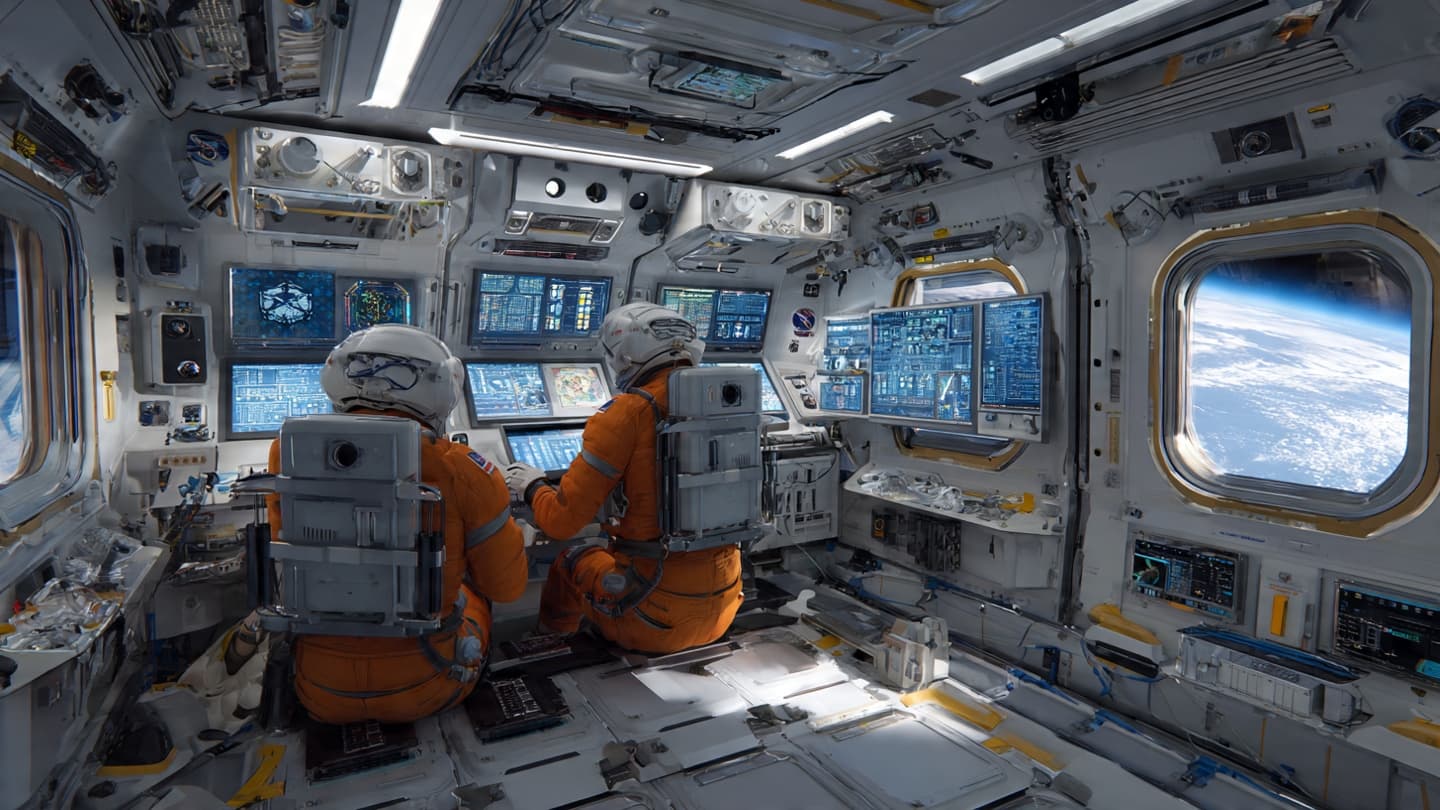
Far above Earth, aboard the International Space Station, science continues to unfold in an environment unlike any laboratory on the ground. In the quiet microgravity of orbit, researchers are exploring some of nature's most subtle behaviors, revealing phenomena that are often hidden by gravity's constant pull.
NASA scientists working with the Cold Atom Laboratory aboard the International Space Station have reported the creation and study of unusual quantum states of matter under microgravity conditions. The achievement marks another important step in understanding the fundamental laws that govern the universe.
The Cold Atom Laboratory, commonly known as CAL, was installed on the space station in 2018. The facility allows scientists to cool atoms to temperatures just above absolute zero, making them among the coldest known objects in the universe.
At such extremely low temperatures, atoms begin to behave collectively according to quantum mechanical principles. Researchers can then observe exotic forms of matter, including Bose-Einstein condensates, which provide valuable insights into quantum behavior.
Microgravity aboard the ISS offers a unique advantage for these experiments. On Earth, gravity limits the amount of time scientists can study ultra-cold atomic clouds. In orbit, however, atoms can remain suspended for longer periods, enabling more precise observations.
According to NASA researchers, the latest experiments have produced quantum matter configurations that are difficult or impossible to create in terrestrial laboratories. These observations could improve scientific understanding of quantum physics and contribute to future technological applications.
Scientists believe that advances in quantum research may eventually influence a wide range of fields, including navigation systems, precision sensors, communications, and fundamental physics. Although practical applications may still be years away, the research continues to expand scientific possibilities.
International collaboration remains a key element of the ISS program. Scientists from multiple institutions around the world contribute to experiments conducted aboard the orbiting laboratory, strengthening global cooperation in space science.
As the Cold Atom Laboratory continues operating in orbit, researchers hope future experiments will reveal even deeper insights into the quantum nature of matter and the underlying structure of the cosmos.
AI Image Disclaimer: The illustrations accompanying this article are AI-generated and intended to visually represent scientific concepts discussed in the report.
Sources (verification check): NASA, Science Daily, Nature, Physical Review Letters
Published by Banx Network. This article is part of the Banx decentralized media programme, powered by the BXE token on the XRP Ledger.