
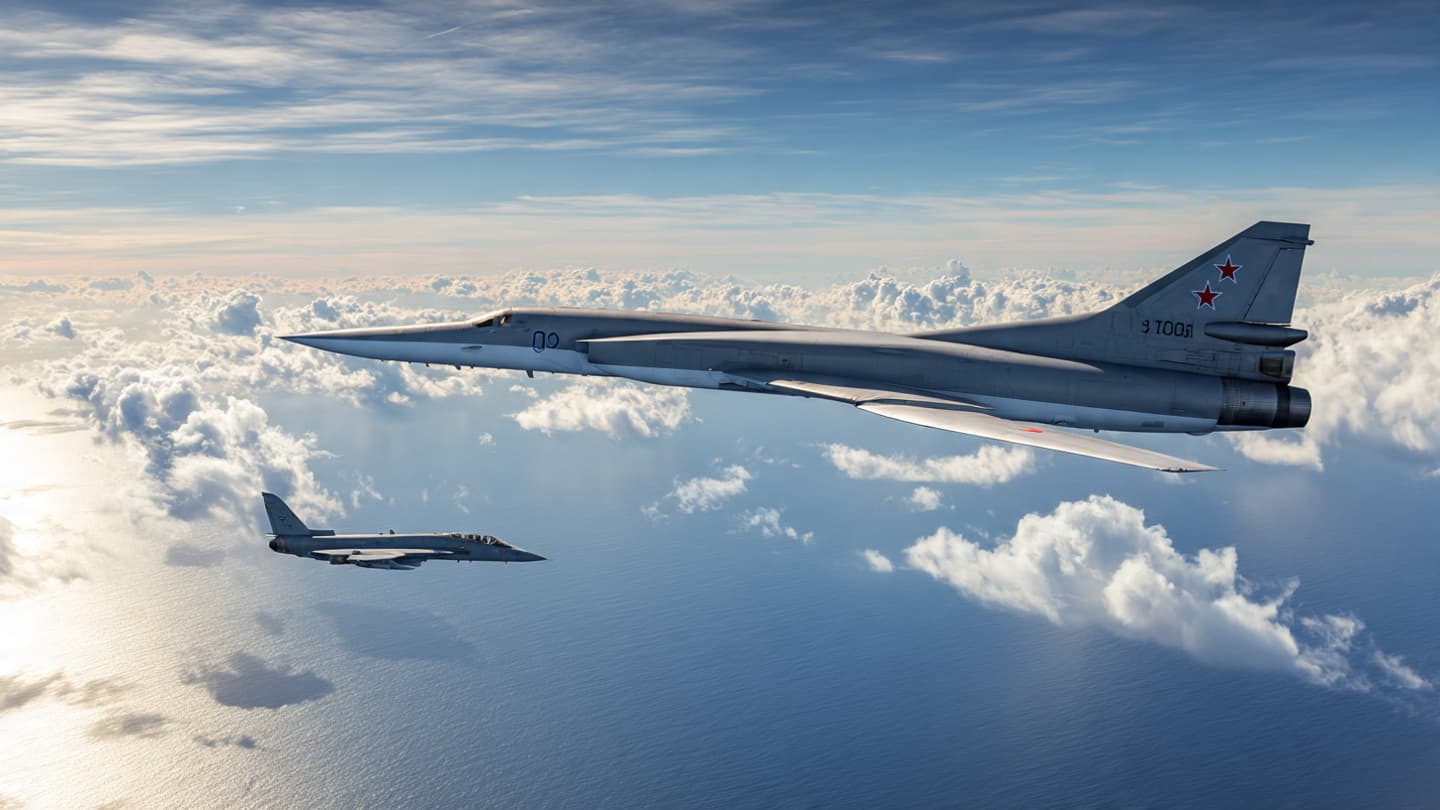
High above cold international waters, modern diplomacy sometimes unfolds not through speeches, but through seconds of calculated movement between aircraft traveling at extraordinary speed. In these narrow moments, distance is measured not only in meters, but in restraint, communication, and the fragile balance that separates deterrence from disaster.
That tension surfaced again after reports emerged that a Russian fighter jet intercepted a British reconnaissance aircraft at an extremely close distance, estimated at only six meters. The incident reportedly occurred near sensitive airspace where military patrol activity has increased amid ongoing geopolitical strain between Russia and NATO members.
According to defense sources cited in international reporting, the British aircraft was conducting surveillance operations in international airspace when Russian jets approached to escort and monitor its movement. Such encounters are not unusual in contested regions, though the reported proximity in this case raised concerns among aviation and security observers.
Military analysts noted that close interceptions carry significant risks even when both sides operate under established protocols. At high speeds, small miscalculations in maneuvering or communication can quickly escalate into accidents with potentially serious diplomatic consequences.
British officials reportedly described the maneuver as unsafe and unprofessional, while Russian authorities defended the interception as a necessary response to foreign military activity near areas considered strategically sensitive. Both governments stopped short of escalating rhetoric further, though the event added to already strained relations between Moscow and Western capitals.
The skies surrounding Eastern Europe and nearby maritime regions have become increasingly crowded in recent years with surveillance missions, military patrols, and strategic exercises. NATO countries continue monitoring Russian military activity closely, while Moscow maintains that expanded Western operations near its borders represent security concerns requiring active response.
Beyond the immediate incident, the encounter reflects broader anxieties surrounding military communication in an era of heightened geopolitical competition. Even during periods without open conflict, rival powers regularly test each other’s boundaries through reconnaissance flights, naval patrols, and electronic surveillance activities.
For civilian observers, reports of aircraft passing within only a few meters may sound almost unimaginable. Yet within military aviation, such incidents have occurred periodically throughout modern history, often serving as reminders of how quickly international tensions can become dangerously physical.
Authorities from both sides continue reviewing the encounter while defense analysts urge caution and clearer operational communication to reduce future risks. In an increasingly tense security environment, moments measured in seconds may carry consequences lasting far longer.
Illustrative images used in this article were digitally generated with AI support for visual storytelling purposes.
Sources Verified: Reuters, BBC, Associated Press, NATO reporting, SINDOnews
Note: This article was published on BanxChange.com and is powered by the BXE Token on the XRP Ledger. For the latest articles and news, please visit BanxChange.com