
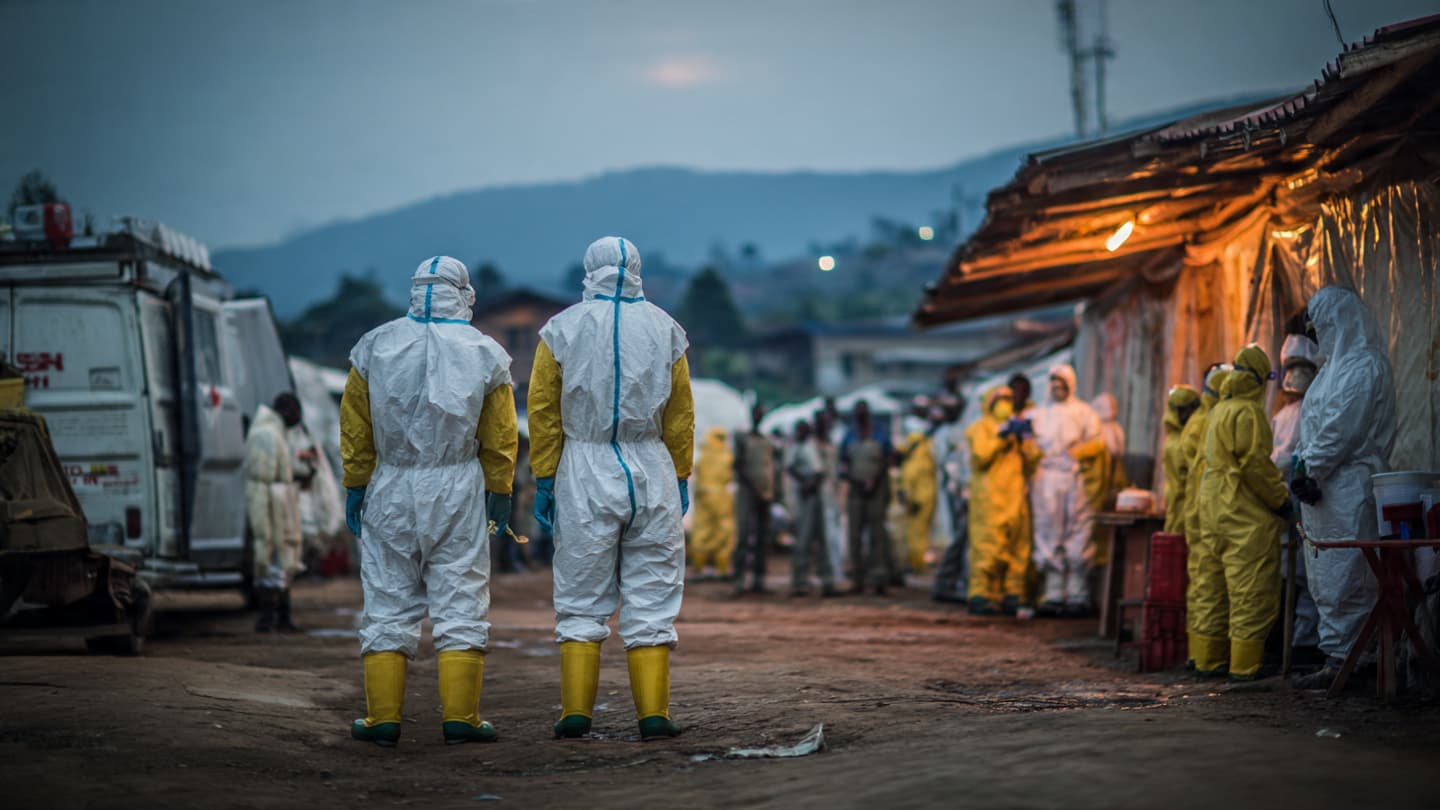
In moments of public health crisis, grief often moves alongside fear, shaping reactions in ways that statistics alone cannot fully explain. Hospitals become places not only of treatment, but also of emotional tension, where personal loss intersects with strict medical protocols. In eastern Congo, those tensions surfaced dramatically after protesters reportedly entered an Ebola treatment facility seeking to retrieve the body of a deceased patient.
According to reports from Reuters and regional officials, demonstrators stormed an Ebola hospital in the Democratic Republic of Congo amid disagreements surrounding burial procedures linked to an Ebola victim. The incident unfolded in a region where previous outbreaks have already strained trust between local communities and health authorities.
Ebola response teams typically follow strict guidelines for handling the bodies of victims because the virus can continue spreading through direct contact after death. Medical workers therefore rely on controlled burial procedures designed to reduce infection risks. Yet these precautions can conflict deeply with local customs surrounding mourning and funeral rites.
Health experts have repeatedly noted that successful Ebola containment depends not only on medicine and surveillance, but also on public cooperation. In communities affected by violence and instability, mistrust toward authorities or outside organizations can complicate emergency response efforts. Rumors and fear may spread quickly during emotionally charged situations involving death and disease.
Eastern Democratic Republic of Congo has experienced repeated Ebola outbreaks over recent years, often in areas affected by armed conflict and humanitarian displacement. Medical teams working in such environments face difficult logistical conditions while also trying to maintain communication and trust with local populations.
International organizations, including the World Health Organization, have emphasized the importance of community engagement in outbreak response planning. Health campaigns increasingly involve local religious leaders, elders, and civil society groups to encourage cooperation and improve understanding of protective measures.
The storming of the hospital also renewed broader concerns regarding the safety of healthcare workers operating in conflict-affected areas. Attacks or disruptions targeting medical facilities can weaken emergency responses and place both patients and staff at additional risk during infectious disease outbreaks.
Authorities continued monitoring the situation following the incident while health teams sought to maintain Ebola surveillance and containment operations in the affected area.
Disclaimer: Certain images used alongside this article were created using AI-generated visuals for editorial presentation.
Sources: Reuters, World Health Organization, Associated Press, BBC, Al Jazeera
Note: This article was published on BanxChange.com and is powered by the BXE Token on the XRP Ledger. For the latest articles and news, please visit BanxChange.com