
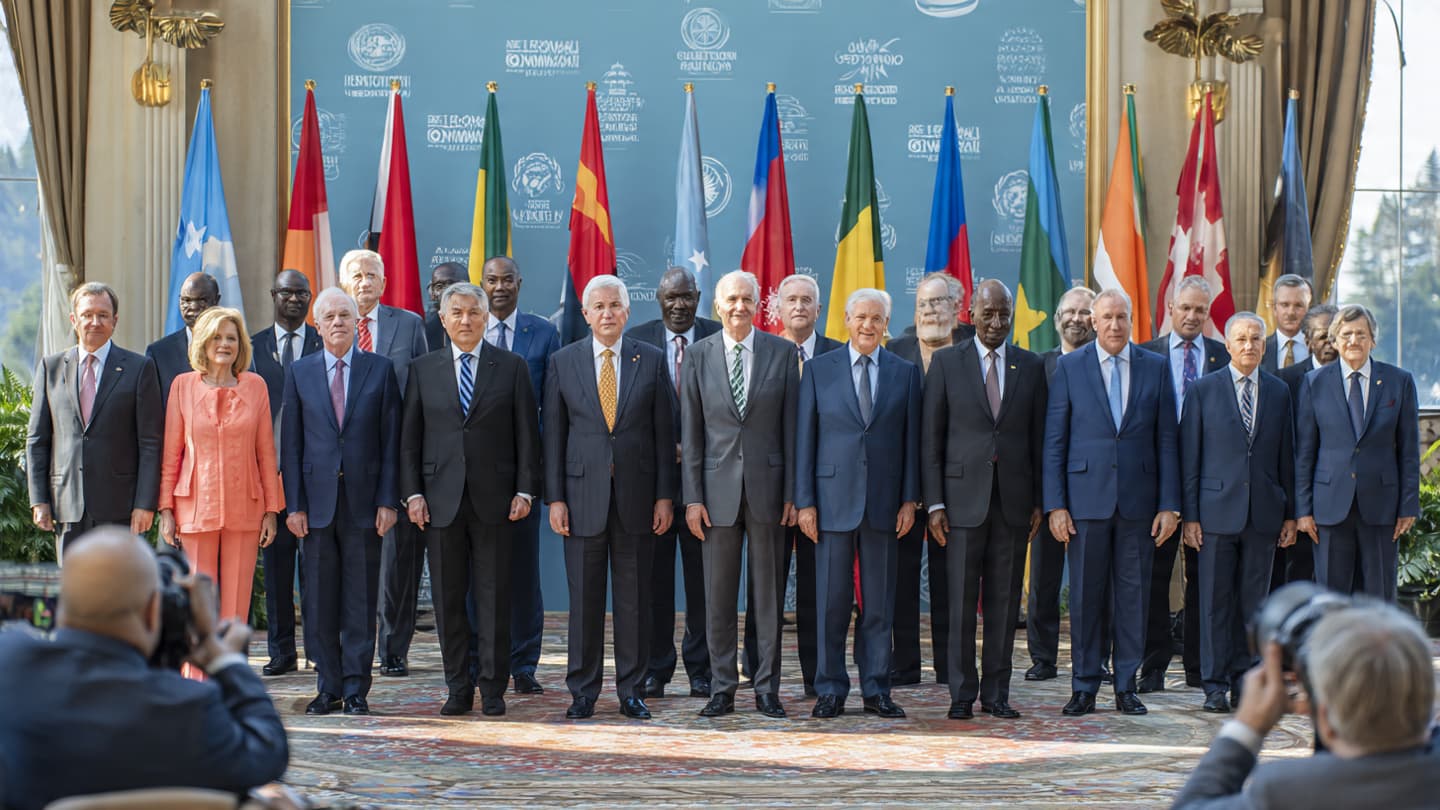
Throughout history, nations have often discovered that influence is rarely exercised alone. Partnerships, treaties, and alliances have long served as tools through which countries pursue shared interests and address common concerns. Today, that reality is once again shaping discussions about international strategy.
Recent policy debates have highlighted the importance of alliances in a world increasingly defined by geopolitical competition. For the United States, relationships with partners across Europe, Asia, and other regions continue playing a central role in diplomatic and security planning.
The renewed focus comes amid a period of significant global change. Economic transformations, technological competition, and regional conflicts have encouraged governments to reconsider how international cooperation contributes to long-term stability. Alliances provide mechanisms through which countries can coordinate responses to complex challenges.
Supporters argue that strong partnerships enhance resilience. By working together, nations can share information, coordinate policies, and combine resources when confronting common threats. Cooperation can also strengthen economic ties and create opportunities for innovation.
Critics occasionally question whether traditional alliance structures remain suited to modern realities. The international environment has evolved considerably over recent decades, introducing new forms of competition and security concerns that extend beyond conventional military considerations.
Despite these debates, many policymakers continue viewing alliances as valuable strategic assets. Relationships developed over years or even decades often provide foundations for trust and communication during periods of uncertainty. Such connections can prove particularly important when rapid coordination is required.
Economic considerations also influence alliance discussions. Trade, investment, technology partnerships, and supply chain cooperation increasingly intersect with broader strategic objectives. Governments therefore examine alliances not only through security lenses but also through economic perspectives.
Analysts note that alliances are not static arrangements. They evolve in response to changing circumstances, adapting to new priorities and emerging challenges. The most durable partnerships are often those capable of adjusting without losing their underlying purpose.
The current emphasis on cooperation reflects a broader understanding of international affairs. Many contemporary challenges—ranging from cybersecurity to economic stability—cannot be addressed effectively by any single nation acting alone. Collaborative approaches therefore remain attractive despite occasional disagreements.
As the global landscape continues changing, alliances are likely to remain a central feature of international strategy. Their exact form may evolve, but the underlying principle endures: in an interconnected world, cooperation often becomes one of the most important sources of strength.
AI Image Disclaimer
Images in this article are AI-generated illustrations, meant for conceptual purposes only.
Sources
Carnegie Endowment for International Peace, Reuters, Brookings Institution, Foreign Policy, Financial Times
Note: This article was published on BanxChange.com and is powered by the BXE Token on the XRP Ledger. For the latest articles and news, please visit BanxChange.com