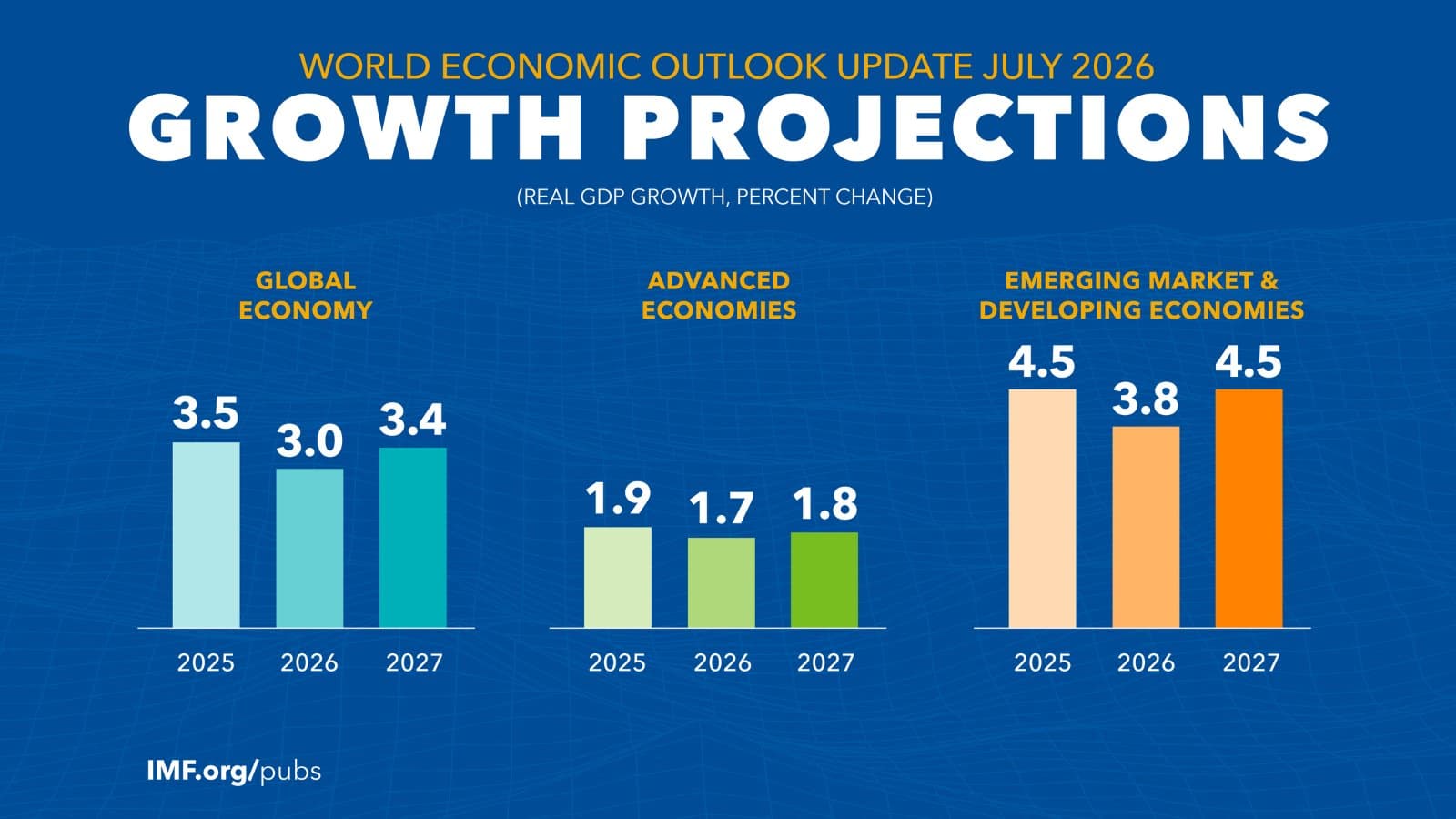
The International Monetary Fund has projected that global inflation will increase from 4.1% in 2025 to 4.7% during 2026 before easing to approximately 3.9% in 2027. The updated outlook reflects ongoing price pressures across several major economies despite aggressive monetary tightening by central banks over recent years. According to the IMF's projection, inflation remains elevated because of persistent wage growth, resilient consumer demand, geopolitical tensions affecting commodity markets and continued supply-chain adjustments. While inflation has declined significantly from post-pandemic highs, the organization believes achieving long-term price stability will take longer than previously expected. For central banks, the forecast suggests policymakers may need to keep interest rates higher for longer or delay expected rate cuts. Financial markets closely monitor IMF projections because they influence expectations for government bond yields, currencies, equity markets and investment decisions worldwide. The inflation outlook also carries implications for consumers. Higher prices can reduce purchasing power, increase borrowing costs and pressure household budgets. Businesses may continue facing higher operating expenses, potentially passing additional costs to customers. Investors are expected to watch future economic data closely to determine whether inflation follows the IMF's projected path or moderates more quickly. Digital assets, commodities and precious metals could also experience increased volatility as markets respond to changing inflation expectations.
Published by Banx Network. This article is part of the Banx decentralized media programme, powered by the BXE token on the XRP Ledger.