
Key Highlights
- IAEA Director-General Rafael Grossi asserts Iran must permit inspections.
- The U.S.-Iran memorandum outlines nuclear oversight responsibilities.
- Disputes arise over the interpretation of access to nuclear facilities.
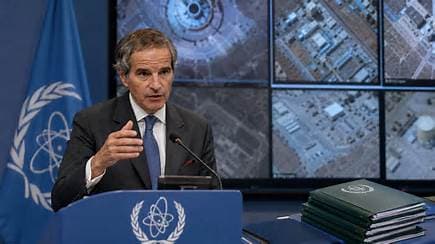
IAEA Director-General Rafael Grossi has emphasized that Iran is obligated to allow inspectors from the International Atomic Energy Agency (IAEA) to conduct verification activities as stipulated in a recently established memorandum of understanding between the United States and Iran. Speaking during a visit to Japan, Grossi clarified that the agreement mandates oversight of relevant nuclear activities involving nuclear materials and facilities, reinforcing the IAEA's role in ensuring compliance.
Grossi stated, "This means the agency will have to inspect," highlighting the necessity of practical arrangements for these inspections, including determining the timing, procedures, and specific locations. While he acknowledged that the precise start date for inspections is significant, he assured that the requirement for inspections will be met, regardless of the timeline.
The remarks from Grossi come in the wake of contrasting public statements from Iran and the United States regarding the memorandum's implications. Iran's deputy foreign minister has indicated that access to damaged nuclear facilities and nuclear materials will only be addressed within a comprehensive framework agreement with Washington, contingent upon the lifting of sanctions. This divergence in interpretation raises questions about the future of nuclear oversight and compliance.
The interim understanding outlined in the memorandum includes specific measures related to Iran's stockpile of enriched uranium. Among these measures is a plan for the dilution, or "downblending," of enriched uranium under the supervision of the IAEA. This step is part of ongoing negotiations aimed at resolving outstanding issues between the two nations.
The IAEA's involvement is critical in maintaining transparency and accountability in Iran's nuclear program, especially as tensions between the U.S. and Iran continue to fluctuate. The agency's ability to conduct inspections is essential for verifying compliance with international agreements and ensuring that nuclear materials are not diverted for non-peaceful purposes.
As the situation develops, the international community will be closely monitoring the implementation of the memorandum and the IAEA's role in facilitating inspections. The outcome of these negotiations could have significant implications for regional stability and global nuclear non-proliferation efforts.
Published by Banx Network. This article is part of the Banx decentralized media programme, powered by the BXE token on the XRP Ledger.



