
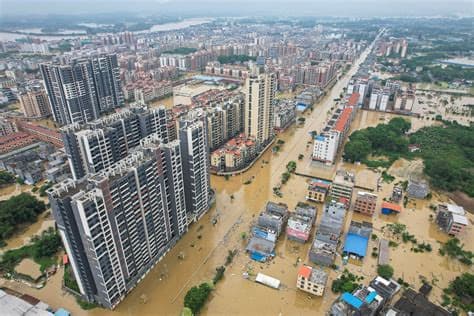
Typhoon Maysak battered China’s southern Guangxi region with heavy rain, driving severe flooding and causing authorities to escalate emergency response measures, including raising flood control alerts in Nanning, Guangxi’s capital, to the highest level as the storm weakened into a tropical storm.
State media showed floodwaters surging through a breach in a dam at Liulan reservoir, described as a “medium-sized” reservoir, with muddy torrents flowing toward nearby buildings. A dam at the Yunbiao reservoir also burst, and the Liuwang reservoir overflowed, according to Nanning authorities.
In Fangchenggang, state media reported that more than 800 residents were evacuated due to the flooding. Heavy rainfall pushed water levels above warning thresholds across multiple rivers and monitoring stations in Guangxi. One area, Luwei Town in Nanning, recorded 637mm of rain over a 24-hour period between July 5 and the morning of July 6, according to CCTV.
China’s Ministry of Emergency Management increased the flood response level for the region as the central government coordinated assistance. Officials reported sending hundreds of rescue personnel and boats, alongside disaster relief supplies such as tents and camp beds, to support local responders. The ministry also dispatched drones to help with emergency communications, while financial support for relief and recovery efforts was allocated to affected areas, including Guangxi.
Authorities warned that, despite Maysak weakening, it was still expected to bring more rain to Guangxi and other parts of southern China over the following days.
Note: This article was published on BanxChange.com and is powered by the BXE Token on the XRP Ledger. For the latest articles and news, please visit BanxChange.com