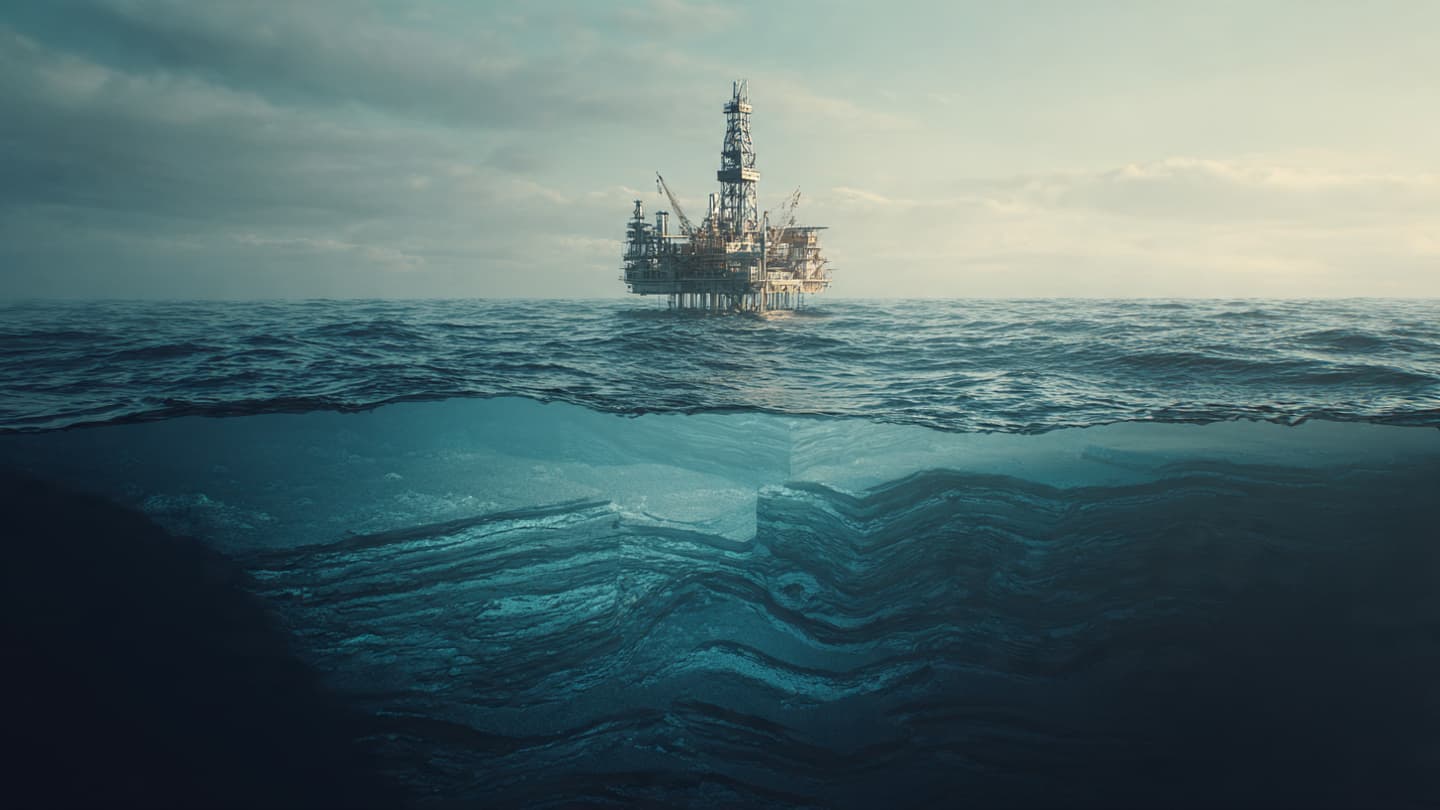
The ocean floor has long been imagined as a distant frontier, silent beneath layers of darkness and pressure. Yet beneath the Atlantic seabed, scientists recently uncovered something unexpectedly familiar: vast reserves of freshwater hidden deep below layers of sediment and rock. The discovery has drawn attention not only for its geological significance, but also for what it reveals about Earth’s ancient environmental history.
Researchers drilling approximately 1,300 feet beneath the reportedly identified a large freshwater reservoir trapped beneath the seafloor. Scientists believe the water may date back thousands or even millions of years, preserved underground through shifting geological processes and ancient climate conditions.
The findings support growing evidence that substantial quantities of freshwater can exist beneath ocean basins around the world. Unlike seawater, these reservoirs contain much lower salt concentrations, suggesting they may have originated during periods when sea levels were lower and large coastal regions remained exposed land.
Geologists explain that during past ice ages, massive amounts of water became locked within glaciers, causing global sea levels to fall significantly. Rainwater could then seep into coastal sediments and underground rock formations before later becoming trapped as rising seas covered the regions once again.
Advanced drilling programs and seismic imaging technologies allowed researchers to study the hidden reservoir in greater detail. Such methods help scientists analyze underground fluid systems, sediment layers, and the movement of water beneath the seafloor without relying solely on surface observations.
The discovery also carries potential implications for environmental science and resource management. While underwater freshwater reservoirs are not currently viewed as simple solutions to global water scarcity, researchers believe understanding these systems may improve knowledge about groundwater movement, offshore geology, and climate history.
Scientists caution that extracting deep subsea freshwater would involve enormous technical, economic, and environmental challenges. For now, the primary importance of the discovery lies in scientific understanding rather than immediate commercial use. Researchers are especially interested in how such reservoirs interact with marine ecosystems and geological structures over long periods.
As studies continue, the hidden freshwater beneath the Atlantic serves as another reminder that Earth still contains major unseen systems beneath its surface. Even in an age of satellites and advanced exploration, the planet continues quietly holding discoveries in places humanity has only recently learned how to reach.
AI Image Disclaimer: Some geological visuals associated with this article were generated using AI-assisted imagery for scientific illustration.
Sources: Nature, Reuters, Scientific American
Published by Banx Network. This article is part of the Banx decentralized media programme, powered by the BXE token on the XRP Ledger.