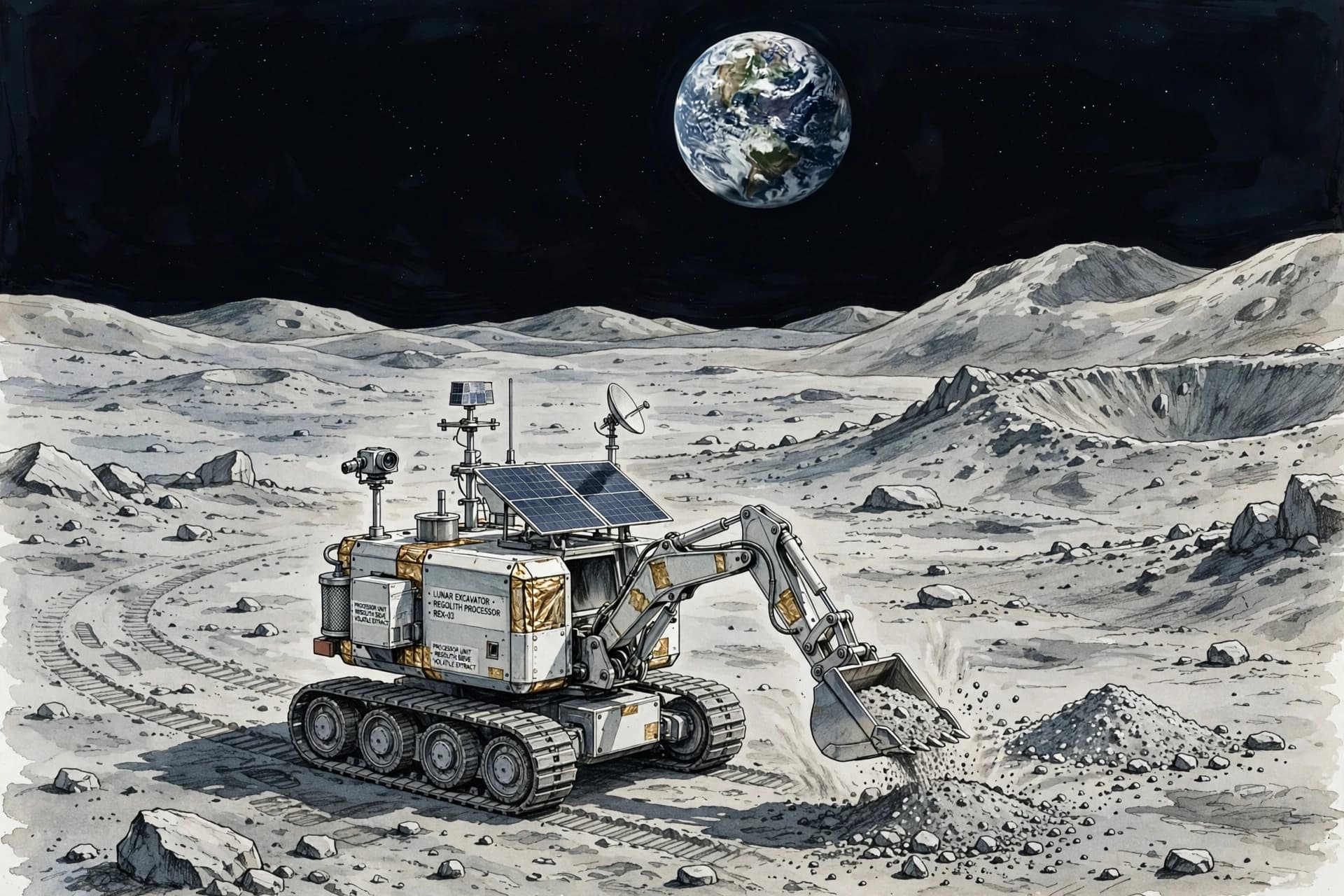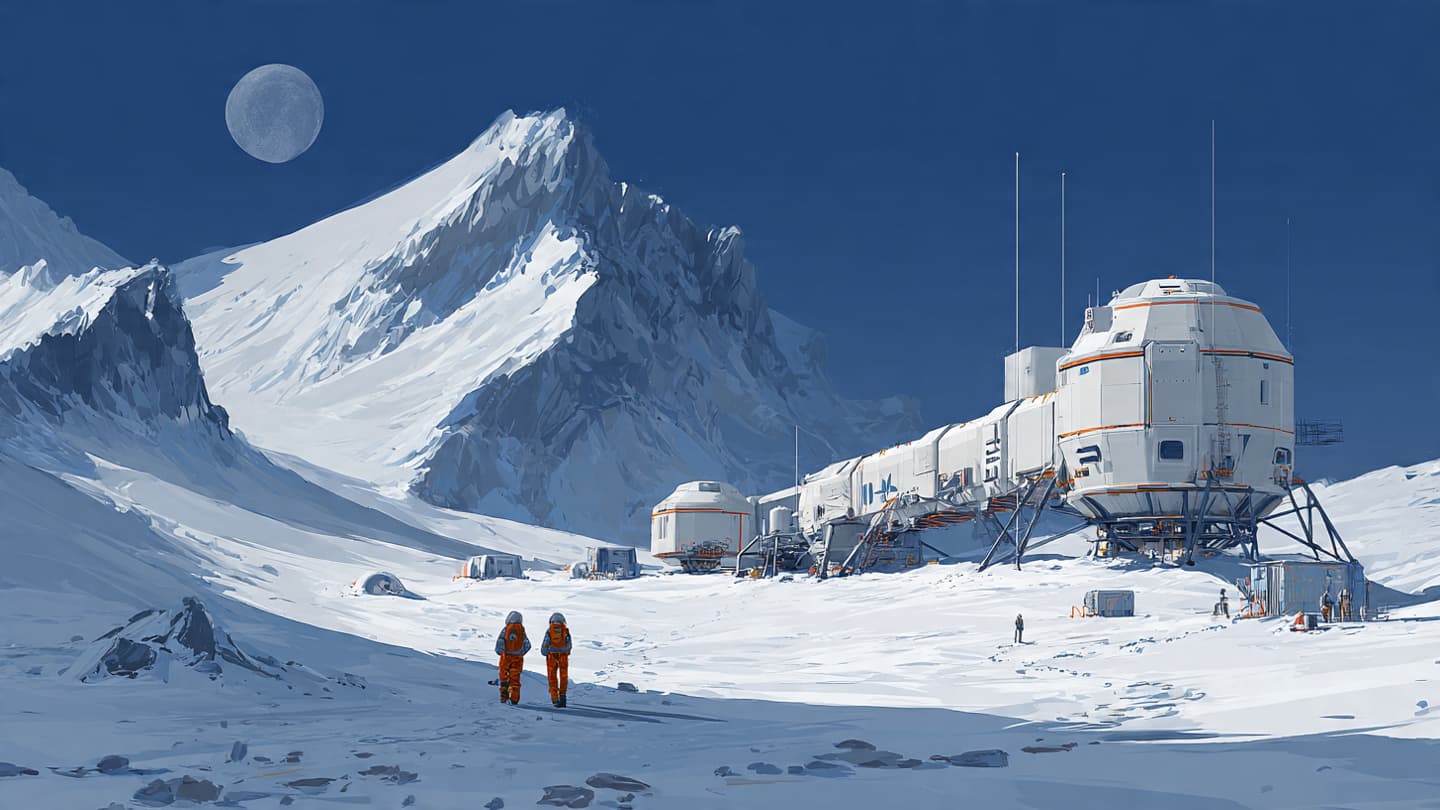
For centuries, the Moon existed mainly as an object of observation — distant, silent, and unreachable to all but imagination. Today, however, scientists and engineers are discussing it in increasingly practical terms. NASA’s evolving plans for a permanent human presence on the Moon suggest that lunar exploration may soon move beyond short visits toward something far more enduring.
According to reports surrounding the Artemis program, NASA is preparing long-term strategies focused on establishing infrastructure near the Moon’s south pole. The region has attracted significant scientific interest because researchers believe it contains water ice deposits trapped within permanently shadowed craters.
Water is considered one of the most important resources for future lunar missions. Beyond supporting astronauts directly, it may eventually be converted into oxygen for breathing and hydrogen-based fuel for spacecraft. Scientists say these possibilities could make the Moon a critical stepping stone for deeper missions into Mars and beyond.
Unlike the Apollo era, modern lunar exploration increasingly depends on international cooperation and commercial partnerships. Multiple space agencies, research institutions, and private aerospace companies are contributing technology, engineering systems, and scientific expertise to support future missions.
NASA officials describe the proposed lunar base not as a traditional colony, but as a research-focused outpost designed to support science and exploration. Astronauts would likely rotate through missions lasting weeks or months while testing life-support systems, robotics, and sustainable habitation technologies under extreme conditions.
Building such a presence, however, presents enormous technical challenges. Lunar temperatures fluctuate dramatically, radiation exposure remains dangerous, and transporting materials from Earth remains expensive and complex. Engineers continue developing systems capable of operating reliably in the harsh lunar environment.
The project also carries symbolic importance. Many scientists view a sustained human presence on the Moon as evidence that space exploration is evolving from brief national achievements into long-term international scientific cooperation. In this sense, the Moon is increasingly being treated less as a destination and more as part of humanity’s expanding research frontier.
Public fascination with lunar exploration has grown steadily alongside recent advances in private spaceflight and robotics. Younger generations who never experienced the original Moon landings are now witnessing a renewed era of exploration that feels connected to both science fiction and practical technological progress.
As planning continues, NASA’s vision of a permanent lunar base remains ambitious but increasingly tangible. While significant obstacles still exist, the effort reflects humanity’s enduring desire to move carefully beyond familiar horizons and establish a longer presence in space.
AI Image Disclaimer: Certain illustrations included with this article may be AI-generated to support scientific storytelling and visual presentation.
Sources: NASA, Space.com, Nature, The New York Times
Published by Banx Network. This article is part of the Banx decentralized media programme, powered by the BXE token on the XRP Ledger.