Space exploration has long been associated with rockets, satellites, and distant planets. Yet as humanity spends more time beyond Earth, scientific questions increasingly turn inward toward the fragile biology of human life itself. China’s latest research mission, involving lab-grown human cells sent into orbit to study reproduction, reflects a growing effort to understand how life may function in environments far from Earth’s gravity.
According to reports surrounding the mission, researchers launched laboratory-grown human embryonic cells into space as part of experiments examining how microgravity affects early biological development. Scientists hope the research will provide insights into cell behavior, reproduction, and developmental processes under conditions very different from those found on Earth.
The study forms part of a broader international interest in space biology. As countries and private companies plan longer-duration missions, lunar habitats, and potential journeys to Mars, researchers face increasingly complex questions about how human health and reproduction may respond to prolonged exposure to space conditions.
Microgravity is known to affect muscles, bones, circulation, and cellular function. Scientists have already documented changes in human physiology during extended missions aboard space stations. However, much less is understood about how reproductive biology and early developmental stages may behave in orbit, where gravity-related processes operate differently.
The experiment has also raised ethical discussions among scientists and policymakers. Research involving embryonic cells often attracts careful scrutiny, particularly when connected to emerging fields such as biotechnology and space medicine. Experts emphasize that strict scientific and ethical oversight remains essential as such studies expand.
China has steadily increased its investment in advanced space research through missions involving lunar exploration, orbital laboratories, and biological experiments. The country’s growing space program reflects broader global competition in scientific capability, technological development, and long-term ambitions for human activity beyond Earth.
Researchers say the findings could eventually contribute not only to space exploration but also to medical understanding on Earth. Cellular behavior observed in microgravity sometimes reveals biological mechanisms difficult to isolate under normal planetary conditions, potentially offering insights relevant to medicine and developmental science.
As humanity gradually extends its presence beyond Earth, questions once considered theoretical are becoming practical scientific challenges. The experiment involving lab-grown human cells represents another step in understanding whether human life can safely adapt to environments far beyond the planet where it first emerged.
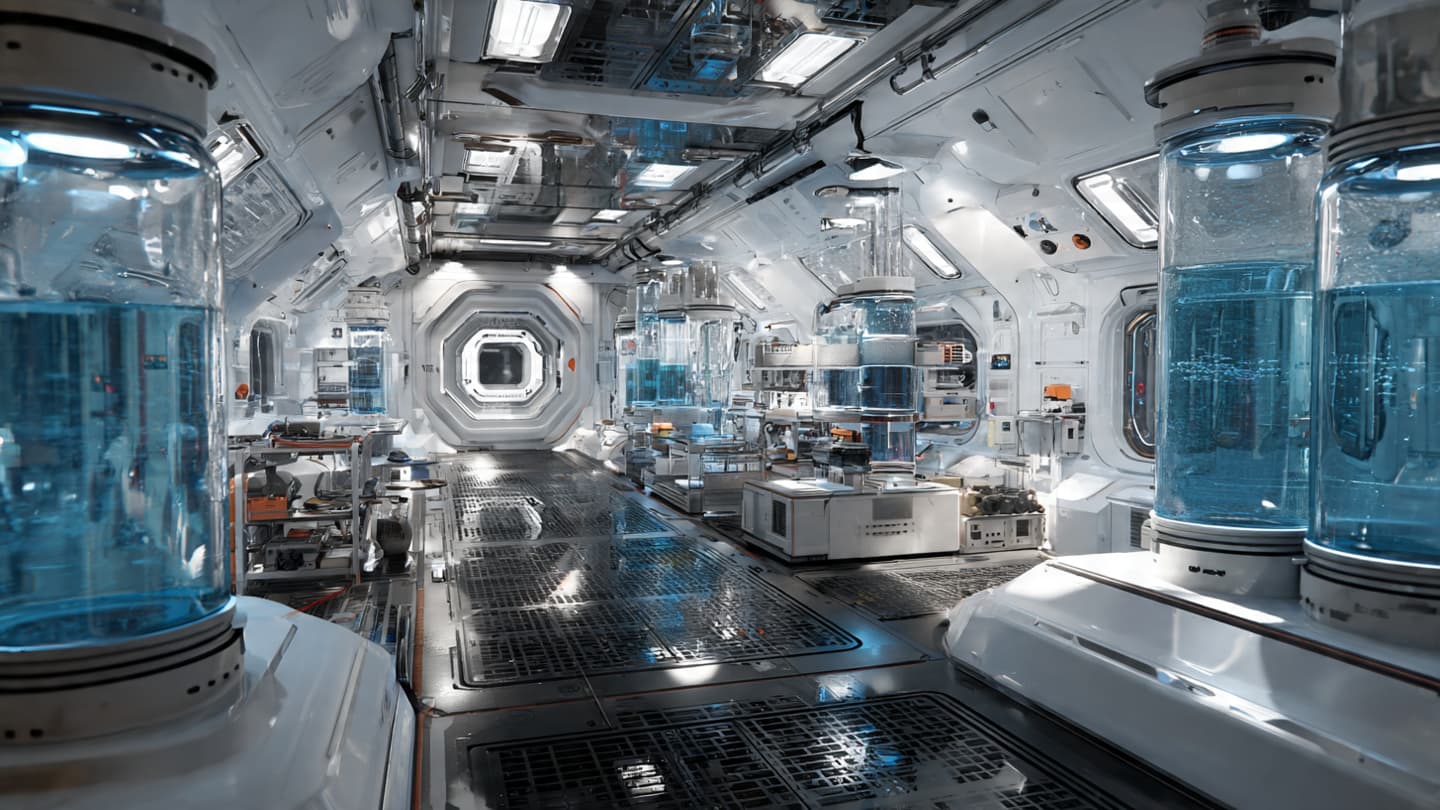
AI Image Disclaimer: Some visuals related to this article were AI-generated to support scientific editorial presentation.
Sources: Reuters, Nature, Space.com, South China Morning Post, Scientific American
Published by Banx Network. This article is part of the Banx decentralized media programme, powered by the BXE token on the XRP Ledger.