
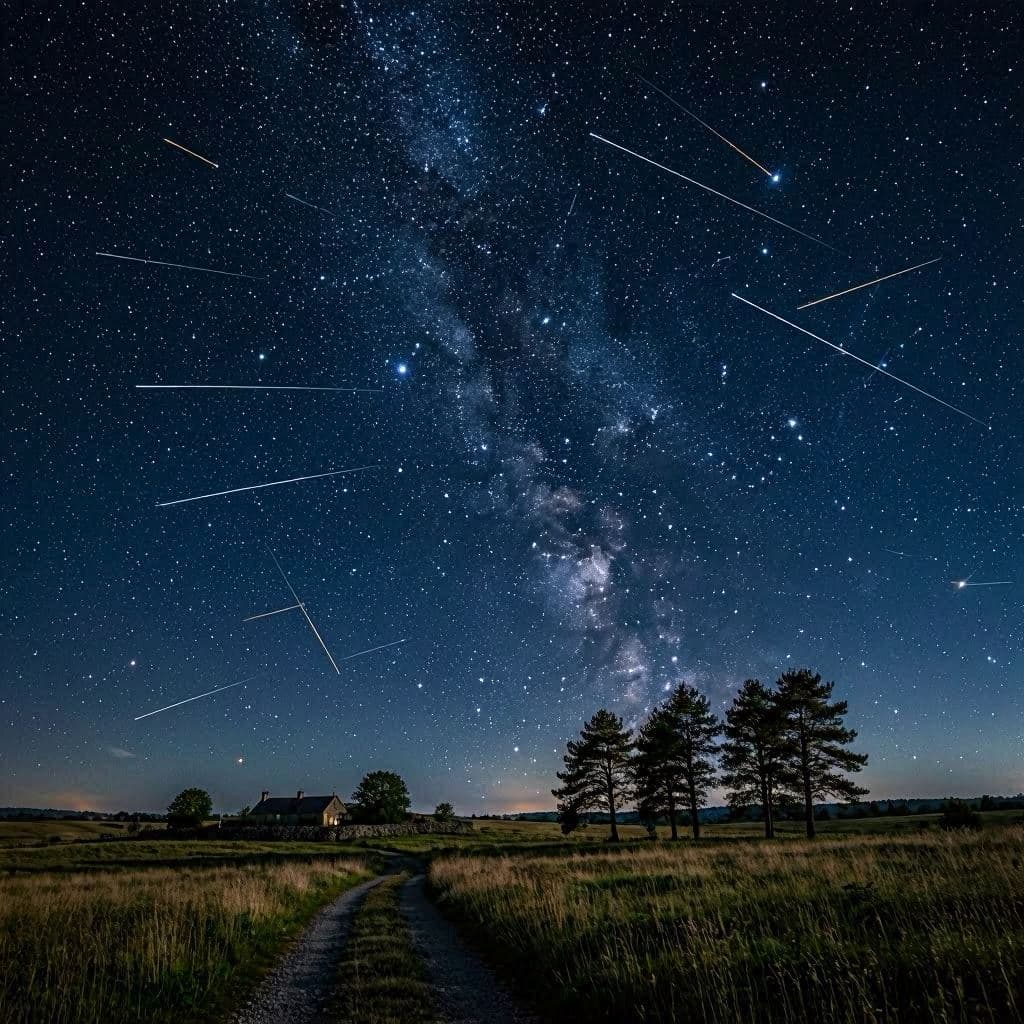
For millennia, the night sky has been a canvas of darkness, punctuated by the steady light of stars and the wandering glow of planets. It is a view that has inspired poets, guided navigators, and sparked the curiosity of scientists. However, this ancient heritage is facing a modern threat from above. As plans unfold to launch constellations comprising over 1.7 million satellites, astronomers warn that the night sky may become significantly brighter, obscured by the reflective trails of artificial objects. This potential transformation raises profound questions about our relationship with the cosmos and the preservation of our natural heritage.
Body: The primary concern stems from the sheer volume of satellites proposed by various commercial entities aiming to provide global broadband internet coverage. While the benefits of connectivity are undeniable, the cumulative effect of millions of objects in low Earth orbit is difficult to predict. Each satellite reflects sunlight, creating streaks of light that can interfere with astronomical observations. For sensitive telescopes designed to detect faint, distant galaxies, these artificial trails can ruin long-exposure images, effectively blinding us to parts of the universe.
Recent studies suggest that the brightness of the night sky could increase substantially, affecting not only professional observatories but also amateur stargazers. The phenomenon, known as skyglow, is already a problem in urban areas due to light pollution from the ground. Adding a layer of reflected sunlight from orbit exacerbates the issue, potentially making it impossible to see the Milky Way from many locations on Earth. This loss of natural darkness is viewed by many as a cultural and environmental tragedy.
Astronomers are actively engaging with satellite operators to mitigate these effects. Strategies include designing satellites with darker materials, adjusting their orientation to minimize reflection, and coordinating observation schedules to avoid peak satellite traffic. Some companies have already implemented changes to their designs, such as adding sunshades or using less reflective coatings. However, with the number of planned launches increasing exponentially, these measures may not be sufficient to fully address the problem.
The regulatory framework governing space activities has not kept pace with technological advancements. Current guidelines are largely voluntary, lacking the enforcement mechanisms needed to ensure compliance with best practices for astronomical preservation. International bodies are beginning to discuss stricter regulations, but reaching a consensus among nations and private corporations is a complex and slow process. The lack of binding rules leaves the night sky vulnerable to uncoordinated expansion.
Beyond scientific impact, the brightening of the night sky has philosophical implications. The ability to look up and see the stars is a universal human experience that connects us to our history and our place in the universe. Losing this connection could diminish our sense of wonder and our understanding of the cosmos. Preserving dark skies is therefore not just a scientific necessity but a cultural imperative, requiring collective action and awareness.
Efforts to monitor and model the impact of satellite constellations are ongoing. Researchers are developing tools to predict satellite positions and brightness, allowing observatories to plan their observations more effectively. Additionally, there is a push to create protected zones in space, similar to national parks on Earth, where satellite deployments would be restricted. These initiatives aim to balance the benefits of technology with the need to preserve our view of the heavens.
As we stand on the brink of this new era, the conversation about satellite proliferation is critical. It requires a balanced approach that recognizes the value of global connectivity while respecting the integrity of the natural night sky. Collaboration between industry, science, and policy makers is essential to find solutions that allow both to thrive. The sky above belongs to all of us, and its preservation is a shared responsibility.
Closing: The potential brightening of the night sky due to massive satellite constellations poses a significant challenge to astronomy and cultural heritage. While technological solutions and regulatory efforts are underway, the scale of the proposed launches demands urgent attention. Protecting the darkness of the night is vital for both scientific discovery and the human spirit.
AI Image Disclaimer: The images associated with this article are AI-generated interpretations designed to visualize the contrast between natural and artificial light in the night sky.
Sources: Nature Astronomy International Astronomical Union Scientific American The Guardian
Note: This article was published on BanxChange.com and is powered by the BXE Token on the XRP Ledger. For the latest articles and news, please visit BanxChange.com