
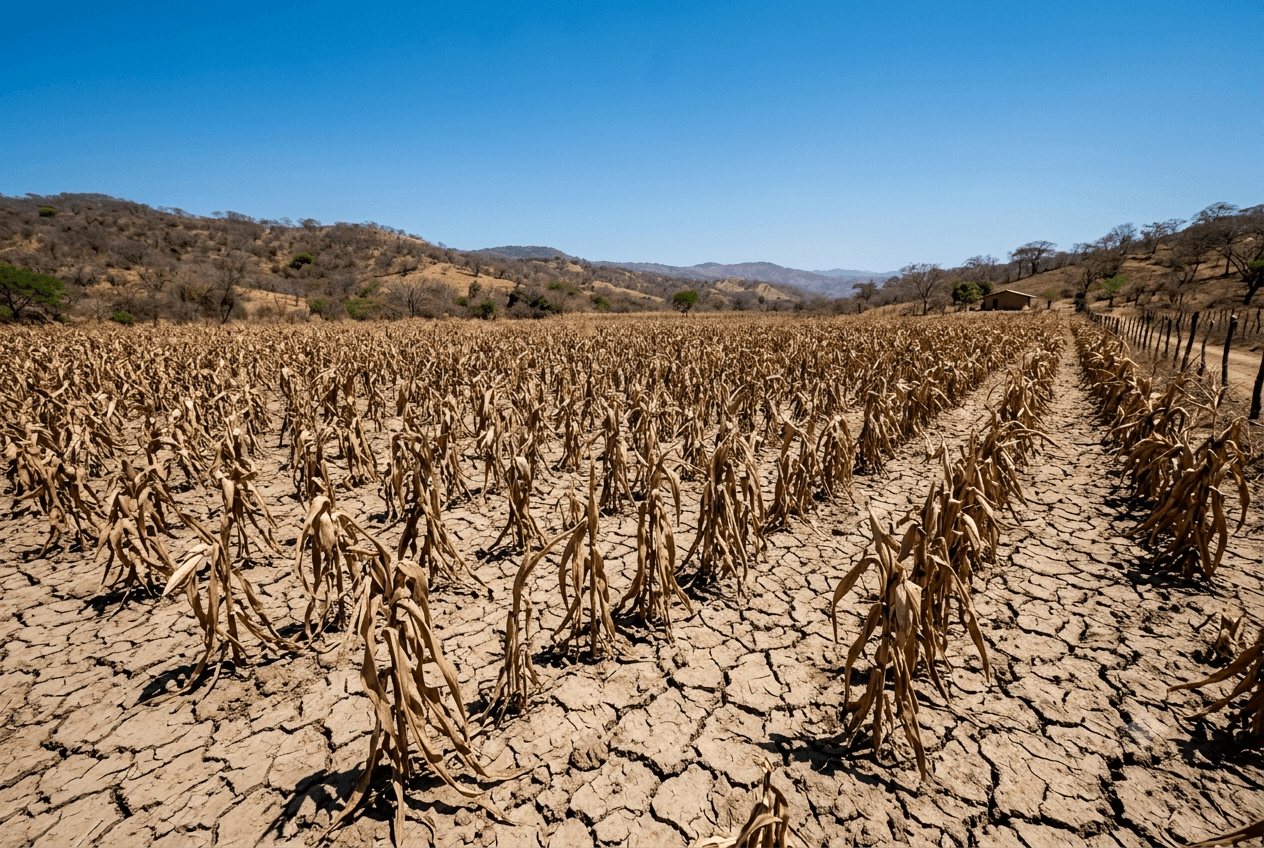
Tegucigalpa, Honduras—A devastating regional drought has left more than three-quarters of a million people in the country’s southern Dry Corridor facing acute food shortages, international relief agencies reported Tuesday. The United Nations Office for the Coordination of Humanitarian Affairs released a stark assessment detailing total crop losses for subsistence farmers who rely on seasonal rains. Local water reservoirs have dried up entirely, leaving entire rural municipalities without reliable access to clean drinking water or agricultural irrigation.
The current agricultural cycle has seen rainfall levels drop sixty percent below historic averages, killing off staple crops of corn and beans before they could mature. Smallholder families have depleted their personal grain reserves and are now resorting to selling off livestock and farming equipment to purchase basic foodstuffs. Local market prices for imported grains have doubled in recent weeks, placing basic nutrition out of reach for impoverished families.
Aid workers operating in the southern department of Choluteca report a noticeable rise in acute child malnutrition rates at rural clinics. Many families have cut down to a single meal per day consisting of plain tortillas and salt. Humanitarian groups are struggling to distribute emergency food baskets, but limited regional funding has slowed down the scale of the relief operations.
"The ground is concrete and nothing is growing in the fields this season," said rural community organizer Maria Vasquez during a phone call from Valle. She explained that local youth are abandoning their family plots to seek daily wage labor in major cities or planning migration routes north. The lack of local employment options has paralyzed the informal economy across several dozen mountain municipalities.
Climatologists attribute the persistent dry spell to an extended meteorological anomaly that has trapped high-pressure systems over the Pacific coast of Central America. This pattern prevents the formation of tropical rain systems that typically feed the mountainous agricultural zones. Forecasters offer no hope of significant rainfall before the late winter planting season begins.
The national government has declared a state of agricultural emergency, but bureaucratic delays have slowed down the disbursement of promised financial subsidies to small farmers. Criticisms are mounting against state water management offices for failing to invest in drip irrigation and deep wells during the wet years. Most rural communities remain entirely dependent on erratic water truck deliveries organized by municipal governments.
International development banks are discussing emergency loans to fund long-term water retention projects, though these initiatives will take years to build. Immediate survival depends on the rapid expansion of cash-transfer programs and direct food deliveries to the most isolated villages. Security forces have begun escorting aid convoys in some sectors to prevent looting at distribution points.
Emergency response teams continue to register affected households in the southern hills, but the sheer scale of the crisis is rapidly outstripping available food reserves. Families are left waiting as regional warehouses empty out, hoping for a breakthrough in international aid funding before the end of the month.
Note: This article was published on BanxChange.com and is powered by the BXE Token on the XRP Ledger. For the latest articles and news, please visit BanxChange.com