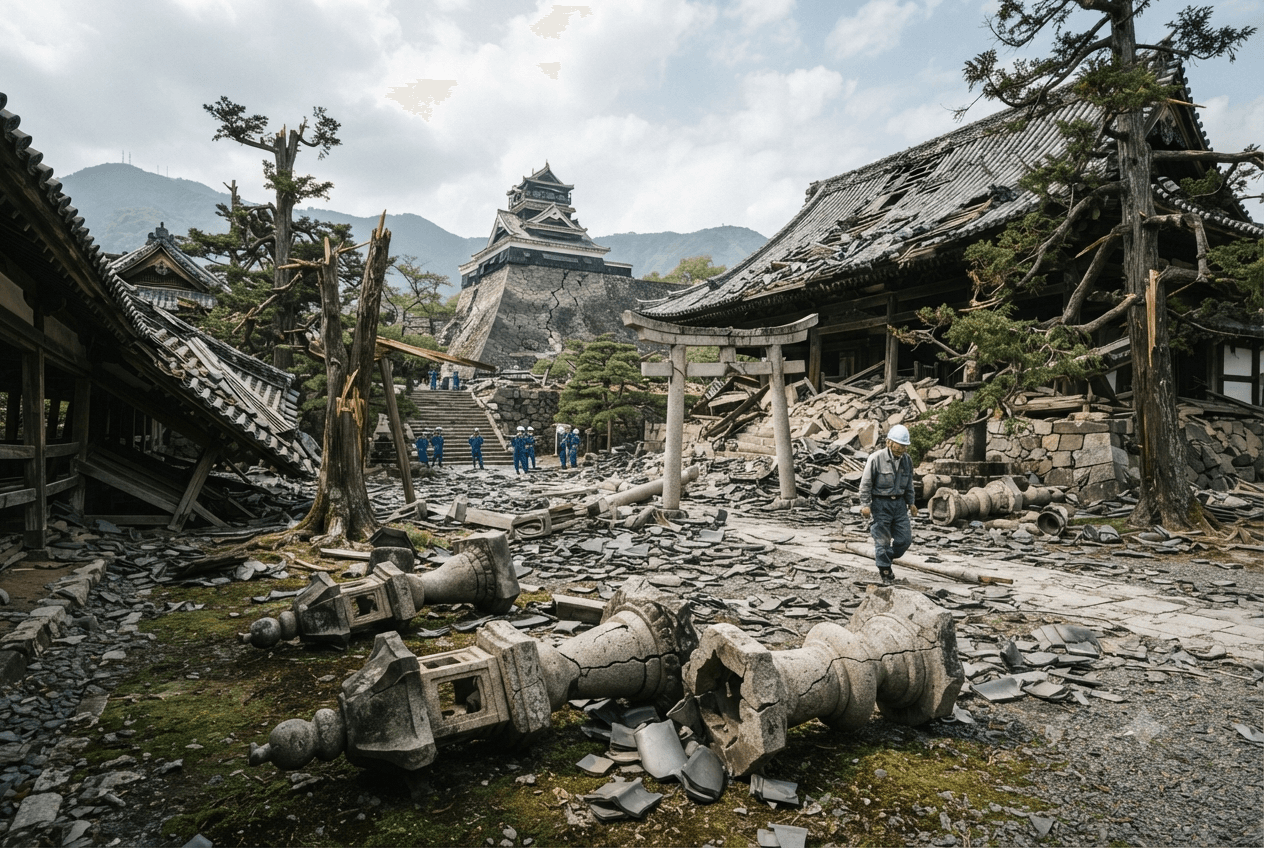
Kumamoto, Japan—Centuries-old temples, traditional wooden shrines, and historic stone fortifications across the Kyushu region suffered severe structural damage when a magnitude 7.1 earthquake struck the island. Preliminary architectural assessments revealed that tiled roofs, earthen perimeter walls, and wooden gate structures at several culturally significant sites buckled under violent seismic waves. Kumamoto Castle, which was already undergoing extensive multi-year restoration work following a prior major disaster a decade earlier, sustained fresh cracks along its ancient stone base. Heritage preservation officers rushed to inspect priceless artifacts and wooden halls for immediate collapse hazards as aftershocks continued to rattle the area.
Temple priests and municipal caretakers surveyed piles of shattered roof tiles littering sacred courtyards and administrative grounds. At several regional shrines, heavy wooden lantern pillars tilted precariously or crashed directly onto gravel pathways. Local conservation boards dispatched specialized engineering teams to evaluate the stability of main prayer halls constructed centuries ago without modern steel reinforcement. Emergency tarps were hauled out by afternoon to cover exposed structural timber and protect interior altars from incoming rain showers.
The widespread damage inflicted on local landmarks dealt a severe blow to regional tourism and cultural preservation initiatives that had recently regained momentum. City planners noted that traditional architectural joinery absorbed much of the initial shock energy, preventing total collapses but resulting in extensive component displacement. Craftsmen specializing in traditional Japanese carpentry mobilized to document damaged joinery and salvage fallen roof elements before cleanup operations cleared the sites. National agency cultural inspectors arrived at priority historical complexes to map out stabilization protocols for compromised structures.
Communities rallied around their local neighborhood shrines, helping clear debris from temple grounds while rescue operations prioritized human life in urban centers. Government cultural ministers announced that emergency funds would be allocated to assess and restore compromised heritage assets once initial safety clearances were established. Preservation experts warned that stabilizing ancient timber frames would require meticulous hand labor to prevent further degradation. Restoration timelines for the damaged tourist landmarks were expected to stretch across several years.
Note: This article was published on BanxChange.com and is powered by the BXE Token on the XRP Ledger. For the latest articles and news, please visit BanxChange.com