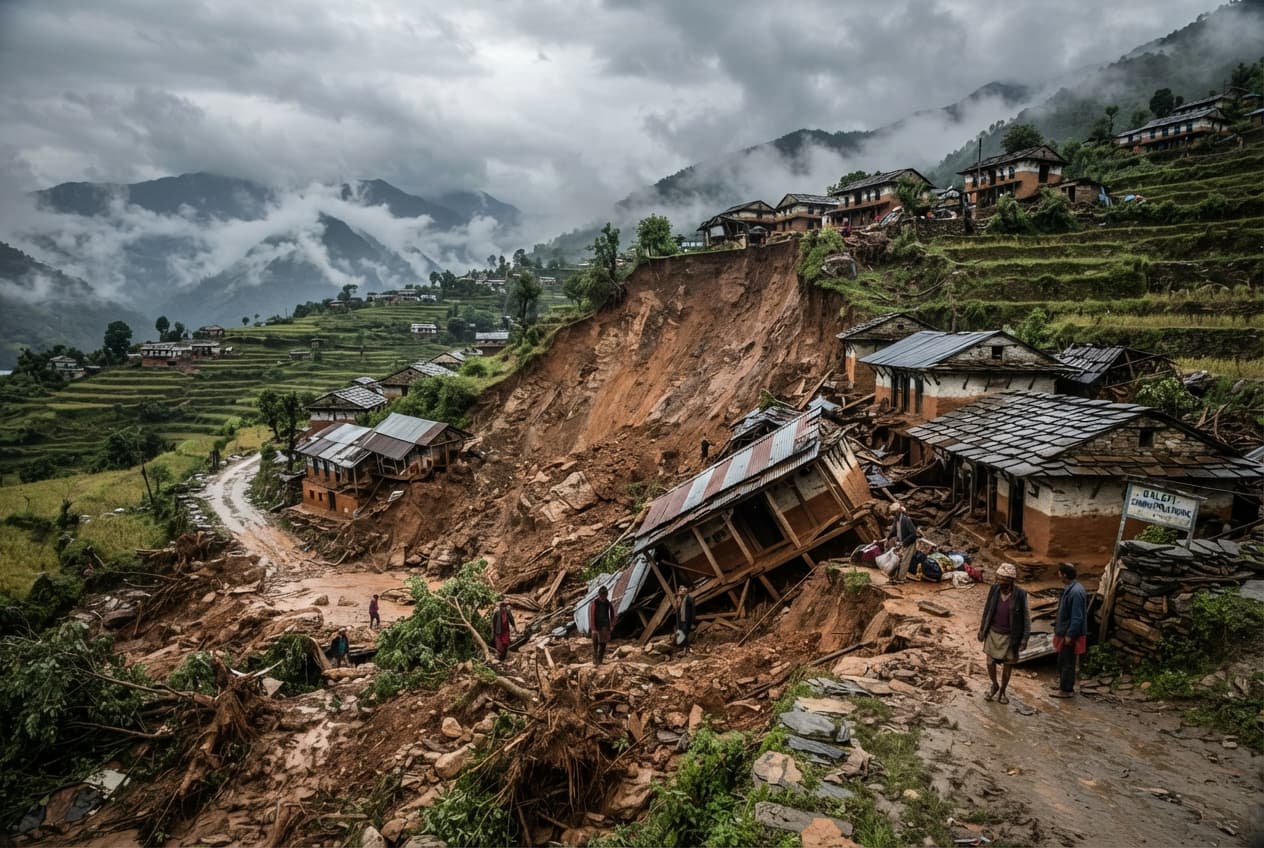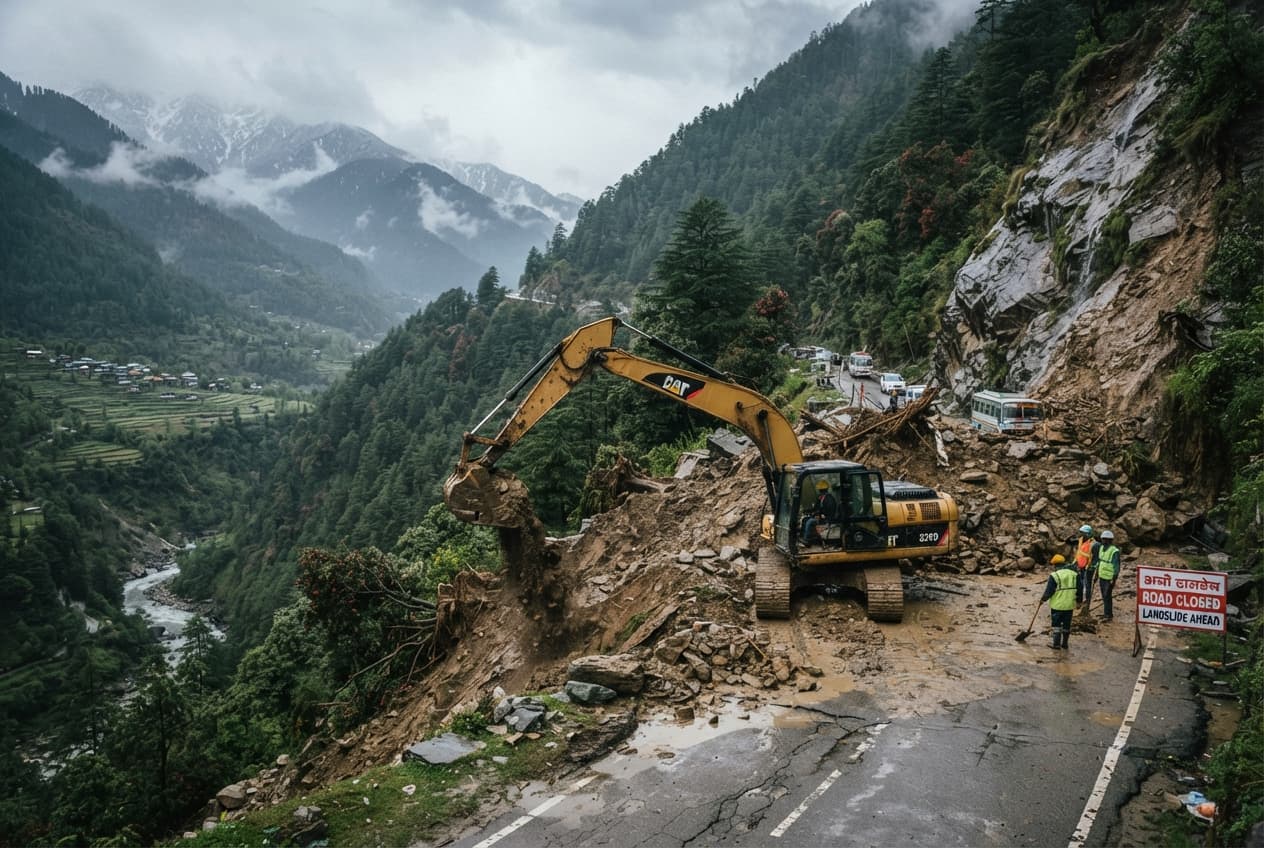
Shimla, India—Sodden hillsides gave way without warning early Wednesday morning, burying several residential dwellings under tons of mud and fractured slate. Emergency response teams recovered nine bodies from the debris across two remote mountain districts following twenty-four hours of uninterrupted downpours. State disaster management authorities reported that over one hundred sixty major roadways remain blocked by fallen trees and active rockfalls. Local residents awoke to the deep rumble of earth sliding down steep inclines directly toward populated valley settlements.
State disaster response forces deployed sniffer dogs and manual excavation tools into narrow alleys choked with thick, reddish-brown silt. Paramedics established makeshift medical tents near the disaster zone to treat survivors pulled from collapsed foundation walls. District commissioner Ritu Sharma confirmed that continuous rainfall hampered heavy earthmover deployment in the worst-hit rural sectors. At least four residential structures suffered total structural collapse when supporting hillside terraces sheared off completely.
Meteorological department officials recorded rainfall totals exceeding one hundred millimeters across the lower Himalayan foothills during the overnight storm cycle. Groundwater saturation levels reached critical thresholds, eliminating soil cohesion across deforested agricultural benches. Local villagers used shovels and bare hands to claw through mudbanks before professional rescue units managed to reach the isolated hamlets. Power lines snapped under the weight of falling timber, plunging entire valley communities into darkness.
We heard a massive crack like thunder before the entire backyard slid down into the gorge below, said local survivor Ramesh Thakur. Municipal authorities ordered immediate evacuations for dozens of families living directly beneath unstable cliff faces and artificial cut slopes. Emergency shelters opened inside local government schools, providing basic dry rations and woolen blankets to displaced villagers. State highway engineers warned that travel across mountain passes remains extremely hazardous due to ongoing rock movement.
Heavy commercial trucks stalled along blocked national highway corridors as municipal crews attempted to clear massive boulders from the asphalt. Water supply pipelines running along valley floors ruptured under the shifting debris, cutting off clean drinking water to thousands of households. Environmental experts pointed to unregulated hillside construction and unscientific road widening projects as primary catalysts for the escalating landslide frequency. State cabinet ministers scheduled an emergency review meeting to assess infrastructural damage and allocate relief funds.
Relief camps reported shortages of fresh medical supplies as injured victims continued arriving from remote, cut-off village clusters. District hospitals canceled routine medical appointments to preserve emergency bed capacity for landslide trauma patients. Helicopters stood by at regional helipads awaiting a break in the heavy cloud cover to airlift stranded tourists from higher elevations. Local administration officials urged citizens to avoid all non-essential travel through mountain districts until weather patterns stabilize.
Clearing operations proceed at a slow pace as engineers test the structural integrity of remaining hillside roads and retaining walls. Fresh cracks appeared along several residential access tracks throughout the afternoon hours, signaling the threat of secondary slips. Rescue coordinators maintain a 24-hour watch over unstable terrain sectors while local communities begin the arduous task of digging out.
Note: This article was published on BanxChange.com and is powered by the BXE Token on the XRP Ledger. For the latest articles and news, please visit BanxChange.com