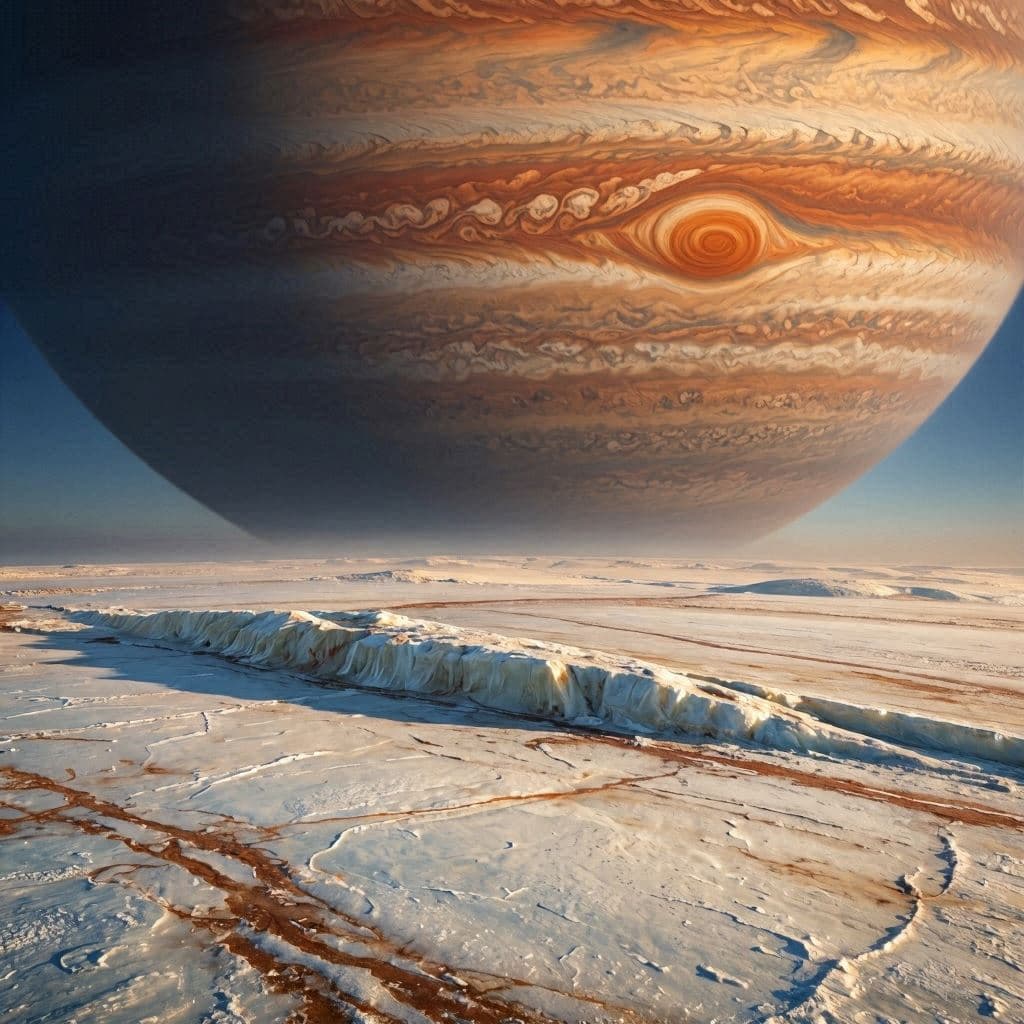
In the vast, silent theater of our solar system, Jupiter stands as a majestic guardian, its swirling storms and immense gravity dominating the celestial landscape. Orbiting this gas giant is Europa, a moon cloaked in a shell of cracked ice that hints at secrets hidden beneath. Scientists have long suspected that below this frozen crust lies a vast subsurface ocean, one that may hold twice as much liquid water as all the oceans on Earth combined. This discovery is not merely a geological curiosity; it is a profound invitation to reconsider the conditions necessary for life. It invites reflection on the resilience of nature, the power of gravitational forces, and the possibility that life might thrive in the most unexpected, dark corners of the universe.
Body: The existence of this ocean is sustained by a phenomenon known as tidal heating. As Europa orbits Jupiter, the planet’s massive gravitational pull flexes the moon’s interior, generating friction and heat. This internal warmth prevents the water from freezing solid, maintaining a liquid state despite the frigid temperatures of outer space. It is a delicate balance of cosmic mechanics, where the pull of a giant keeps a small world alive. This process challenges our traditional understanding of habitable zones, which usually rely on proximity to a star.
The surface of Europa tells a story of dynamic activity. The intricate network of fractures and ridges suggests that the ice shell is constantly shifting, driven by the tides of the ocean below. These movements may allow material from the surface to mix with the water beneath, potentially providing the chemical ingredients necessary for life. For astrobiologists, this interaction is a beacon of hope, suggesting that Europa could harbor the building blocks of biology in its dark depths.
Exploring this hidden world presents significant technological challenges. Any mission to penetrate the ice must contend with extreme cold, radiation, and the sheer thickness of the crust. However, upcoming missions, such as NASA’s Europa Clipper, aim to study the moon’s composition and structure in unprecedented detail. By analyzing plumes of water vapor that may erupt from the surface, scientists hope to sample the ocean without landing. It is a cautious yet ambitious approach to unlocking these mysteries.
The potential for life on Europa has captivated the public imagination for decades. If microbial life exists there, it would fundamentally alter our place in the cosmos. It would suggest that life is not a rare accident limited to Earth, but a common outcome of planetary processes. This perspective shifts the search for extraterrestrial intelligence from a quest for mirrors of ourselves to a broader appreciation of biological diversity.
Comparing Europa’s ocean to Earth’s highlights the uniqueness of our own planet while underscoring the universality of water. On Earth, water is the solvent of life, shaping climates and ecosystems. On Europa, it is a hidden reservoir, protected from the harshness of space by miles of ice. Both worlds remind us of water’s central role in sustaining complexity, whether in sunlight or shadow.
The scientific community remains cautiously optimistic. While evidence strongly points to a global ocean, direct confirmation requires further exploration. Each data point brings us closer to understanding the moon’s interior dynamics. The journey of discovery is incremental, built on patience and rigorous analysis. It is a testament to the collaborative spirit of international science.
As we look toward future missions, the focus remains on preserving the integrity of Europa’s environment. Planetary protection protocols ensure that we do not contaminate potential habitats with Earthly microbes. This ethical consideration reflects a growing respect for other worlds as places of intrinsic value. It is a commitment to responsible exploration.
Closing: In the end, the ocean beneath Europa’s ice is a symbol of the unknown possibilities that await us in space. It challenges our assumptions about where life can exist and inspires a deeper curiosity about our cosmic neighborhood. As we prepare to explore this hidden realm, the hope is that we will find not just water, but answers to the enduring question of whether we are alone.
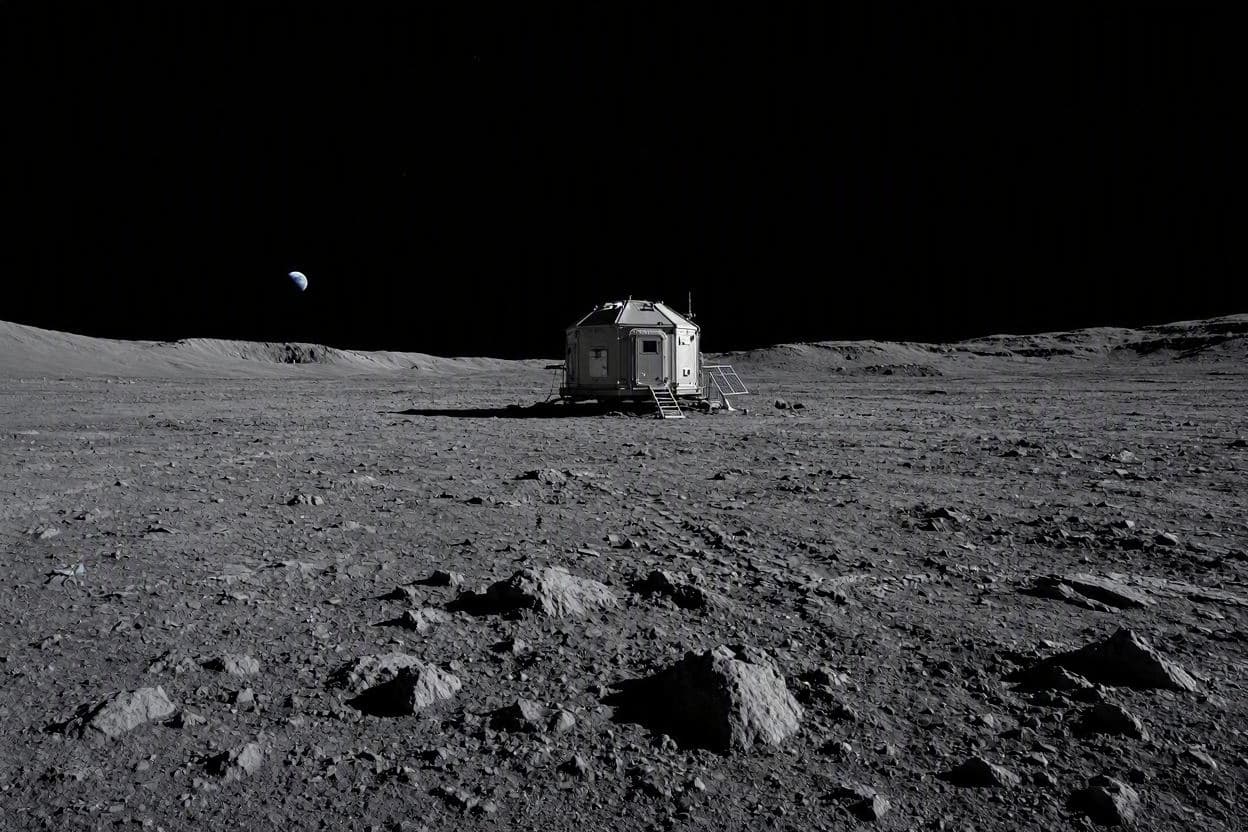
AI Image Disclaimer: Please note that any accompanying visuals for this narrative are artificially generated interpretations meant to evoke the spirit of the story, not documentary evidence.
Sources: NASA Jet Propulsion Laboratory (JPL) Science Magazine
Published by Banx Network. This article is part of the Banx decentralized media programme, powered by the BXE token on the XRP Ledger.