
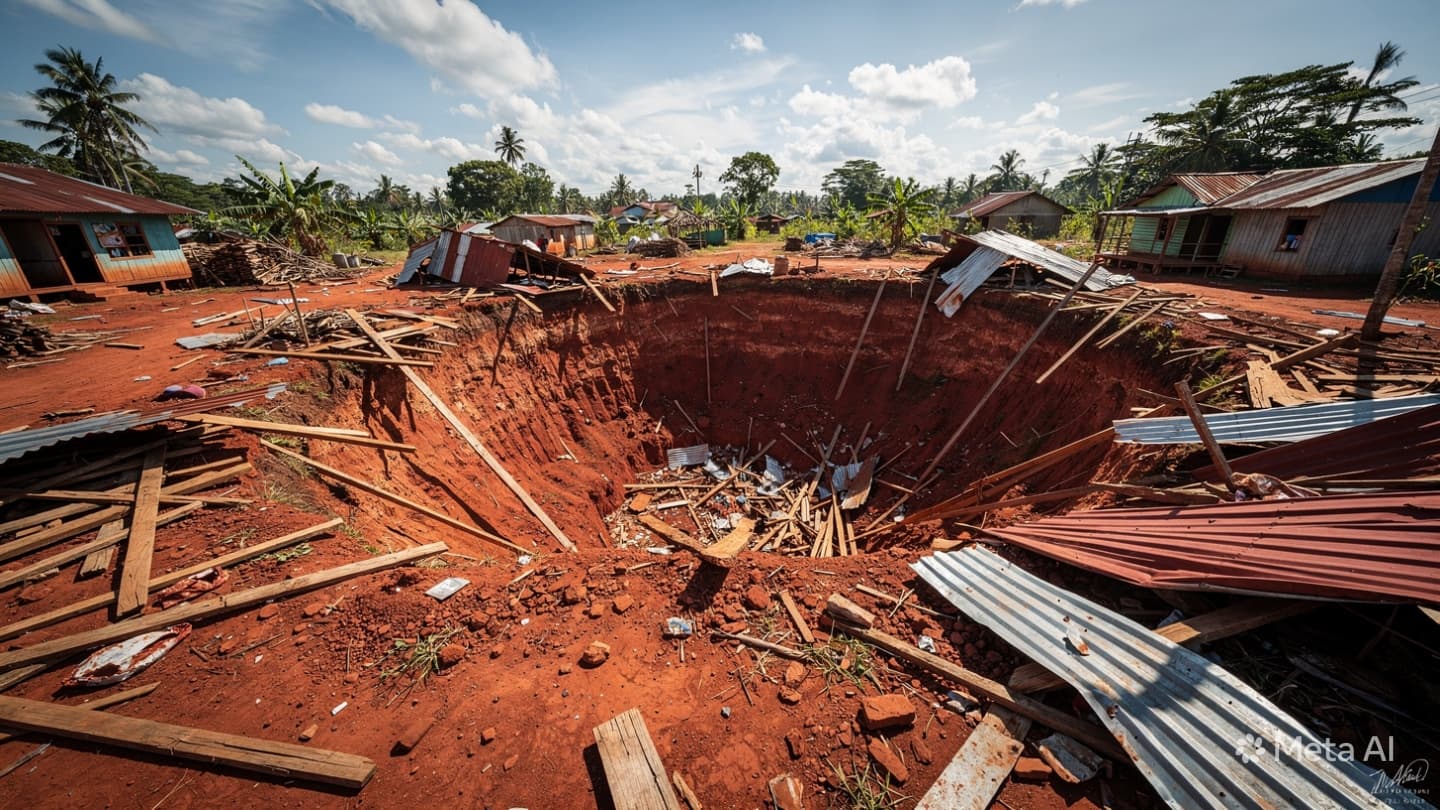
Jayapura, Indonesia—A long-buried relic from the Pacific theater of World War II detonated in a coastal Papuan village on Sunday afternoon, leaving five residents dead and three others missing under pulverized housing debris. The unexpected blast tore through a cluster of residential structures, flinging shrapnel across a hundred-meter radius. First responders arrived to find secondary fires burning through dry timber walls.
Regional police confirmed the explosion originated from a deeply embedded multi-kilogram aerial bomb dating back to the 1944 Allied campaigns. Local scrap collectors had reportedly unearthed the metallic cylinder earlier in the week, mistake-ridden in their belief that the device was completely inert. Witnesses stated several individuals were attempting to dismantle the casing with hand tools when the internal picric acid compound ignited.
Emergency personnel immediately cordoned off the perimeter, ordering remaining families to evacuate to a nearby school building. Local hospital authorities reported treating seven additional victims for severe blast trauma and deep laceration wounds caused by flying debris. Medical supplies are currently being flown in from neighboring districts to handle the surge of emergency surgeries.
Search and recovery operations faced immediate delays as night fell over the peninsula. Police units suspended digging operations shortly before midnight due to the total absence of portable floodlighting and fears that adjacent ground tremors could trigger secondary unexploded ordnance buried nearby. Local military commanders are waiting for specialized ordnance disposal squads to clear the soil before heavy equipment enters the crater site.
The provincial administration issued a broadcast warning residents against handling any corroded metallic objects found in riverbeds or forest clearings. Decades of tropical humidity have destabilized the chemical composition of abandoned wartime stockpiles across the territory, making them highly sensitive to physical friction. Historical records indicate thousands of tons of unexploded munitions remain scattered across the northern coast of the island.
Community leaders criticized the central government's delayed mapping of historic battlefields. Many remote villages expand directly over old tactical supply depots and artillery lines without prior soil scanning or safety clearings. Families of the missing spent the night waiting outside the police lines, searching for signs of movement in the wreckage by flashlight.
Military logistics teams are currently routing specialized mine-detecting gear to the village via patrol boats. Road access to the immediate area remains blocked by fallen trees and collapsed utility poles shattered by the shockwave. The power grid in the immediate neighborhood is completely down.
The current casualty count is expected to shift as search teams prepare to lift heavy concrete slabs obstructing the main blast trench. Forensics experts are working to identify the remains recovered during the initial hours of the response.
Note: This article was published on BanxChange.com and is powered by the BXE Token on the XRP Ledger. For the latest articles and news, please visit BanxChange.com