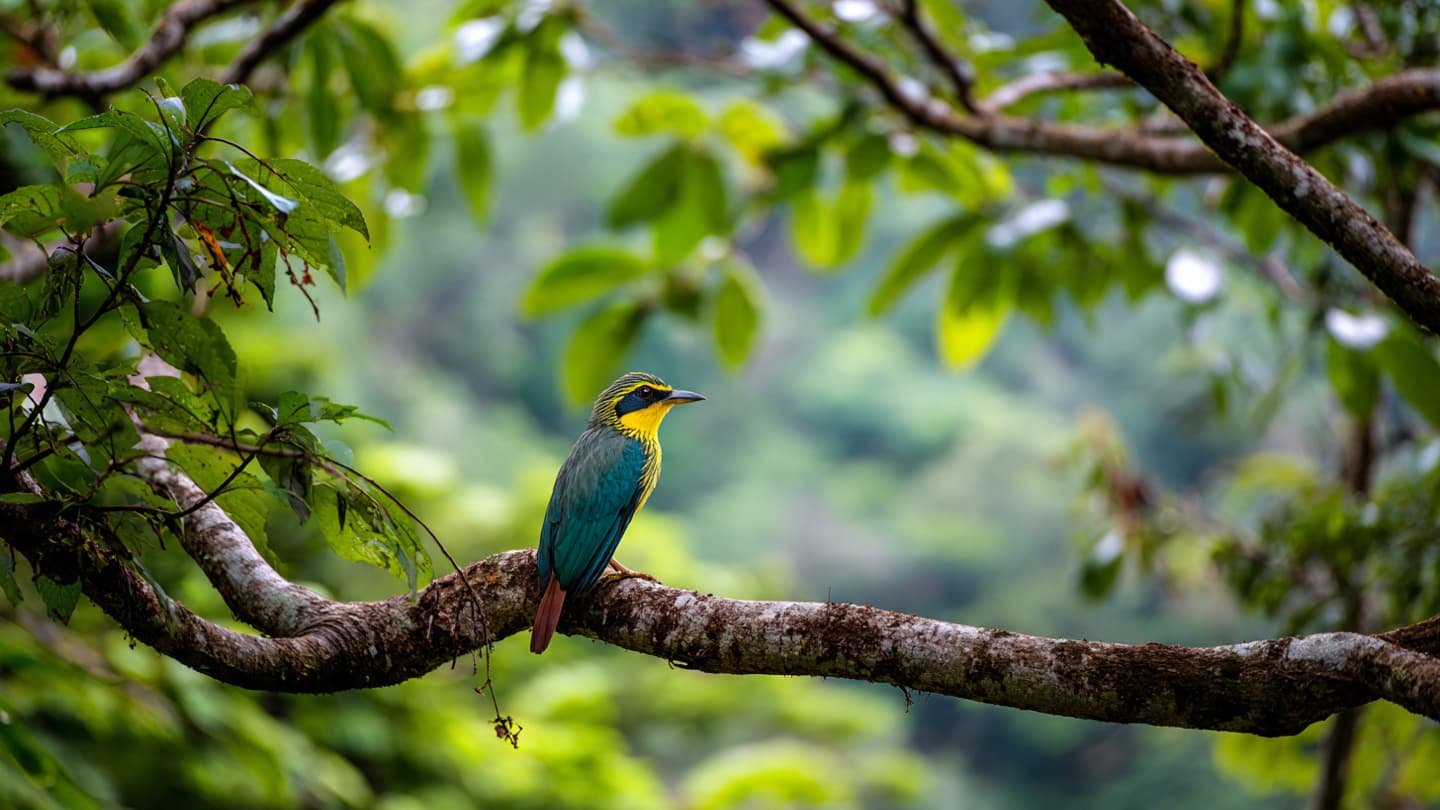
Nature often preserves its greatest surprises in places that remain difficult to reach. Across remote islands, dense forests, and isolated ecosystems, countless species continue to live beyond the attention of science. The recent announcement of a newly identified bird species from Indonesia serves as a reminder that the natural world still holds discoveries waiting to be documented.
An international team of researchers reported the identification of a previously unknown bird species inhabiting a remote island region within the Indonesian archipelago. The finding contributes to the growing scientific understanding of one of the world's richest centers of biodiversity.
Indonesia is widely recognized as a global biodiversity hotspot. Its thousands of islands support unique ecosystems that have evolved over millions of years, often producing species found nowhere else on Earth.
The discovery resulted from extensive fieldwork, including habitat surveys, behavioral observations, and genetic analysis. Modern taxonomic methods increasingly combine traditional observation with advanced molecular techniques to distinguish species accurately.
Scientists note that island environments are especially important for evolutionary research. Geographic isolation can encourage the development of distinct species as populations adapt to local conditions over long periods.
Beyond its scientific value, the finding highlights the importance of conservation. Newly identified species may face environmental pressures before researchers fully understand their ecological roles or population sizes.
Conservationists emphasize that habitat protection remains essential throughout many parts of Southeast Asia. Forest loss, climate change, and human development continue to influence biodiversity across the region.
The discovery also reflects the collaborative nature of modern science. Researchers from multiple institutions often work together to document species, share data, and expand knowledge about Earth's living systems.
As studies continue, the new bird species adds another chapter to Indonesia's remarkable natural heritage. For scientists and conservationists alike, the finding demonstrates that exploration and discovery remain active parts of twenty-first-century biology.
AI Image Disclaimer: This article includes an AI-generated wildlife illustration created solely to represent the scientific discovery described.
Source Verification Check: Sci.News, BirdLife International, National Geographic, Mongabay, Zoological Research Publications
Published by Banx Network. This article is part of the Banx decentralized media programme, powered by the BXE token on the XRP Ledger.