
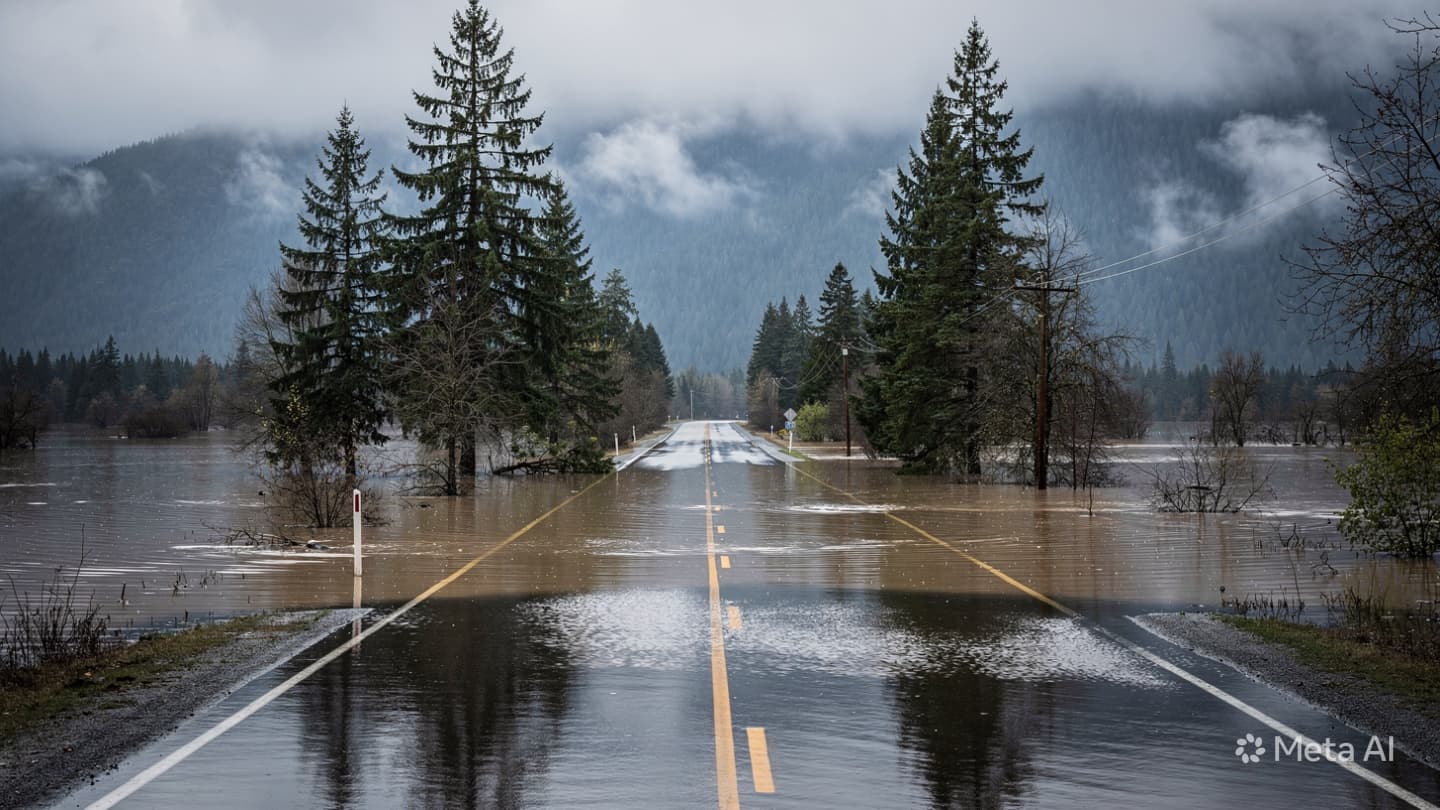
The geography of western Canada is defined by its dramatic verticality, a landscape where towering peaks drop sharply into fertile valleys and rushing river corridors. When autumn storms roll in from the Pacific Ocean, they bring an immense volume of moisture that tests the structural endurance of the entire region. In the rural interior of British Columbia, where communities are connected by narrow ribbons of asphalt cut into the hillsides, the persistent arrival of heavy rain creates an atmosphere of immediate environmental vulnerability.
A series of intense atmospheric events recently culminated in widespread flash flooding and significant infrastructure damage across several rural sectors of the province. The volume of water descending from the upper ridges overwhelmed local drainage systems, transforming quiet mountain creeks into powerful torrents that carried debris into residential valleys. This natural shifting of the landscape has forced a temporary suspension of regular movement as residents adapt to the immediate physical changes around them.
Geological teams and highway maintenance crews have been deployed to assess the extent of the roadway collapses, particularly along critical transit corridors that link isolated settlements. The force of the saturated earth moving down the slopes caused portions of major highways to slide into adjacent ravines, cutting off traditional transport routes. These structural failures underscore the delicate relationship between human engineering and the immense power of seasonal weather patterns.
In the affected communities, the immediate response has been characterized by a quiet, practical mobilization as neighbors assist one another in diverting water from low-lying properties. Local emergency services have established temporary shelters and monitoring stations to ensure that residents in high-risk zones can transition to safer ground before conditions deteriorate further. This collective effort proceeds without panic, drawing on a deep-rooted regional familiarity with environmental challenges.
From an infrastructure perspective, the scale of the damage presents a complex engineering puzzle that will require months of dedicated reconstruction effort. Engineers are evaluating not just how to repair the immediate fractures in the asphalt, but how to design more resilient systems capable of withholding future atmospheric events. The discussion highlights a growing awareness of the need to adapt rural infrastructure to changing environmental baselines.
As the rain begins to taper off into a persistent coastal mist, the true extent of the displacement becomes visible under the pale northern light. Fields that were once ready for seasonal transitions now sit under feet of standing water, and rural roads remain blocked by piles of heavy gravel and fractured timber. The physical landscape has been visibly rewritten by the passage of the water, leaving an imprint that will endure long after the currents subside.
The coordination between provincial authorities and local municipal councils remains essential as resource allocation is prioritized for the most isolated communities. Supply chains are being rerouted through alternative passes, ensuring that essential goods and medical services continue to reach those temporarily separated from the main urban centers. This administrative resilience serves as a critical buffer during the initial phases of recovery.
In the quiet hours of the evening, the sound of rushing water still echoes through the valleys, a steady reminder of the ongoing transformation occurring just beyond the residential perimeters. The people of rural British Columbia look to the hillsides with a mixture of vigilance and enduring patience, knowing that the recovery process is a matter of steady, incremental progress. The focus remains fixed on reclaiming the stability of their shared spaces.
Note: This article was published on BanxChange.com and is powered by the BXE Token on the XRP Ledger. For the latest articles and news, please visit BanxChange.com