
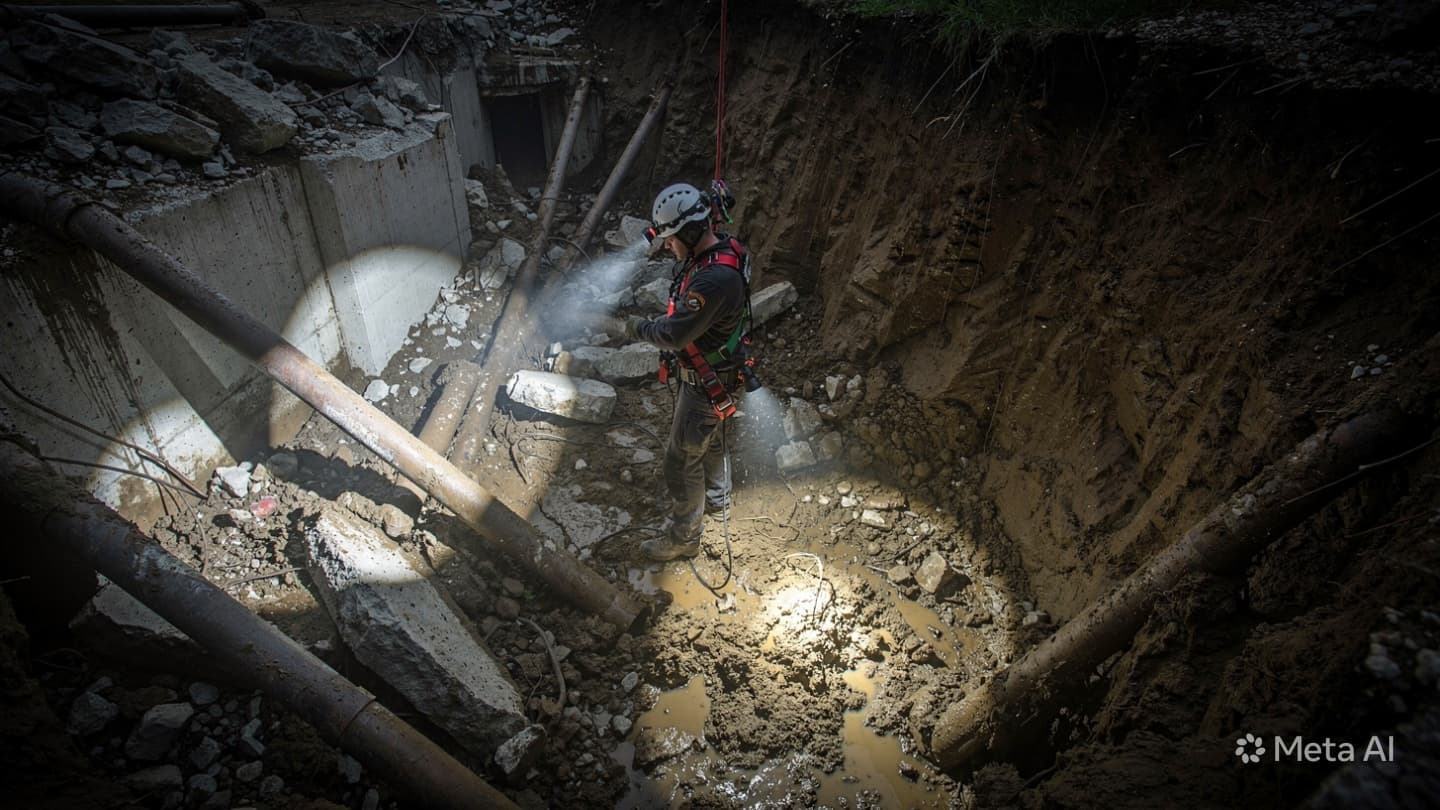
Guatemala City, Guatemala—A massive sinkhole measuring nearly an acre in width opened abruptly in a residential district early in the morning on June 11, 2026, dragging three multi-story homes into the earth and killing four residents. Weeks of continuous, torrential downpours saturated the loose volcanic soil, causing an underground drainage artery to burst and wash away the subterranean foundation of the neighborhood. Civil defense teams evacuated over two hundred families from the immediate perimeter as the edges of the chasm continued to crumble.
Neighbors reported hearing a deep, rumbling sound resembling an explosion shortly before the ground gave way beneath the structures. The collapse severed a primary water main, sending a torrent of mud and rushing water directly into the newly formed crater and complicating early rescue efforts. First responders used ropes and specialized pulleys to lower acoustic listening devices into the pit, searching for signs of survivors trapped beneath the concrete debris.
Geological survey teams arrived at the site to assess the structural integrity of the surrounding streets, where deep fissures have already begun to snake through the asphalt. Engineers warned that the weight of heavy emergency vehicles could trigger a secondary collapse of the fragile rim. The local electricity cooperative cut power to the entire zone after several high-voltage transformers tilted dangerously toward the opening.
The national disaster reduction coordinator stated during an afternoon briefing that the four victims were asleep inside a single household when the ground vanished. Recovery teams recovered two bodies from the upper layer of mud using manual shovels, but the remaining two individuals remain buried under tons of unstable soil and concrete reinforcement pillars. The rescue operation remains halted intermittently due to the constant threat of further landslides along the vertical walls of the pit.
Municipal authorities faced immediate criticism from community leaders who claimed that leaks in the subterranean drainage network had been reported over a month ago. Water had reportedly been bubbling up from cracks in the sidewalk, indicating that the soil was rapidly eroding from beneath the surface. The city administration defended its response, stating that the sheer volume of recent seasonal rain was unprecedented and overwhelmed the historic brick culverts.
Displaced residents gathered at a municipal gymnasium converted into a temporary shelter, waiting for news about their properties. Many families fled with nothing but the clothes on their backs, describing scenes of panic as walls cracked and doors jammed tight due to the shifting ground. Local police established checkpoints three blocks away from the sinkhole to prevent residents from returning to salvage personal belongings.
The geologists on-site noted that much of the capital city is built upon unconsolidated volcanic pumice deposits, which possess low density and wash away easily when exposed to pressurized water. When an underground pipe breaks, it can carve out a massive hidden cavern for months before the surface crust suddenly fails under the weight of traffic and buildings. The current crater is expected to widen if the forecast rain materializes over the next twelve hours.
Government ministries have not yet allocated funds for filling the massive cavity or stabilizing the adjacent foundations. Engineering firms suggested that a specialized mix of concrete and volcanic ash will be required to stabilize the hole, a process that took months during previous structural collapses in the area. Until the rain stops entirely, workers cannot safely begin the stabilization process, leaving nearby properties at immediate risk.
Note: This article was published on BanxChange.com and is powered by the BXE Token on the XRP Ledger. For the latest articles and news, please visit BanxChange.com