
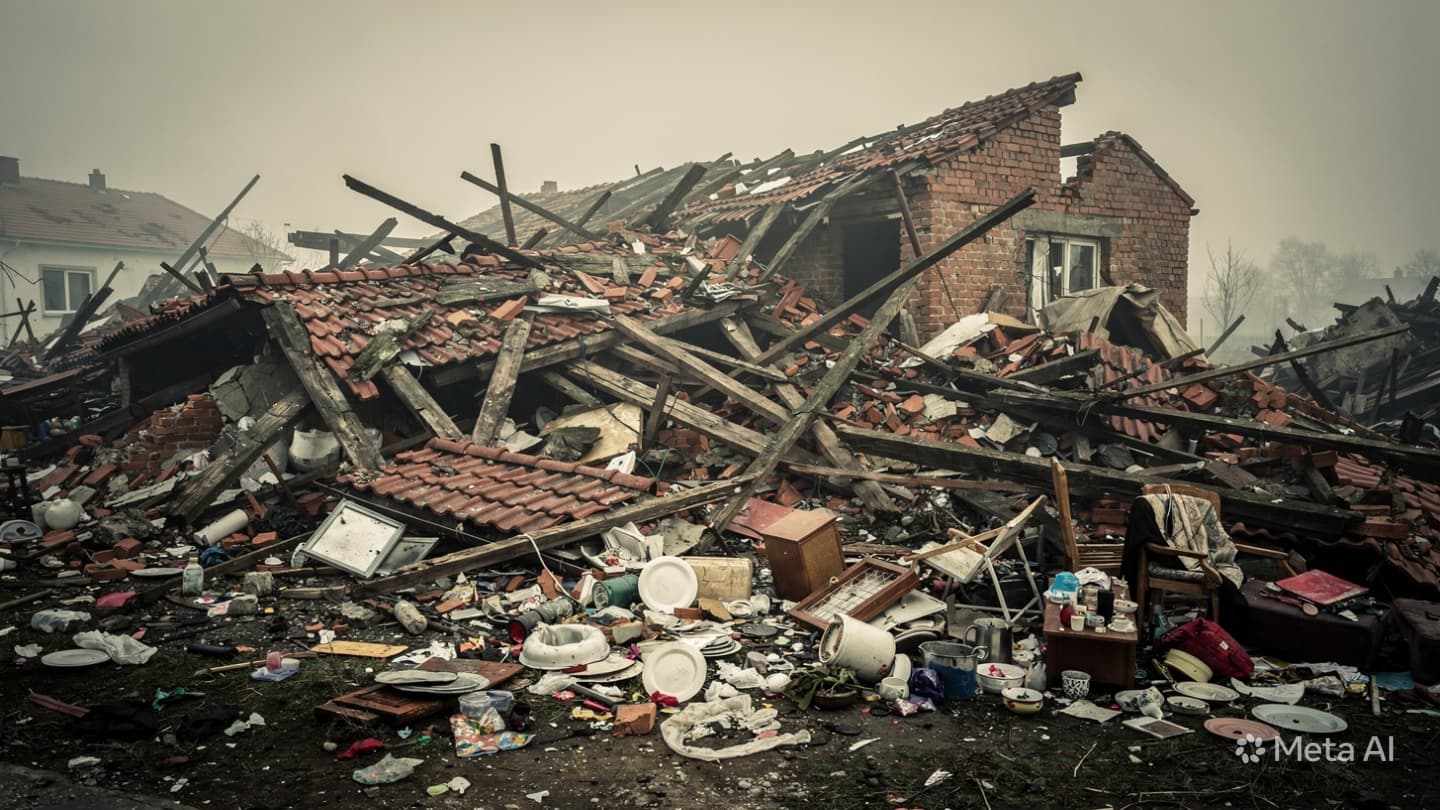
Multan, Pakistan—A violent windstorm slammed into regional districts today after weeks of triple-digit temperatures, causing widespread structural collapses that killed nine people. The sudden thermal shift created extreme atmospheric instability, generating wind gusts that exceeded ninety kilometers per hour. Flimsy brick walls and weakened concrete roofs gave way under the abrupt pressure drop and heavy rain.
Emergency medical teams responded to multiple residential blocks where families were crushed under collapsing ceilings while seeking shelter from the dust storm. Hospital wards in the affected municipalities reported an immediate influx of over forty injured individuals suffering from trauma wounds and fractures. Rescue workers used basic hand tools to clear heavy concrete slabs in densely populated neighborhoods.
"The brickwork had been baked by forty-six-degree heat for twenty days, making the mortar highly brittle before the storm struck," a provincial disaster management official reported outside a damaged medical clinic. The inspector noted that most structural failures occurred in older, low-income residential sectors.
Power distribution networks collapsed across three provinces as hundreds of transmission towers were buckled by the straight-line winds. The blackout has left millions of people without air conditioning or running water during an ongoing heat crisis, compounding the medical risk for vulnerable demographics. Technical crews are working in shifting dust to isolate severed high-voltage lines.
Local police units confirmed that four children were among the nine dead, having been caught inside a collapsing veranda during the peak of the wind gale. Municipal workers spent the evening pulling fallen trees and iron billboards off main thoroughfares to allow emergency vehicles unimpeded access to peripheral villages.
Civil defense volunteers have established emergency first-aid tents outside primary state hospitals to handle the overflow of casualties. Supply lines for clean drinking water are compromised due to pump failures, forcing authorities to mobilize water tankers from unaffected military garrisons.
Government ministers announced immediate financial assistance for the families of the deceased and promised a rapid safety audit of commercial structures along major transport corridors. However, engineering firms warn that thousands of legacy buildings remain highly susceptible to similar thermal shock events.
Military engineers have been deployed with heavy clearing machinery to assist local governments in restoring basic traffic flow along regional supply routes before secondary storm systems develop.
Note: This article was published on BanxChange.com and is powered by the BXE Token on the XRP Ledger. For the latest articles and news, please visit BanxChange.com