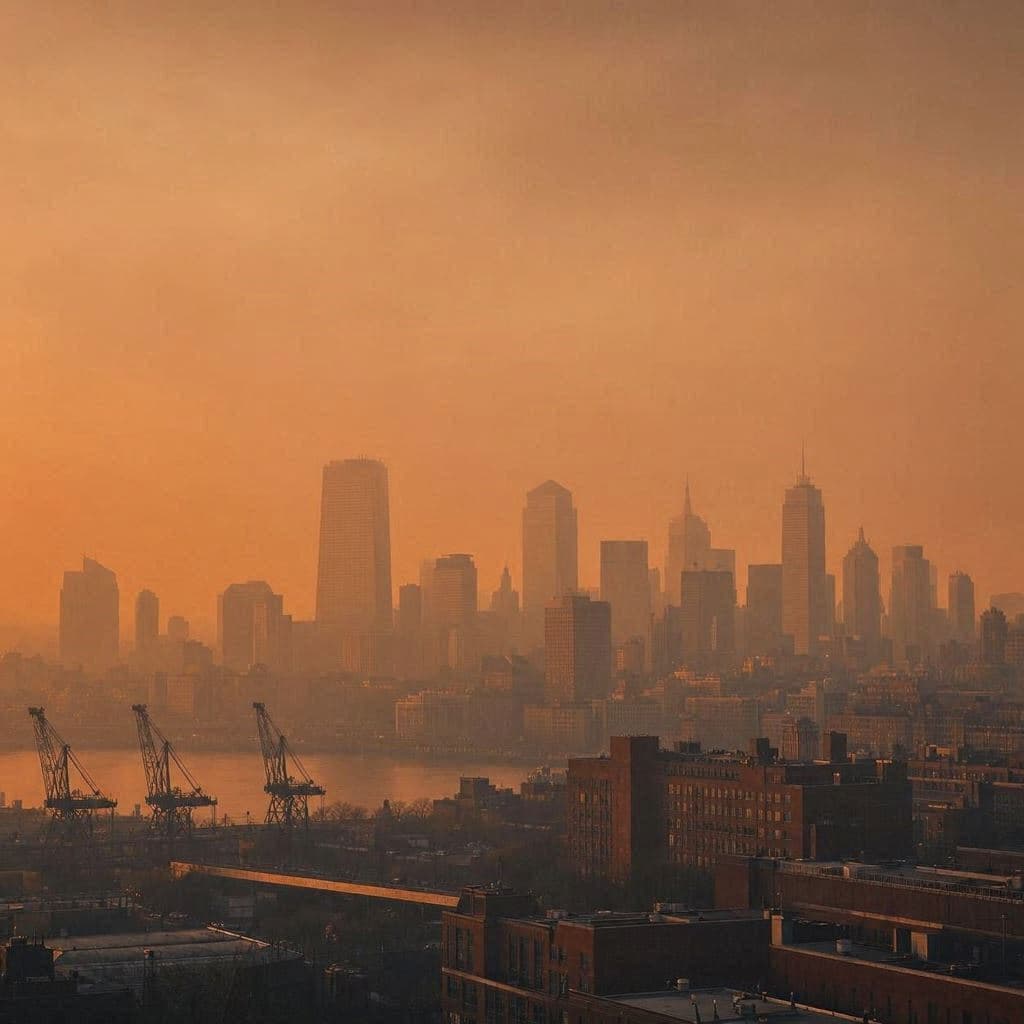
The sky over Boston has taken on a hazy, amber hue, a visual reminder that the boundaries of our local environment are far more porous than we often imagine. Smoke from wildfires burning thousands of miles away in Canada has drifted south, settling over New England and altering the air quality for millions of residents. This phenomenon is not merely a weather event; it is a testament to the interconnectedness of our continent’s ecosystems. It invites us to reflect on how distant environmental changes can have immediate, tangible impacts on our daily lives, urging a deeper awareness of the air we breathe and the shared challenges of a changing climate.
Body: The smoke originates from active wildfires in Quebec and other parts of eastern Canada, where dry conditions and strong winds have fueled extensive burns. As atmospheric currents carry the particulate matter southward, it mixes with the local air, creating a haze that can persist for days. For Bostonians, this means that the crisp, clear skies of summer may be temporarily replaced by a muted, grayish filter. While visually striking, the presence of fine particulate matter, known as PM2.5, poses health risks that extend beyond mere discomfort.
Health officials have issued air quality alerts, advising residents to limit outdoor exertion, particularly during peak hours when pollution levels are highest. Vulnerable populations, including children, the elderly, and those with respiratory conditions such as asthma, are urged to stay indoors and keep windows closed. The fine particles in wildfire smoke can penetrate deep into the lungs and even enter the bloodstream, triggering inflammation and exacerbating existing health issues. It is a subtle but serious threat that requires vigilance.
For many, the sight of smoky skies is becoming a familiar, if unwelcome, part of the seasonal cycle. In previous years, similar events have affected the Northeast, signaling a shift in regional air quality patterns. What was once considered a problem confined to the western United States is now a continental concern. This normalization of poor air quality challenges our expectations of summer and forces a reevaluation of how we prepare for environmental hazards.
Indoor air quality becomes a priority during these episodes. Using air purifiers with HEPA filters, keeping HVAC systems on recirculate, and avoiding activities that generate indoor pollutants like smoking or frying can help mitigate exposure. Creating a safe haven within the home allows individuals to maintain their health despite the conditions outside. It is a practical adaptation to a new reality.
The economic and social impacts are also notable. Outdoor events may be postponed or canceled, and businesses that rely on foot traffic may see a decline. The haze can affect visibility, impacting transportation and safety. These disruptions, while temporary, highlight the fragility of our daily routines in the face of environmental volatility. They remind us that our communities are deeply tied to the natural world.
Scientific monitoring plays a crucial role in managing these events. Agencies like the EPA and local health departments provide real-time data on air quality indices, helping residents make informed decisions. Understanding the metrics, such as the Air Quality Index (AQI), empowers individuals to take proactive steps. Knowledge is a key tool in navigating these challenging periods.
As the wind shifts and the smoke eventually disperses, the skies will clear. But the memory of the haze lingers, prompting questions about long-term trends. Climate change is expected to increase the frequency and intensity of wildfires, making such events more common. Preparing for this future requires both individual action and collective policy efforts to reduce emissions and manage forest health.
Closing: In the end, the arrival of Canadian wildfire smoke in Boston is a call for awareness and adaptation. It reminds us that environmental health is a shared responsibility. As we navigate these hazy days, the hope is that we emerge with a greater commitment to protecting the air and the planet that sustains us.
AI Image Disclaimer: Please note that any accompanying visuals for this narrative are artificially generated interpretations meant to evoke the spirit of the story, not documentary evidence.
Sources: WBUR NBC Boston The New York Times
Published by Banx Network. This article is part of the Banx decentralized media programme, powered by the BXE token on the XRP Ledger.