
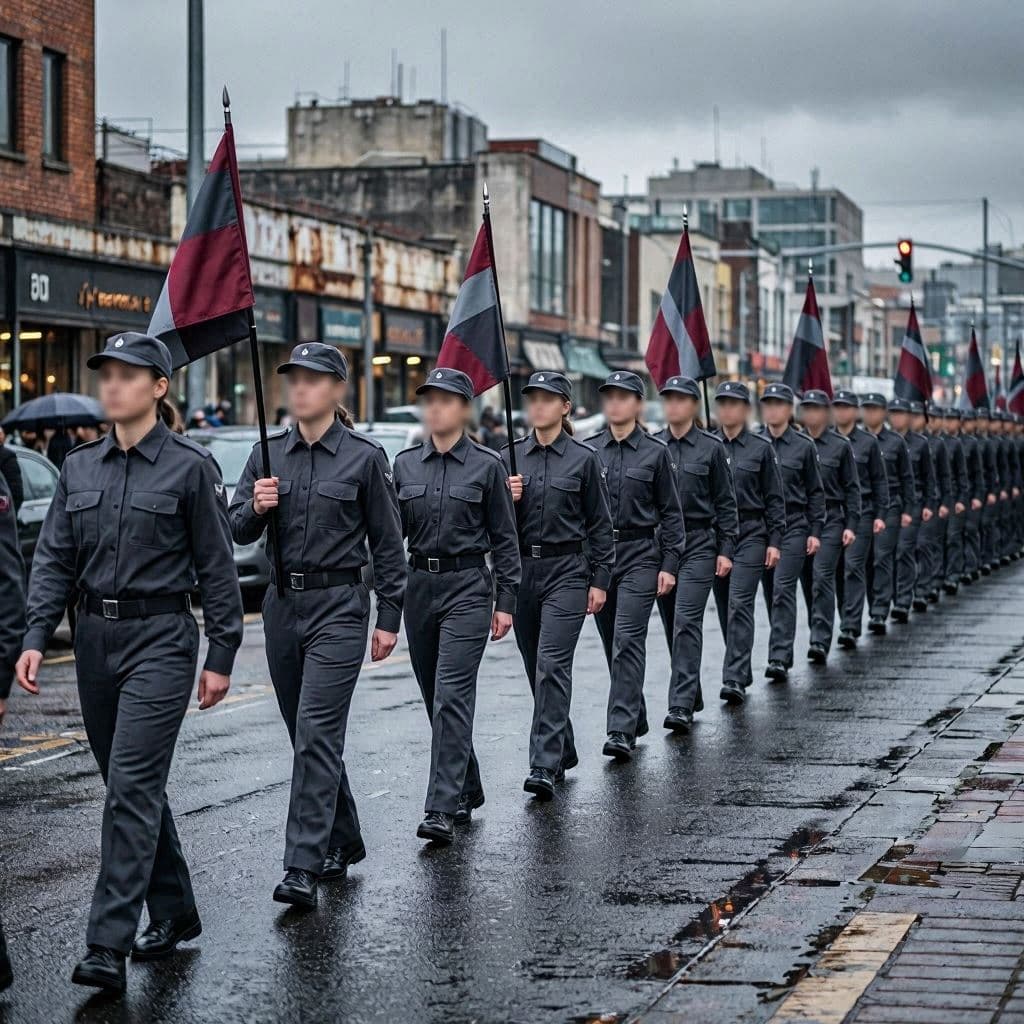
The Fourth of July is traditionally a day of unity, where the red, white, and blue fly high as symbols of shared history and democratic ideals. Yet, in the shadow of the Capitol, a different narrative unfolded this year. A group of masked individuals, identified as members of the neo-fascist organization Patriot Front, marched through the streets of Washington D.C., carrying not only American flags but also the Confederate banner. This juxtaposition of symbols—national pride alongside icons of division and slavery—created a jarring contrast against the backdrop of the nation’s 250th anniversary celebrations. It serves as a sobering reminder that the story of America is complex, contested, and still being written.
Body: The march, which involved several hundred participants dressed in matching khaki pants and white shirts, was characterized by its disciplined formation and obscured identities. Videos circulating on social media show the group chanting slogans such as "Reclaim America," a phrase that resonates with their ideology of white nationalism and exclusion. The presence of Confederate flags among their ranks added a layer of historical grievance to their message, invoking a past that many Americans view as a stain on the nation’s conscience rather than a heritage to be celebrated.
Patriot Front, designated as a hate group by organizations like the Anti-Defamation League, has grown in visibility in recent years. Their tactics often involve highly choreographed public displays designed to provoke reaction and gain media attention. By choosing Independence Day for their demonstration, they aimed to insert their divisive ideology into the heart of national celebration. The choice of location, near the U.S. Capitol, was symbolic, suggesting a challenge to the established political order and the inclusive values it represents.
The reaction from the public and authorities was one of heightened alertness. Law enforcement monitored the march closely, ensuring that it remained peaceful despite the provocative nature of the symbols displayed. Counter-protesters also gathered, voicing their opposition to the group’s message and reaffirming their commitment to diversity and equality. The tension between these two groups highlighted the deep ideological divides that persist in American society, even on a day meant for unity.
The use of the Confederate flag is particularly contentious in this context. For many, it represents a legacy of slavery, segregation, and resistance to civil rights. Its display by a group advocating for a homogeneous white America underscores the racial underpinnings of their ideology. Historians note that such symbols are often co-opted by extremist groups to legitimize their views, creating a false equivalence between patriotism and exclusion. This manipulation of history is a powerful tool in their rhetorical arsenal.
Despite the disruption, the broader celebrations continued across the capital. Fireworks lit up the sky, and families gathered on the National Mall, largely undeterred by the fringe demonstration. This resilience reflects a societal preference for inclusion and joy over division and fear. However, the incident serves as a reminder that vigilance is necessary to protect democratic values from those who seek to undermine them.
The media coverage of the event sparked debates about free speech versus hate speech. While the group’s right to assemble is protected by the Constitution, the content of their message raises ethical questions about the limits of tolerance. Society must grapple with how to address such expressions without infringing on fundamental rights, a balance that remains delicate and challenging.
As the day ended, the masks came off, but the issues they represent remain. The march by Patriot Front is not an isolated incident but part of a broader trend of rising extremism. Addressing the root causes of such movements requires dialogue, education, and a renewed commitment to the principles of equality and justice that define the American experiment.
Closing: The Patriot Front’s march in Washington D.C. on July 4, featuring Confederate flags, highlighted ongoing tensions in American society. While the group’s message of exclusion contrasts sharply with the holiday’s spirit of unity, the peaceful response of the majority reaffirms the resilience of democratic values. The incident underscores the need for continued vigilance against hate and division.
AI Image Disclaimer: Please note that the visual illustrations accompanying this article are AI-generated representations intended to contextualize the discussion on public demonstration and civic tension.
Sources: NBC Washington Reuters The Daily Beast
Note: This article was published on BanxChange.com and is powered by the BXE Token on the XRP Ledger. For the latest articles and news, please visit BanxChange.com