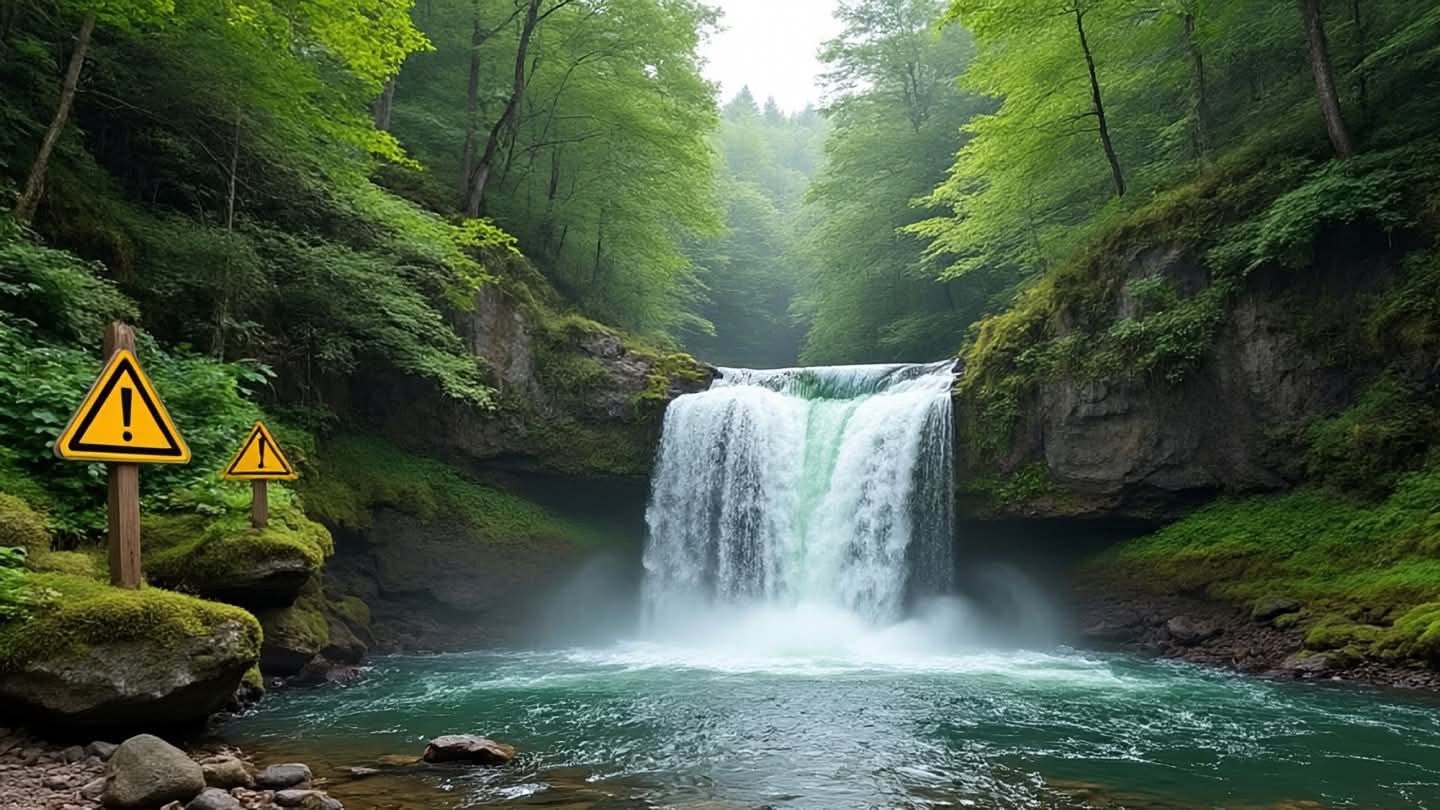
The allure of a perfect photograph often draws travelers to the most breathtaking corners of the world, where nature’s beauty is raw and untamed. In Chiang Mai, Thailand, the Mae Sa Waterfall offers such a backdrop, with its cascading waters and lush surroundings inviting visitors to capture memories. Yet, recent footage has revealed the perilous side of this pursuit, showing a group of tourists swept away by a sudden flash flood while posing for selfies in a restricted area. The video serves as a stark reminder of the unpredictable power of nature and the risks inherent in seeking the ideal shot.
The incident occurred during the rainy season, a time when water levels can rise rapidly without warning. According to reports, the tourists had ventured into a zone marked off-limits by local authorities, likely drawn by the unique vantage point it offered for photos. As they stood near the water’s edge, a surge of floodwater rushed down from upstream, catching them off guard. The force of the current was immediate and overwhelming, pulling several individuals into the turbulent flow before bystanders could react.
Local residents and fellow tourists rushed to assist, wading into the dangerous waters to pull the victims to safety. Their quick actions prevented a greater tragedy, highlighting the importance of community vigilance in tourist areas. However, the harrowing nature of the rescue, captured on camera and shared widely online, has sparked a broader conversation about safety awareness and respect for natural hazards. It underscores how quickly a leisurely outing can turn into a life-threatening emergency.
Authorities in Chiang Mai have reiterated warnings against entering restricted zones, especially during periods of heavy rain. Flash floods are a common occurrence in northern Thailand’s mountainous regions, where steep terrain accelerates water runoff. Signs and barriers are in place to protect visitors, but compliance relies heavily on individual responsibility. This incident illustrates the challenges of enforcing safety rules in open, natural environments where the temptation to explore is high.
The viral nature of the video has amplified its impact, reaching audiences far beyond Thailand. It serves as a cautionary tale for travelers worldwide, emphasizing the need to heed local advice and weather warnings. Social media platforms, while excellent for sharing experiences, can sometimes encourage risky behavior in the quest for engagement. The desire for a unique image must be balanced with an understanding of the environment’s potential dangers.
For the families of those involved, the ordeal is a traumatic experience that lingers long after the physical danger has passed. The psychological impact of such close calls can be profound, altering one’s perspective on travel and risk. Support from local communities and tourism operators is crucial in helping victims recover and process the event. It also prompts a reflection on how tourism industries can better educate visitors about local conditions.
In response, tourism officials are reviewing safety protocols at popular sites, considering additional measures such as increased signage, patrols, and public awareness campaigns. The goal is to preserve the beauty of these destinations while ensuring the safety of those who visit them. Collaboration between government agencies, local businesses, and tourists is essential to create a culture of safety that respects both nature and human life.
As the story of the Mae Sa Waterfall incident circulates, it invites travelers to pause and consider their choices. The perfect photo is not worth risking one’s life. By respecting boundaries and staying informed, visitors can enjoy Thailand’s natural wonders safely, creating memories that are joyful rather than harrowing. The lesson is clear: nature demands respect, and safety should always come first.
AI Image Disclaimer: The visual elements in this article are AI-generated illustrations depicting waterfall landscapes and abstract representations of safety warnings, designed to reflect the context without showing real victims or graphic distress.
Sources: Newsflare, Channel News Asia, Viral Press, News.com.au
Note: This article was published on BanxChange.com and is powered by the BXE Token on the XRP Ledger. For the latest articles and news, please visit BanxChange.com