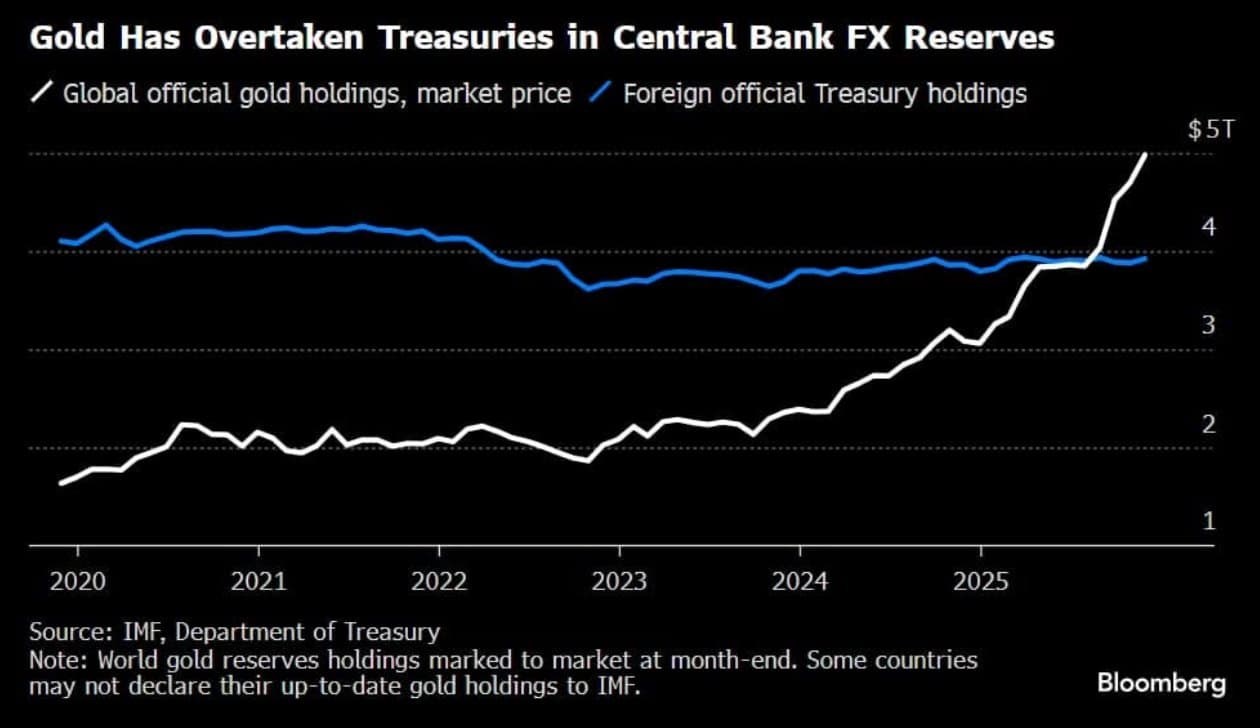
A major shift may be unfolding within the global financial system after new data suggested that gold has overtaken United States Treasuries as the world’s top reserve asset among central banks. The development, highlighted across financial media and market discussions, reflects years of accelerating gold accumulation by governments seeking diversification away from traditional dollar-denominated reserves. Analysts say the trend represents one of the most important structural changes in international finance in decades. For generations, U.S. Treasuries served as the dominant reserve asset held by central banks worldwide due to the strength of the U.S. economy, the liquidity of Treasury markets and the dollar’s role as the global reserve currency. However, recent geopolitical tensions, inflation concerns and rising debt levels have encouraged many countries to reconsider reserve allocation strategies. Gold has emerged as one of the biggest beneficiaries of this shift. Central banks across Asia, the Middle East and emerging markets have significantly increased gold purchases over recent years, helping drive prices to historic highs. Financial strategists argue gold’s appeal stems from its perceived independence from political systems and sovereign debt risk. Unlike government-issued securities, gold cannot be directly inflated or sanctioned by foreign states, making it attractive during periods of geopolitical instability. The reported milestone also reflects broader concerns surrounding the long-term sustainability of global debt markets. Rising government borrowing, persistent inflation pressures and uncertainty surrounding interest rates have contributed to growing investor caution regarding sovereign debt exposure. The shift carries major implications for currency markets and global capital flows. A decline in reliance on U.S. Treasuries could eventually affect demand for the dollar and reshape how international reserves are managed. Cryptocurrency supporters quickly connected the development to Bitcoin’s “digital gold” narrative. Advocates argue that growing skepticism toward traditional reserve systems strengthens the long-term case for decentralized assets with limited supply characteristics. Bitcoin has frequently been compared to gold because both assets are viewed by supporters as hedges against inflation and monetary debasement. However, critics note that Bitcoin remains significantly more volatile and speculative than precious metals. The move toward gold also reflects rising geopolitical fragmentation. Countries increasingly seek financial systems and reserve strategies capable of reducing dependence on Western-controlled infrastructure amid sanctions risks and global political tensions. Market analysts believe central bank reserve diversification is likely to continue regardless of short-term economic conditions. Gold purchases have accelerated consistently over the past several years as nations prioritize resilience and strategic flexibility. At the same time, the U.S. dollar remains deeply entrenched within the global financial system. Treasury markets continue to offer unmatched liquidity and scale, meaning any major transition away from dollar assets would likely unfold gradually over many years. Still, the symbolic importance of gold surpassing Treasuries is substantial. It signals that governments worldwide are adapting to a changing geopolitical and economic landscape where reserve diversification and financial sovereignty are becoming increasingly important priorities.
Published by Banx Network. This article is part of the Banx decentralized media programme, powered by the BXE token on the XRP Ledger.