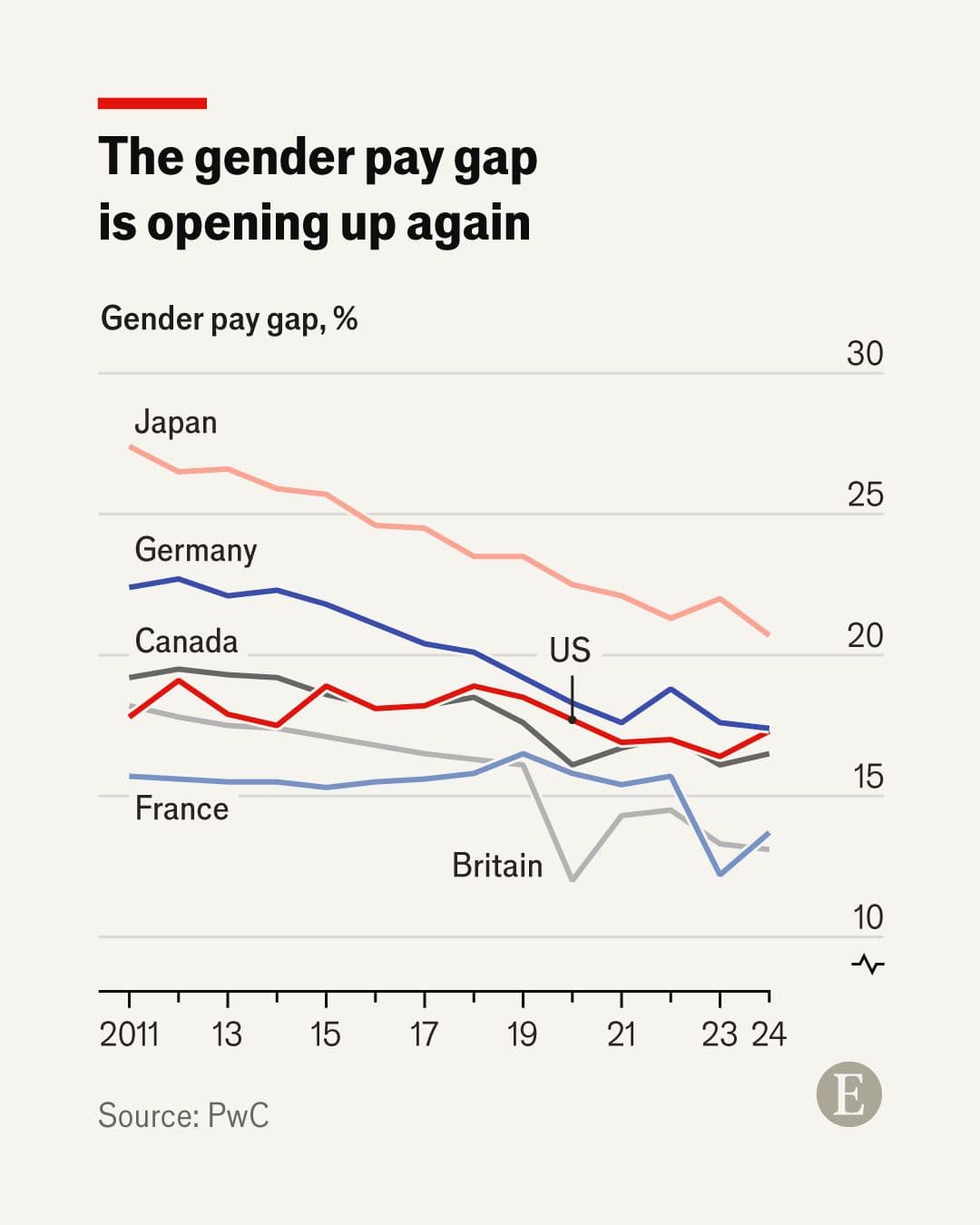
New research highlighted by The Economist indicates that progress toward closing the global gender pay gap has slowed, with several countries experiencing widening wage differences between men and women for the first time in years. The analysis suggests multiple factors are contributing to the trend, including changes in workforce participation, slower career advancement in certain sectors and the lasting economic effects of the pandemic. In some countries, more women have reduced full-time employment or shifted toward part-time work, affecting average earnings. Economists warn that persistent wage disparities can reduce long-term economic growth by limiting workforce participation and lowering lifetime earnings. Governments and businesses continue exploring policies such as flexible working arrangements, improved childcare access and equal pay transparency to address the issue. While several nations have made meaningful progress over the past decade, recent data suggests those gains are becoming more difficult to sustain. The pace of improvement now varies considerably between countries depending on labor market conditions and public policy. Researchers emphasize that continued monitoring and targeted reforms will be necessary to ensure progress resumes and that wage equality continues improving over the coming years.
Published by Banx Network. This article is part of the Banx decentralized media programme, powered by the BXE token on the XRP Ledger.