
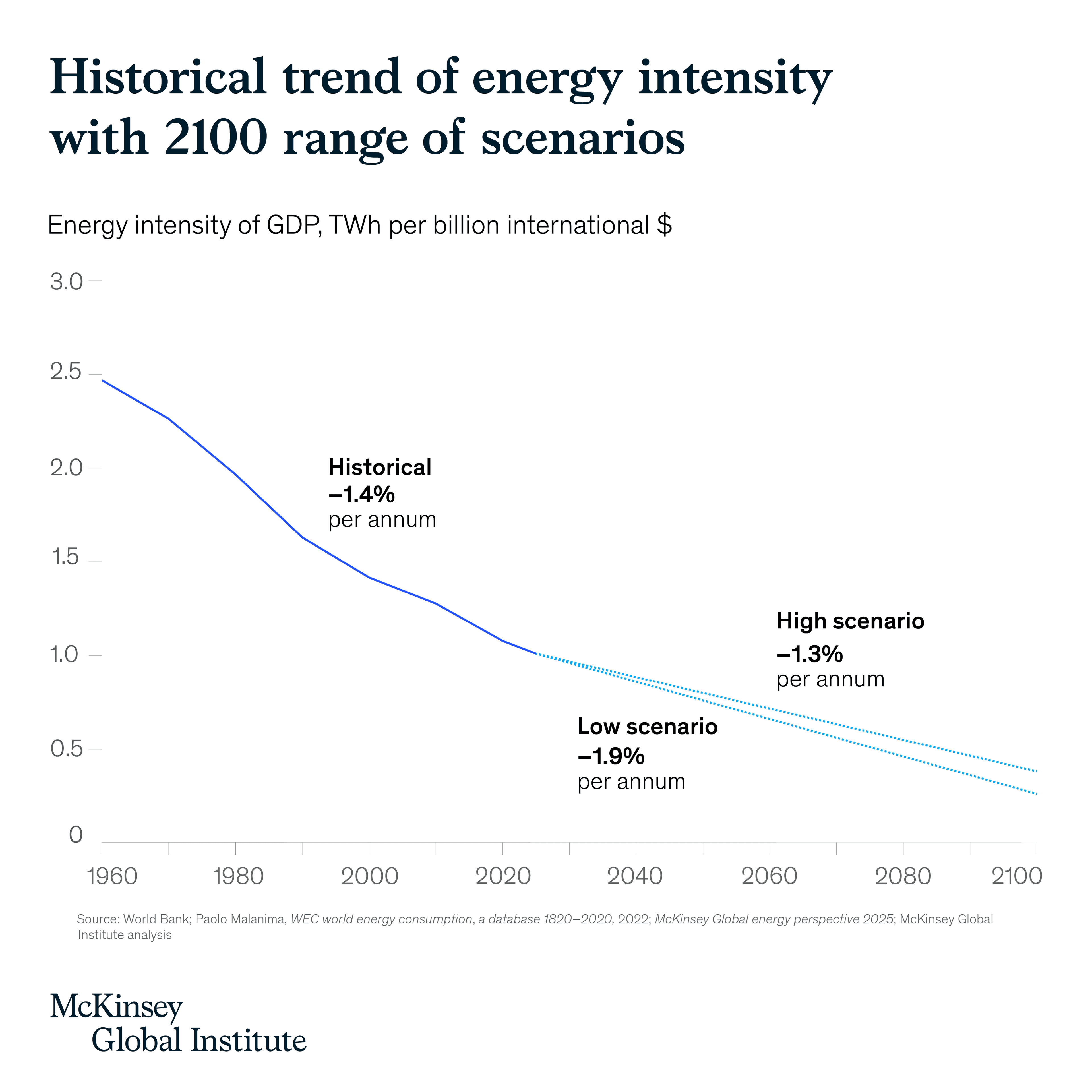
Research published by the McKinsey Global Institute suggests worldwide energy consumption could increase substantially by the end of the century as economic growth, industrial development, and population expansion continue across emerging and developed economies. Over the past century, global energy demand has grown dramatically alongside improvements in living standards, urbanization, manufacturing, transportation, and digital infrastructure. Analysts project this trend will continue as billions of people seek higher incomes and greater access to electricity, transportation, healthcare, and technology. Meeting future demand will require a diversified energy strategy. Renewable energy sources such as solar, wind, hydroelectric, and geothermal power are expected to play increasingly important roles, while nuclear energy, natural gas, and emerging technologies may also contribute to maintaining reliable electricity supplies. Artificial intelligence is becoming an additional driver of electricity demand. AI data centers require enormous computing power, increasing demand for reliable energy infrastructure while encouraging investments in more efficient chips, cooling systems, and grid modernization. Energy efficiency remains another critical component of future planning. Advances in building design, industrial equipment, transportation, and manufacturing can reduce energy intensity even as total consumption continues rising. More efficient technologies allow economies to generate greater output using proportionally less energy. Governments and private companies are investing heavily in modernizing electricity grids, expanding battery storage, improving transmission networks, and developing cleaner fuels such as hydrogen. These investments aim to balance sustainability objectives with long-term energy security. Climate goals further complicate planning. Policymakers must reduce greenhouse gas emissions while ensuring affordable and reliable access to energy for households and businesses. Achieving both objectives will require significant technological innovation and international cooperation. The report underscores that the global energy transition is not simply about replacing one fuel source with another. Instead, it involves redesigning infrastructure, improving efficiency, expanding clean technologies, and supporting economic growth simultaneously.
Published by Banx Network. This article is part of the Banx decentralized media programme, powered by the BXE token on the XRP Ledger.



