
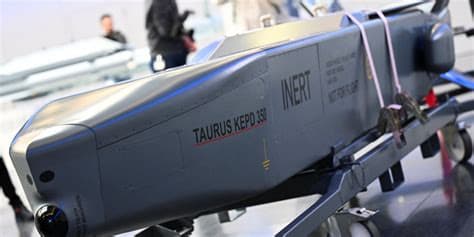
Key Highlights
- Germany will not supply Taurus missiles to Ukraine, citing improved capabilities.
- Chancellor Friedrich Merz emphasizes the effectiveness of Ukraine's own long-range weapons.
- The decision marks a shift from Merz's previous support for missile delivery.
Germany has officially announced that it will not be supplying Taurus cruise missiles to Ukraine, a decision attributed to the assessment that Kyiv no longer requires these weapons due to advancements in its own long-range strike capabilities. This statement was made by German Chancellor Friedrich Merz during a session in the Bundestag, where he articulated the rationale behind this significant policy shift.
Chancellor Merz highlighted that Ukrainian forces have developed increasingly effective strike systems, which he believes are “significantly more effective” than the limited number of Taurus missiles that Germany could potentially provide. This assertion underscores a broader trend in the ongoing conflict, where Ukraine has been enhancing its military technology and capabilities, thereby reducing its reliance on external arms supplies.
The Chancellor's remarks also reflect a notable change in his position since taking office. Previously, Merz had supported the idea of delivering Taurus missiles to Ukraine, a stance he now acknowledges was based on the assumption that the Bundeswehr had sufficient operational missiles available for transfer. However, he indicated that the situation has evolved, both in terms of Germany's military readiness and Ukraine's technological advancements on the battlefield.
This decision comes at a time when the dynamics of military support for Ukraine are rapidly changing. As the conflict continues, the need for countries to reassess their military aid strategies becomes increasingly critical. The German government’s current stance may also signal a broader trend among Western allies to prioritize the provision of advanced weaponry that aligns more closely with the operational needs of Ukrainian forces.
The implications of this decision are significant, as it not only affects the immediate military capabilities of Ukraine but also reflects the shifting landscape of international military support. As Ukraine continues to adapt and innovate in its defense strategies, the response from its allies will likely evolve as well, focusing on providing more sophisticated and effective weaponry.
In conclusion, Germany's decision to withhold Taurus missiles from Ukraine illustrates a strategic pivot in response to the changing realities of the conflict. As both nations navigate this complex situation, the emphasis on enhancing Ukraine's own military capabilities will likely remain a priority for Germany and its allies moving forward.
Published by Banx Network. This article is part of the Banx decentralized media programme, powered by the BXE token on the XRP Ledger.



