Not every rescue succeeds.
Yet humans often try anyway.
That emotional instinct now sits at the center of debate in after officials defended an expensive rescue attempt involving a whale nicknamed “Timmy,” whose struggle captured national attention before the animal ultimately died.
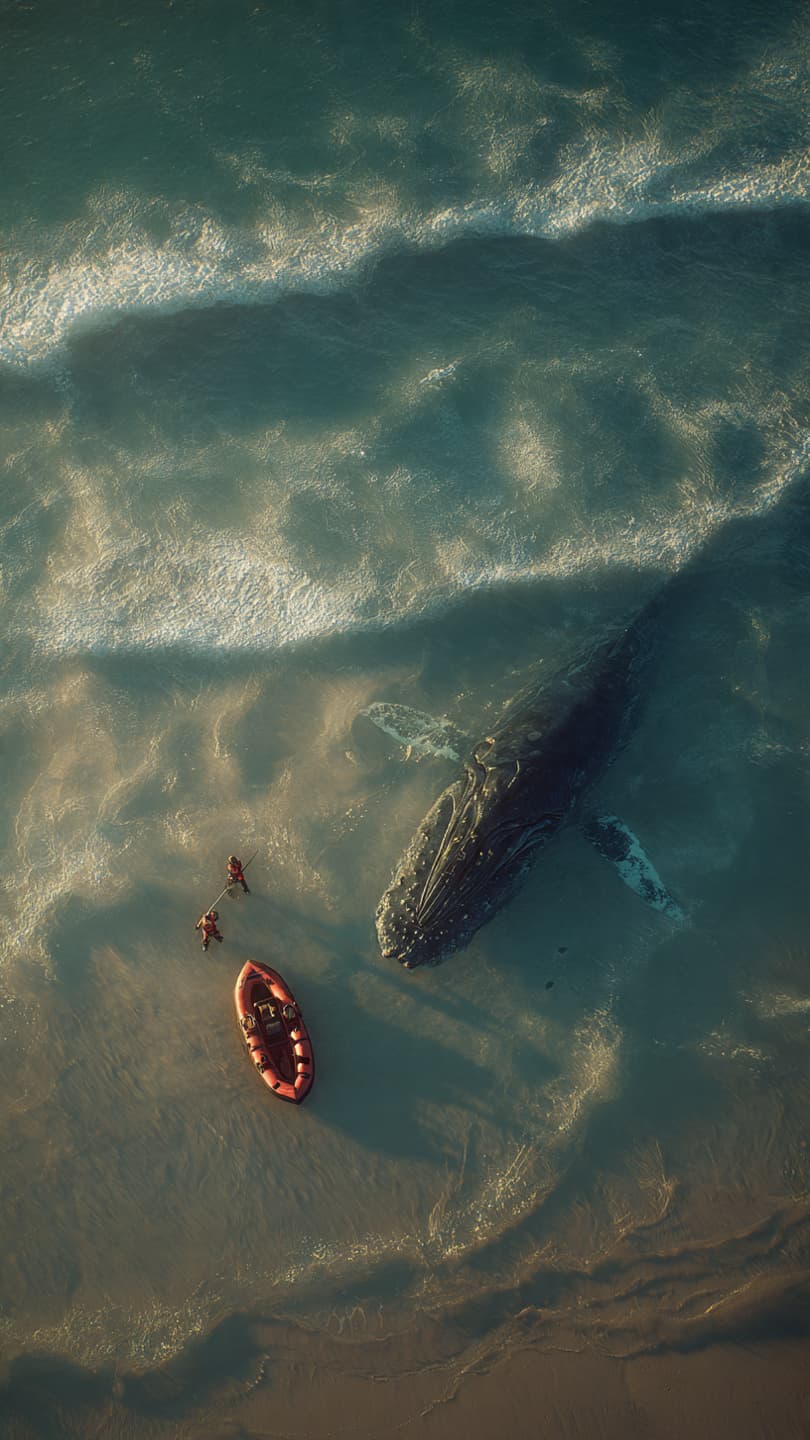
The whale became stranded in shallow waters, prompting emergency response teams, marine specialists, and local authorities to organize a difficult rescue effort aimed at guiding the animal back toward open sea.
Despite the operation failing, German officials defended the decision to proceed.
One government minister reportedly described the rescue attempt as a “perfectly human” reaction to seeing a large, intelligent animal in distress.
The comments came after criticism emerged over:
Operational costs Resource allocation Environmental practicality Whether intervention should have occurred at all Supporters of the rescue argued that abandoning the whale without attempting assistance would have felt morally unacceptable for many people witnessing the situation unfold.
Why Whale Rescues Are So Difficult Marine mammal rescues are often far more complicated than they initially appear.
Large whales that enter shallow waters can face multiple dangers, including:
Stress exhaustion Internal injuries Disorientation Dehydration Weight pressure from gravity outside deep water Unlike fish, whales evolved for buoyancy in the ocean. When stranded or trapped in shallow environments, their own body weight can become physically damaging.
Rescue operations involving whales often require:
Specialized vessels Tidal coordination Veterinary monitoring Acoustic guidance methods Large emergency teams Even under ideal conditions, survival rates can remain low.
Why People Become Emotionally Attached Part of why whale rescue stories resonate so strongly is because whales occupy a unique place in human imagination.
They are often associated with:
Intelligence Emotional complexity Communication Social bonds Ocean conservation symbolism When a whale receives a name — like Timmy — public attention frequently intensifies further.
The animal shifts from being an abstract wildlife case into something emotionally recognizable.
Crowds gather. Livestreams spread online. People begin hoping for survival almost like following the fate of an individual character rather than a distant wild animal.
That emotional response can influence political pressure surrounding rescue decisions.
The Ethical Debate Around Intervention Wildlife experts remain divided over how aggressively humans should intervene in stranded animal situations.
Some conservationists argue rescue attempts are important because:
Human activity contributes to marine disruption Compassion toward animals matters ethically Some rescues do succeed Public awareness can increase conservation support Others argue intervention sometimes prolongs suffering or creates unrealistic expectations about nature.
Not every animal can be saved. And in many cases, marine strandings occur because of illness, injury, or underlying biological problems already beyond recovery.
The debate surrounding Timmy reflects that larger philosophical tension between: accepting natural processes, and resisting the instinct to walk away from visible suffering.
A Wider Reflection The story of Timmy was never only about one whale.
It became a reflection of something deeply human: the refusal to remain emotionally detached from suffering even when the outcome appears uncertain.
People knew the rescue might fail. Officials likely understood that too.
Yet the attempt still happened.
Perhaps because modern societies often struggle with helplessness. We are surrounded by environmental crises, species decline, warming oceans, and disappearing ecosystems.
So when one visible creature appears stranded before the public eye, the instinct to act becomes powerful — even symbolic.
Not because success is guaranteed. But because sometimes the attempt itself feels morally important.
And perhaps that is what the German minister meant: that trying to save Timmy was not purely strategic or practical.
It was human.
AI Image Disclaimer Images are AI-generated illustrations and are intended for visual representation only, not real-world documentation.
Source Check Officials in defended the costly and ultimately unsuccessful effort to rescue a stranded whale nicknamed “Timmy,” arguing that the attempt reflected a “perfectly human” response to an animal in distress and was justified despite criticism over expenses and outcome.
Published by Banx Network. This article is part of the Banx decentralized media programme, powered by the BXE token on the XRP Ledger.