
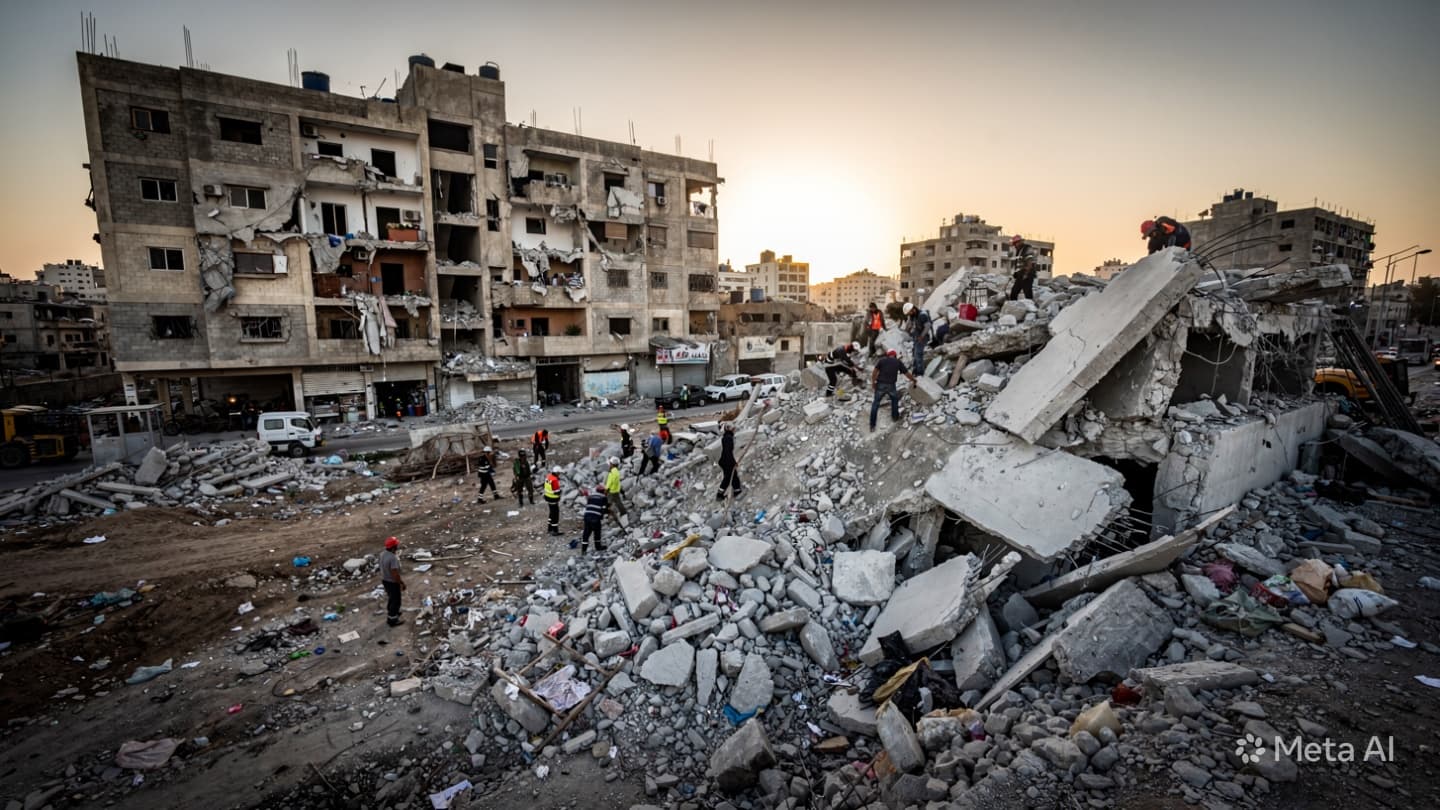
Gaza City, Gaza—Overnight airstrikes pulverized residential districts across Gaza City, leaving local medical teams scrambling to pull survivors from the debris. The latest bombardment intensified a cycle of violence that has shown no signs of stopping despite months of talk regarding a supposed ceasefire. Local authorities are still identifying the dead as secondary strikes hindered rescue efforts throughout the early morning hours.
Hospitals in the immediate vicinity report that emergency wards are once again flooded with victims suffering from crush injuries and shrapnel wounds. One senior medic noted that the facility is running low on basic surgical supplies, forcing staff to prioritize those with the highest chance of survival. The air in the city remains thick with dust and the smell of burning wreckage as families search for missing relatives.
Witnesses on the ground described a series of loud blasts that shook the foundations of nearby buildings. Many residents were asleep when the first wave hit, leaving them little time to react or seek shelter. The sheer scale of the destruction suggests the use of heavy ordnance, turning multi-story homes into piles of twisted concrete and rebar.
This latest surge in violence highlights the ongoing collapse of civic order within the enclave. Police and municipal workers attempting to clear roads or direct traffic have frequently found themselves in the crosshairs, complicating efforts to maintain basic services. Without a functional police presence, the chaos following each strike has only grown more pronounced.
Aid organizations are struggling to distribute even the most basic necessities. While some supply convoys have entered the territory, the rapid destruction of roads and utility networks makes delivery increasingly hazardous. Every new strike creates more rubble, which in turn blocks the few routes left for ambulances to navigate the city.
The humanitarian situation is deteriorating by the hour as more families find themselves forced into smaller, increasingly dangerous pockets of the city. Displacement orders are still being issued, though many residents have run out of places to flee. The lack of safe zones has turned urban centers into high-risk areas for those caught in the middle of the fighting.
Local leaders have issued repeated pleas for international intervention to stop the targeting of residential areas. These requests have gone largely ignored, leaving the population to endure the consequences of the standoff. The international community remains divided, while the situation on the ground remains largely unregulated and increasingly grim.
Rescue operations are currently focused on a handful of collapsed apartment buildings where people are still reported to be trapped. Heavy machinery is in short supply, forcing first responders to rely on hand tools and basic equipment to move heavy slabs. The work is slow, dangerous, and likely to continue through the next several days.
Note: This article was published on BanxChange.com and is powered by the BXE Token on the XRP Ledger. For the latest articles and news, please visit BanxChange.com