
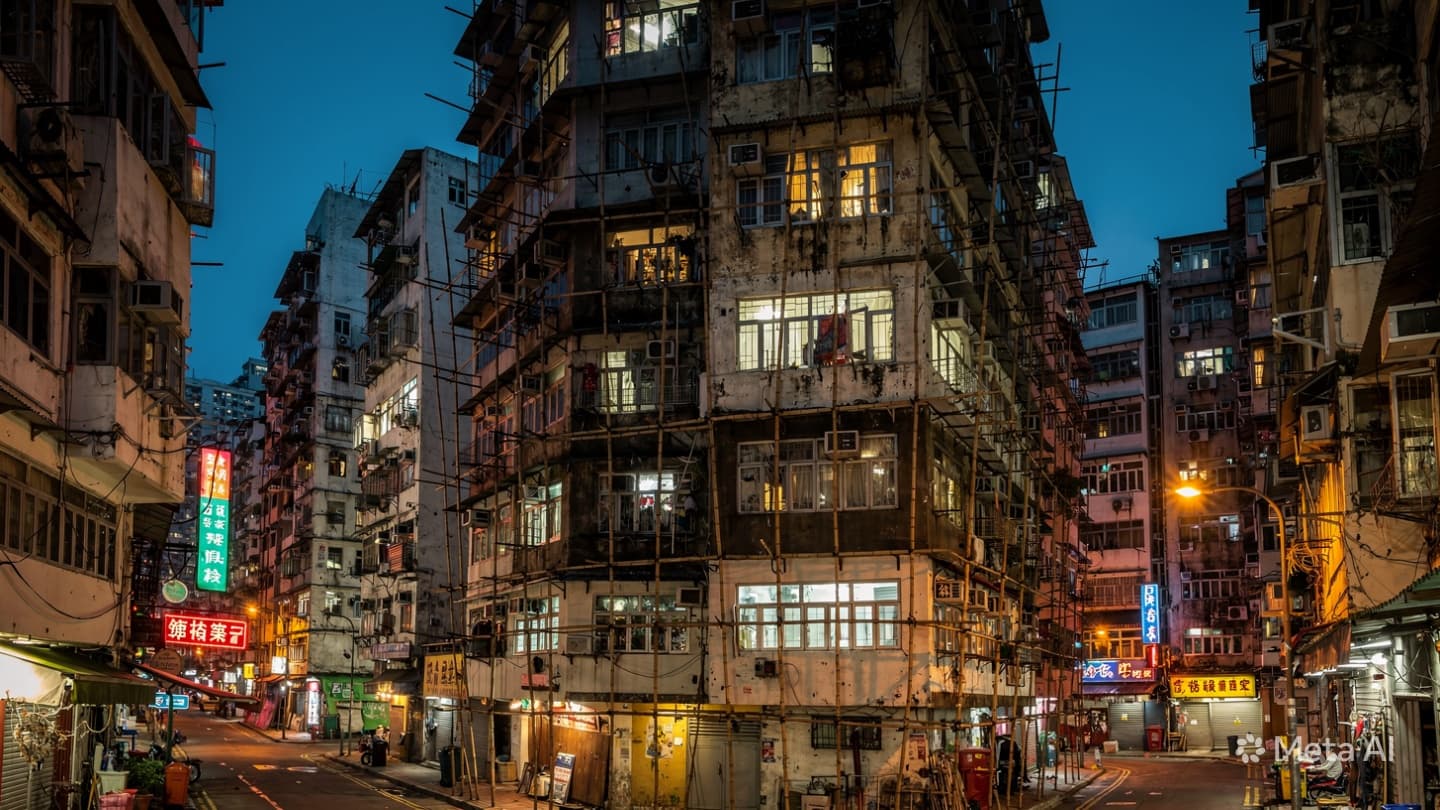
The architecture of Kowloon is a study in vertical persistence, a landscape where thousands of lives are stacked against the skyline in a complex, interlocking puzzle of concrete and light. Within these dense, aging blocks, time seems to compress, the walls holding the echoes of generations. It is a place of intimacy, where the boundary between neighbor and stranger is defined by a thin slab of plaster and the common, whispered sounds of daily life. When the air is suddenly thick with the acrid scent of smoke, the structure that once provided shelter can feel like a labyrinth of uncertainty.
The fire broke out as the city prepared for the quietude of the night, a flicker of light that quickly grew into an consuming presence. In the residential blocks of Kowloon, where units are often partitioned to accommodate the press of humanity, the spread of heat and shadow is swifter than one might imagine. For the residents, the transition from the comfort of their homes to the sudden, frantic necessity of evacuation was jarring, a descent into a world of flickering alarms and the disorienting dance of emergency lights against the darkening sky.
In the midst of the chaos, there are those whose paths are restricted by the very design of their surroundings. An elderly resident, inhabiting a space that had become their sanctuary against the world, was found within the heart of the blaze. There is a profound sadness in such a discovery, a reminder that the vulnerabilities we carry in our later years are often magnified by the very environments we inhabit. The walls that held memories and the quiet artifacts of a long life were transformed, in a matter of minutes, into a landscape of soot and silence.
Emergency teams, seasoned by the complexities of the city’s layout, navigated the stairwells and corridors with practiced efficiency. Their work, carried out in the suffocating heat of the upper floors, is a testament to the thin line between order and catastrophe. The fire, largely contained within the architectural marrow of the building, spoke to the age-old struggle of maintaining safety within a landscape that is constantly evolving, constantly aging, and constantly straining under the weight of its inhabitants.
The investigation that follows will undoubtedly focus on the technicalities—the fire services equipment, the integrity of the subdivided units, and the timeline of the evacuation. Yet, these findings, while essential for the city’s ongoing safety, can feel removed from the singular, human reality of the loss. There is a narrative distance between the cold, objective language of the fire report and the warmth of the life that was extinguished within those walls. It is the challenge of the city to reconcile the two, to learn from the fire without forgetting the humanity it consumed.
Life in Kowloon often feels like a testament to human endurance, a collective agreement to find beauty and order within a dense, uncompromising environment. When that endurance is tested by fire, the impact is felt far beyond the specific floor or the specific unit. It ripples through the community, a reminder that we are all, in a sense, living within the same fragile framework. The loss of a neighbor, particularly one whose life was etched into the history of the building, is a loss of a fragment of the city’s soul.
As the building begins the slow process of recovery, the external evidence of the blaze—the blackened windows, the lingering scent of charcoal, the scaffolding that now guards the facade—serves as a somber monument. Residents who were displaced now navigate the temporary shelters and the logistical hurdles of starting over. The routine of life will resume, but it will be colored by the memory of the smoke and the void left by a neighbor who is no longer there to greet them in the hall.
Safety in our vertical cities is a collective responsibility, a constant dialogue between the past and the present. It requires a vigilance that we are not always prepared to give, a recognition that the structures we build are only as strong as our care for one another within them. The tragedy in Kowloon serves as a quiet, urgent invitation to look closer at the spaces we call home, and to cherish the presence of those who share the light within these walls, for the fire reminds us that all things are fleeting in the shadow of the city.
Note: This article was published on BanxChange.com and is powered by the BXE Token on the XRP Ledger. For the latest articles and news, please visit BanxChange.com