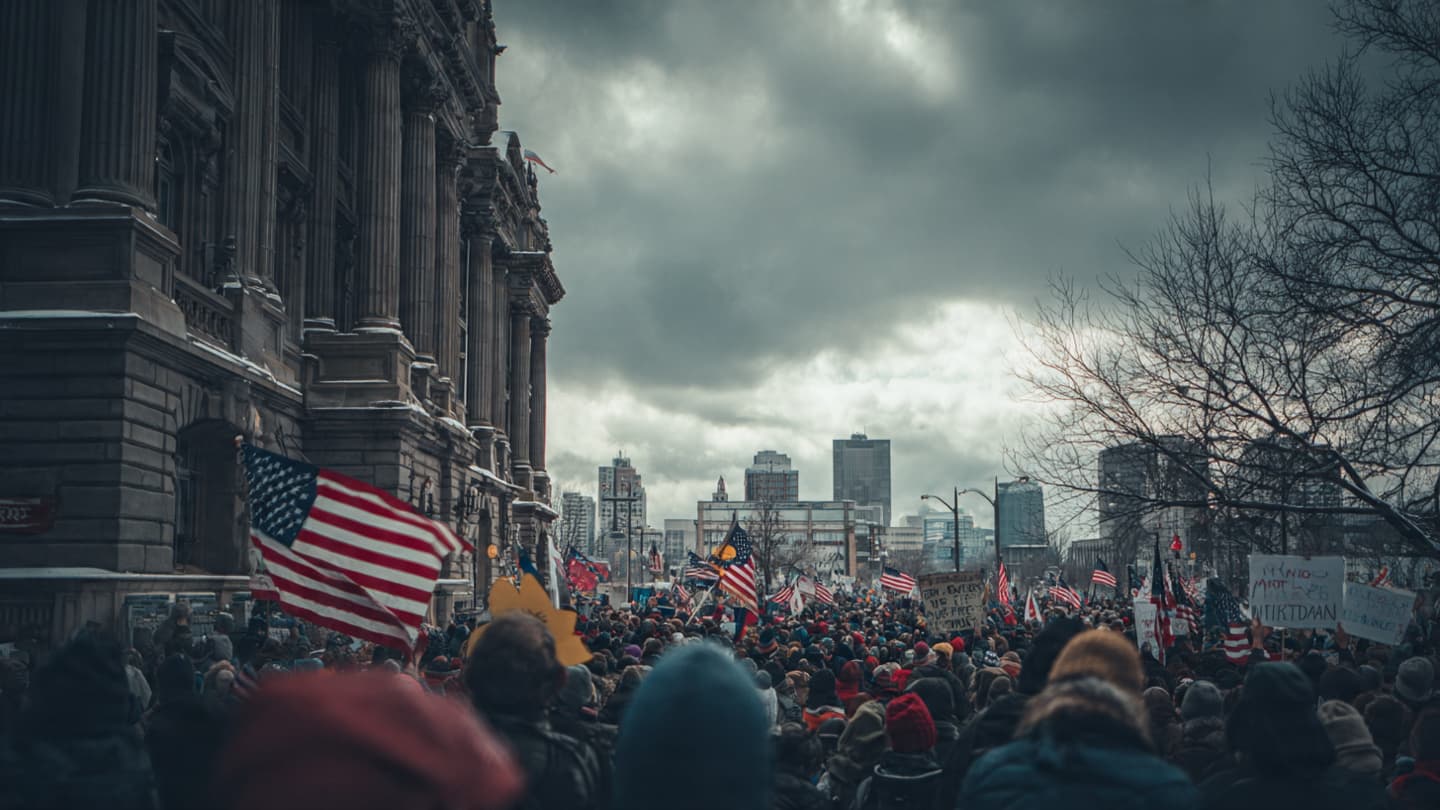
On certain evenings in Washington, D.C., the Capitol dome glows softly against the night sky, almost detached from the turbulence that so often surrounds it. Tourists photograph the marble steps, joggers pass beneath monuments, and the city resumes its ordinary rhythms. Yet beneath that calm surface, the events of January 6 continue to ripple outward through courtrooms, campaign rallies, congressional debates, and the private lives of those drawn into one of the most consequential political episodes in recent American history.
Now, years after the riot that shook the U.S. Capitol, hundreds of January 6 defendants are reportedly preparing to seek financial assistance or compensation through an “Anti-Weaponization Fund” linked to allies of Donald Trump. The effort reflects how the legacy of January 6 has evolved far beyond criminal prosecutions alone, becoming a deeply symbolic struggle over identity, justice, and political memory in the United States.
For many defendants and their supporters, the fund represents acknowledgment of what they describe as overly aggressive prosecutions and politically motivated treatment by federal authorities. Lawyers and activists aligned with Trump have increasingly framed the prosecutions surrounding January 6 as examples of institutional bias, using language centered on “weaponization” of government agencies against political dissent.
Critics, however, argue that such claims risk recasting an unprecedented assault on democratic institutions into a narrative of victimhood. To them, the prospect of compensation for individuals charged or convicted in connection with the Capitol attack represents a striking reversal in public framing — one where legal accountability itself becomes contested terrain.
The fund, still surrounded by questions regarding eligibility and administration, has become more than a financial initiative. It now functions as a political symbol within a broader movement that views federal investigations, court proceedings, and intelligence agencies through increasingly partisan lenses. In that environment, legal defense and ideological solidarity often blend together until distinctions between the two become difficult to separate.
The January 6 attack itself remains one of the defining images of recent American political history: shattered windows beneath winter skies, lawmakers fleeing through corridors, crowds moving through chambers once associated with institutional permanence and ceremony. Yet as years pass, the public meaning of that day continues shifting depending on political affiliation, media ecosystem, and personal belief.
For some Americans, January 6 stands primarily as an attack on democratic order. For others, especially within segments of Trump’s political base, the prosecutions that followed have become central to broader concerns about federal authority and political fairness. The emergence of compensation claims through the Anti-Weaponization Fund reflects how these competing narratives continue hardening rather than fading.
Beyond politics, there is also a quieter human dimension. Many defendants have faced years of legal fees, imprisonment, damaged careers, strained family relationships, and public scrutiny. Some supporters argue the financial burden itself justifies assistance regardless of political interpretation. Opponents counter that accountability for unlawful actions cannot be reframed simply through partisan grievance.
Meanwhile, the Republican Party itself continues navigating the enduring gravitational pull of Trump’s influence. Few issues reveal that tension more clearly than January 6. While some Republican figures have sought to move beyond the events of that day, others have increasingly embraced narratives portraying defendants as symbols of political persecution.
The legal system, once imagined by many Americans as standing apart from partisan identity, now finds itself deeply entangled within the nation’s ideological divisions. Court rulings are interpreted politically, investigations become campaign themes, and defendants transform into cultural symbols representing broader struggles over legitimacy and power.
In Washington, these arguments unfold not only inside courtrooms but across television studios, podcasts, fundraising platforms, and congressional offices. Every new legal filing, pardon discussion, or compensation claim becomes another fragment in a national conversation that appears far from resolution.
As night settles over the Capitol once again, its illuminated dome stands above a city still wrestling with the meaning of what occurred there years earlier. Around the country, former defendants, lawyers, donors, and political activists prepare new claims tied to a fund that itself has become part of America’s widening debate over justice and political identity.
And so January 6 continues its slow transformation from singular event into enduring narrative — one interpreted through competing memories, opposing moral frameworks, and increasingly incompatible visions of what accountability means inside a divided democracy.
AI Image Disclaimer: Visuals in this article were generated using AI-based imaging tools and are intended as illustrative representations of current events.
Sources:
Reuters Associated Press CNN Politico The Washington Post
Published by Banx Network. This article is part of the Banx decentralized media programme, powered by the BXE token on the XRP Ledger.